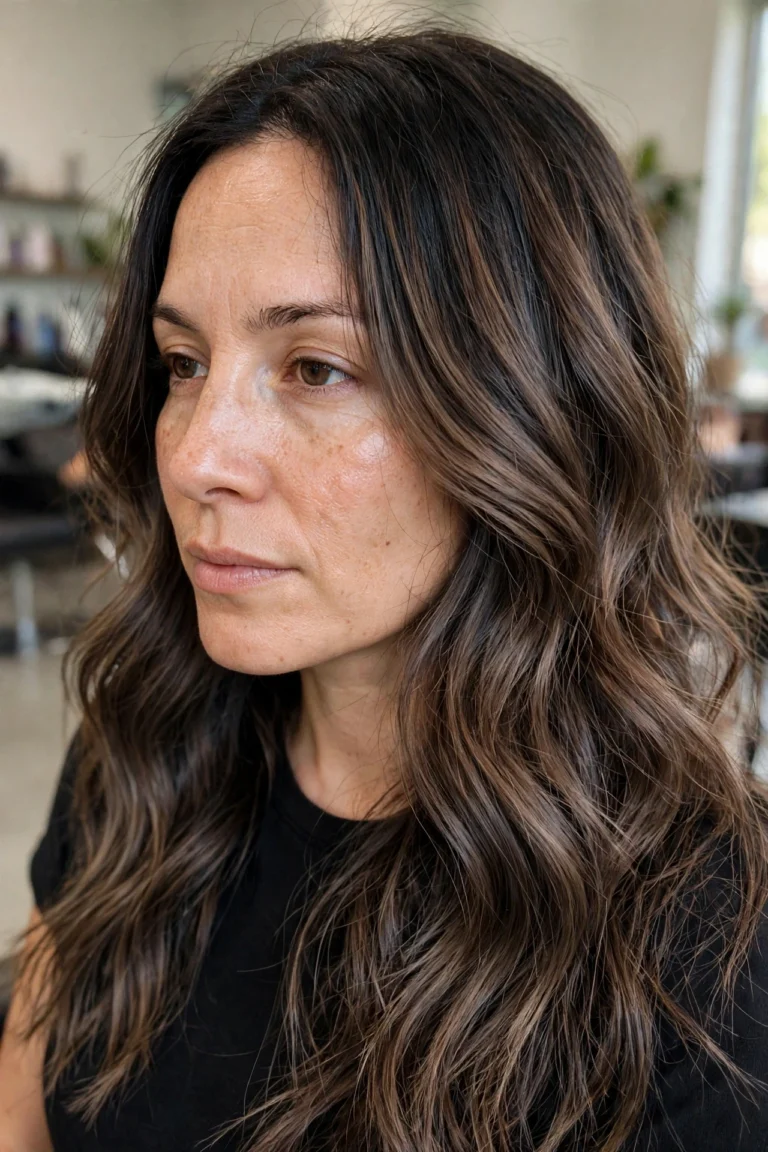
Oxidised Copper for Brunettes Who Hate Orange: Muted, Weathered Copper That Fades Well

You love copper in other people’s photos, but every time you imagine it on yourself, the same picture appears: bright orange roots, brassy ends, and a colour that shouts instead of glowing. That fear is the reason most brunettes never try copper at all. Oxidised copper exists for exactly that reader. It is copper with the shine knocked back — muted, weathered, a little dusty — so it reads as a rich brunette with warmth, not as orange hair.
Quick answer: Ask for muted, weathered copper one to two levels darker than the bright copper you fear, with a cool or neutral base underneath and no orange-gold toner on top. It fades softly over eight weeks instead of turning brassy, and a blue-green toning wash once a week keeps it in line at home.
What ‘Oxidised’ Means: Copper With the Shine Knocked Back
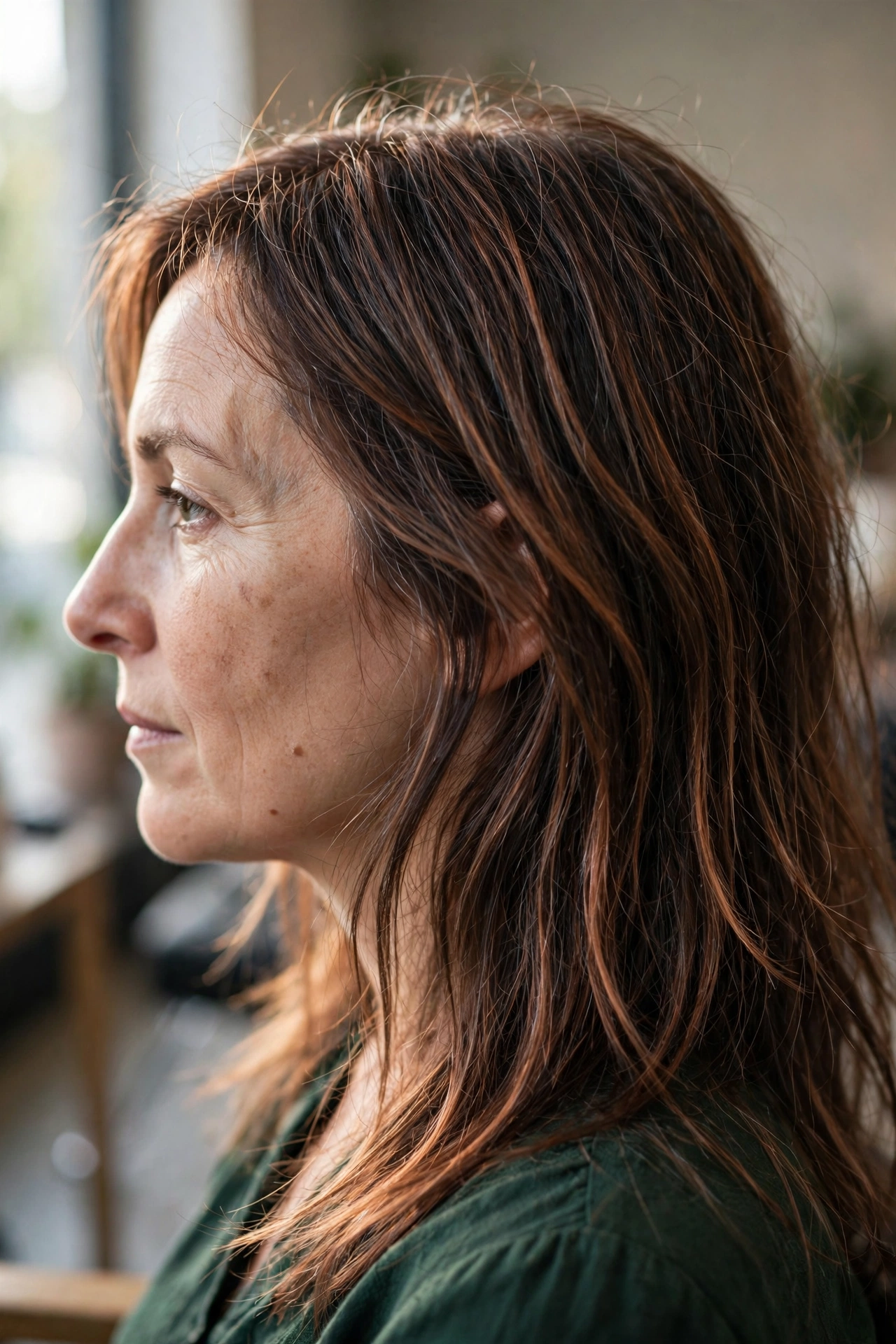
Oxidised copper is not a single shade on a chart. It is a way of building copper: the colourist starts with a muted copper — think old penny, weathered terracotta, maple left out in the rain — and then tones it down instead of brightening it. The result keeps copper’s warmth but loses its glare, so in indoor light it can pass for a deep brunette, and in sunlight it shows a soft copper glow rather than a flash of orange.
Who it suits best
Brunettes who want warmth without a visible colour change, and anyone whose hair has gone orange before. It suits medium and olive skin especially well, because the muted tone sits close to the skin’s own warmth instead of fighting it. Very fair skin can wear it too, kept a level deeper so the contrast stays soft.
How to ask for it (or do it at home)
At the salon, say “muted, weathered copper — oxidised, not bright” and name the fear directly: “I do not want orange, even in sunlight.” At home, do not reach for a bright copper box dye; a demi-permanent muted copper over your natural brunette is the safer first step, and a strand test on the underneath layers tells you the truth before the whole head does.
Styling and upkeep
Style it the way you already style brunette hair — the shade does the work. A gloss every six to eight weeks revives the muted tone without lifting it brighter, and cool water on wash days slows the fade more than any product will.
Oxidised Copper on Light Brunette Bases
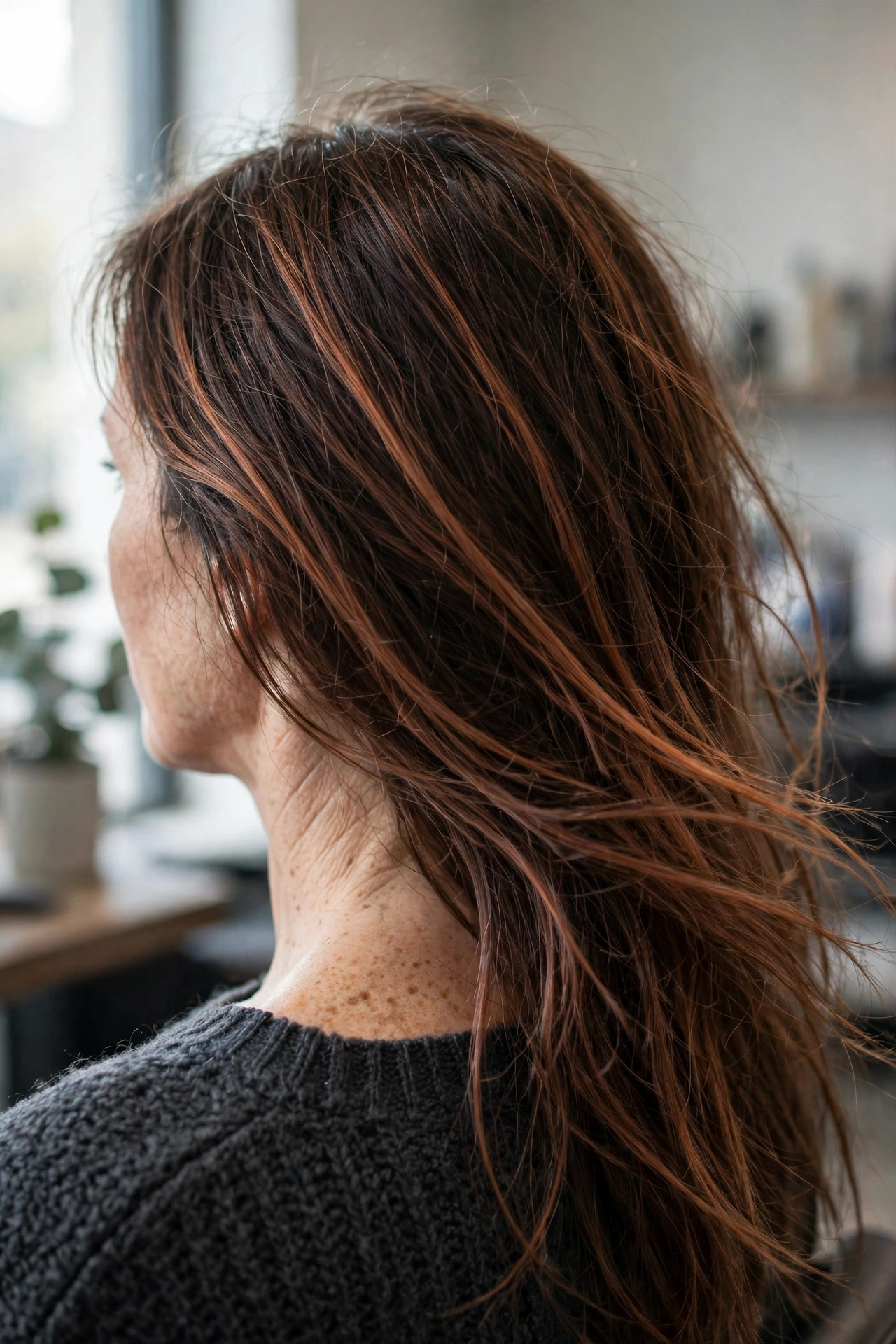
Light brunette is the easiest starting point, because the hair needs little or no lifting before the copper goes on. The colourist can paint the muted copper straight over a level 6 or 7 base, which means less damage, a truer muted result, and a grow-out that blends instead of drawing a line. The risk on light bases is the opposite of what most people expect: the copper can grab too brightly on porous ends, so the ends usually get a weaker formula than the roots.
The technique, step by step
The colourist applies the muted copper from roots to mid-lengths first, then pulls a diluted version through the ends for the last ten minutes only. A cool-toned gloss seals it, knocking back any gold that tries to surface. The whole appointment is usually under two hours, with no bleach at all on virgin light brunette hair.
Common mistakes to avoid
Lifting a light brunette base first “to make the copper show” — it does not need it, and the lift is what creates orange later. Using a bright copper toner as a shortcut is the same mistake in a different bottle. And skipping the gloss: without it, the muted tone washes out in two weeks and the raw copper underneath shows.
Products and tools that help
A colour-safe, sulphate-free shampoo, a cool-toned gloss or toning mask for weekly use, and a leave-in with heat protection if you blow-dry. Keep one toning product only — two different toners used in the same week can push the shade muddy instead of muted.
Deep Weathered Copper on Dark Brunette Bases

Dark brunette hair needs one gentle lift before oxidised copper can show at all, and that lift is where orange is born. The trick is to lift only one or two levels — to a warm level 5 — and then fill the hair with the muted copper instead of toning it bright. Done this way, the colour reads as a deep, weathered copper in sunlight and as a rich dark brunette indoors, which is exactly the low-drama result most dark brunettes are after.
Best for: hair types and face shapes
Thick, dark hair shows this shade best, because the depth gives the copper somewhere to sit. It flatters oval, square and heart face shapes, where the warmth softens a strong jawline or a wide forehead. Fine dark hair can wear it too, but keep the copper in the lengths and leave the roots darker, so the regrowth does not draw attention.
The exact salon wording
“I am a dark brunette and I want deep weathered copper — muted, oxidised, not bright and not orange. Please lift me only one or two levels, fill with a muted copper, and finish with a cool gloss. I would rather it look too subtle on day one than too orange on day seven.” That last sentence is the one that stops a colourist from going brighter “to be safe”.
Maintenance schedule
A gloss at week four, a root touch-up at week eight, and a toning wash once a week in between. Dark bases hold the muted tone longer than light ones, so the eight-week cycle is realistic — but only if the first lift was gentle. A hard lift fades fast and orange, whatever you put on top of it.
📌 Save this for your salon visit — the exact wording in this section is the difference between weathered copper and the orange you are trying to avoid.
Oxidised Copper Balayage for Low Commitment
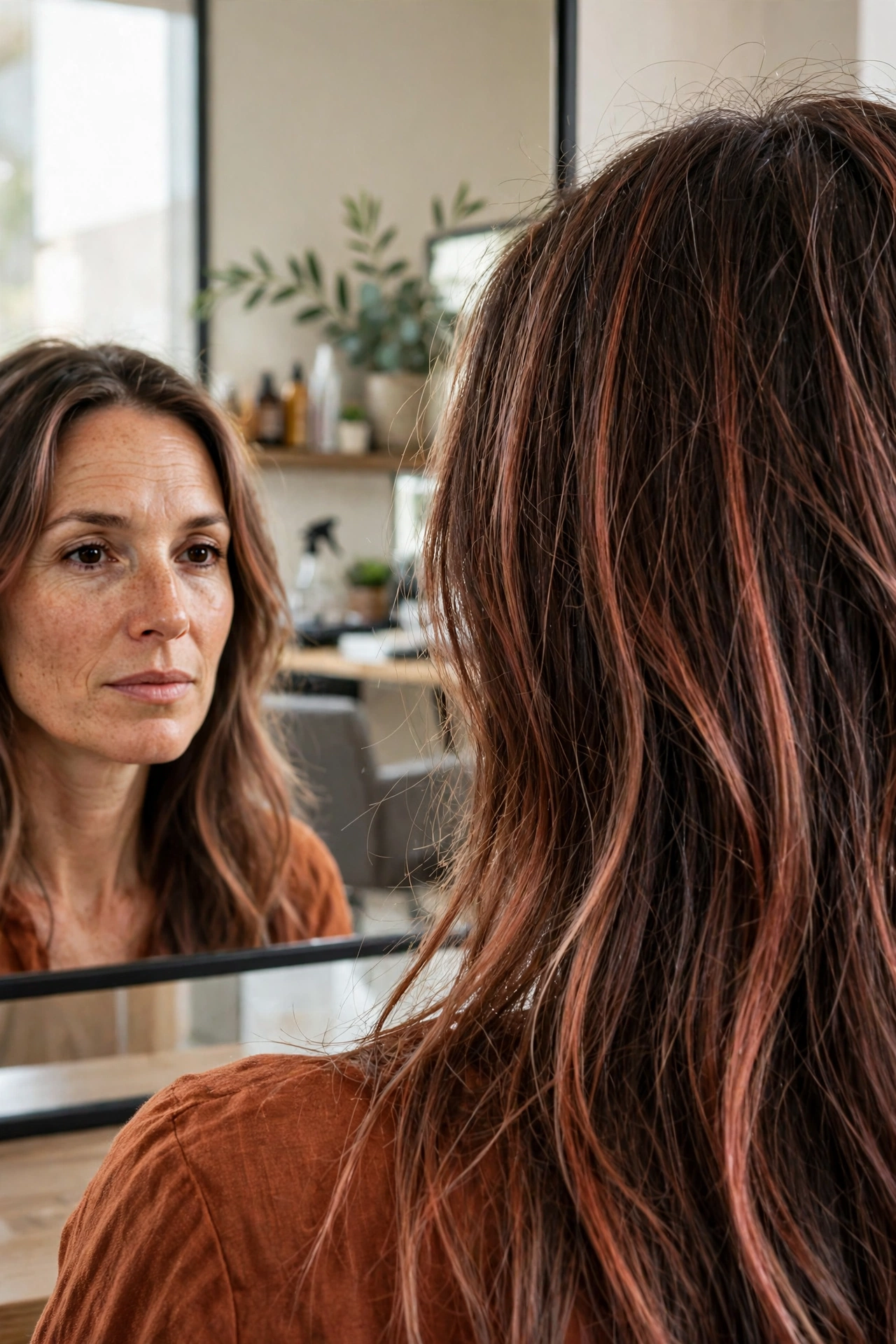
If a full head of copper still feels like too much, balayage is the low-commitment way in. The muted copper is painted through the mid-lengths and ends only, leaving your natural brunette at the roots untouched. There is no regrowth line, no root appointment every four weeks, and if you hate it, the colour lives far enough from your face that a gloss can tone it back to brunette in one visit.
What it looks like in real life
Indoors it reads as brunette hair with warm, sun-caught ends. Outdoors the copper wakes up — soft ribbons of weathered tone through the lengths, never a solid block of colour. It looks best with movement, so wavy and loosely curled hair shows the placement better than pin-straight hair, which can make the painted sections look striped.
Variations worth trying
A face-framing money piece in the same muted copper, kept narrow so it glows without shouting. A low balayage that starts below the chin, for the softest grow-out of all. Or copper only on the underneath layers, which shows when the hair moves and hides when it is tied up — see the cuts that show this placement best in our shoulder-length hairstyles guide.
When to skip it
Skip balayage if your hair is very short — there is not enough length for the painted gradient to develop, and it reads as patchy instead of blended. Skip it too if your ends are already porous from old bleach; the copper will grab unevenly and fade in patches.
The Fade Timeline: Weeks 1, 4 and 8
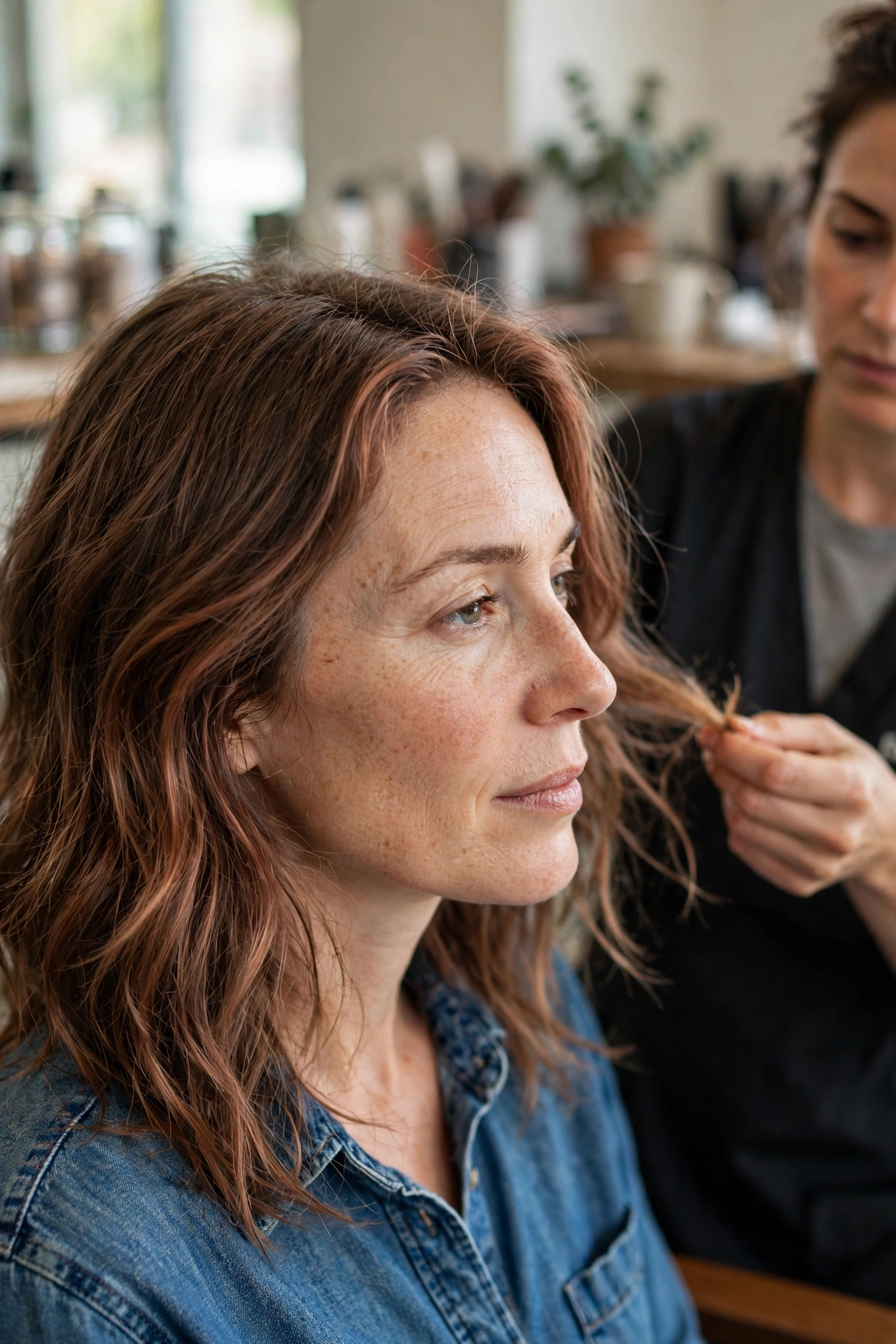
Copper is famous for fading, and oxidised copper is no exception — but it fades differently. Because the starting point is already muted, the fade walks the shade back toward brunette instead of forward toward orange. Week 1 is the richest it will ever look. By week 4 the brightest notes have softened. By week 8 it is a warm brunette with a copper memory, and a gloss brings it straight back.
Who it suits best
Anyone who cannot commit to a four-week root cycle. The eight-week fade is the whole point of this shade: it is built to look good while it fades, not just on day one. Low-maintenance brunettes, busy schedules, and first-time colour clients all get more from this timeline than from a bright copper that needs rescuing by week three.
How to ask for it (or do it at home)
Tell the colourist you want a shade “designed to fade well” and ask what it will look like at week eight, not just at week one. At home, wash less often, use cool water, and keep the toning wash to once a week — over-toning is the fastest way to turn a graceful fade into a muddy one.
Styling and upkeep
Weeks 1–4: colour-safe shampoo, weekly toning wash, heat protection every time. Weeks 5–8: add a copper-depositing mask once a fortnight if the ends look washed out, and book the gloss for week eight before the fade flattens completely.
Toning at Home Without Turning It Muddy
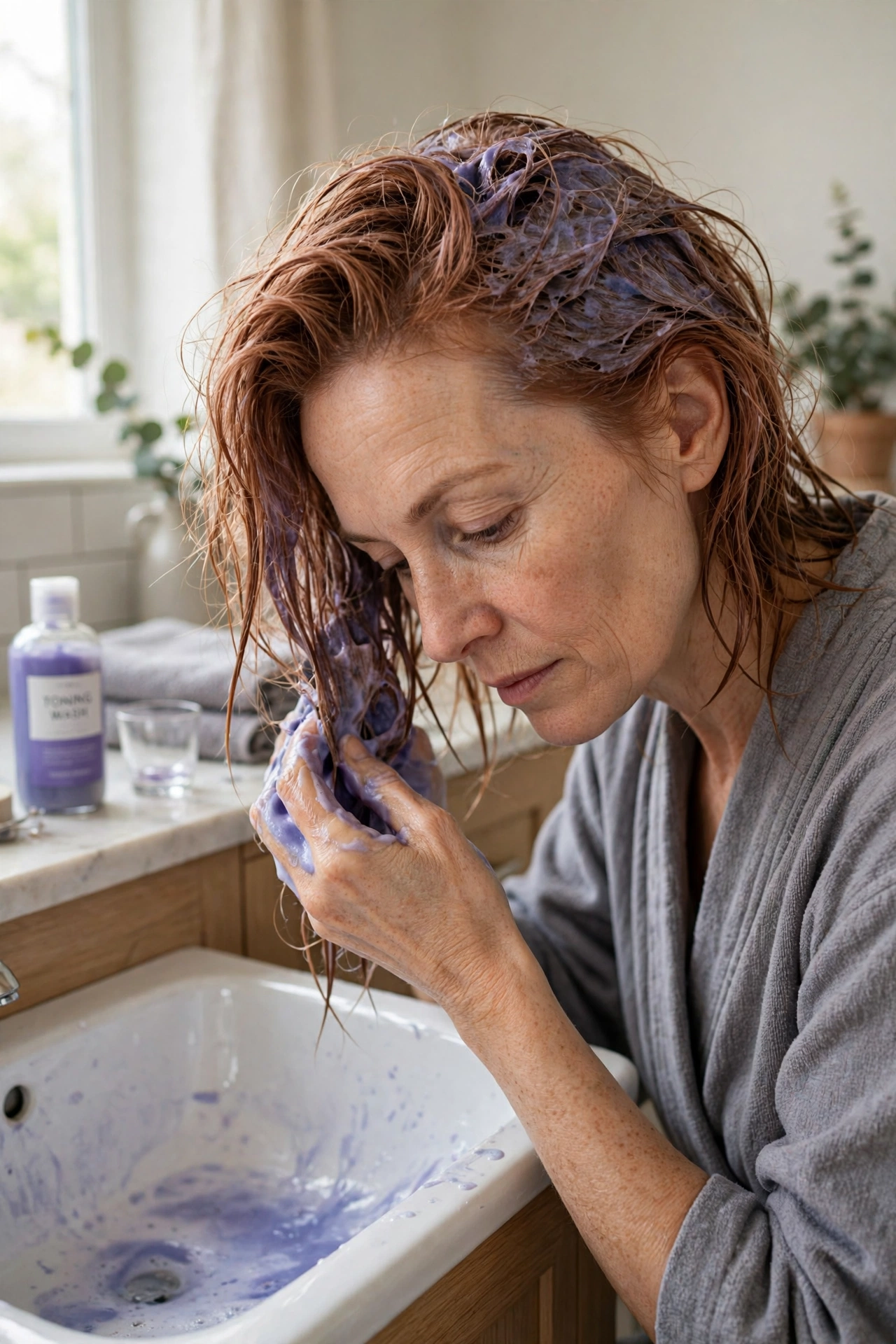
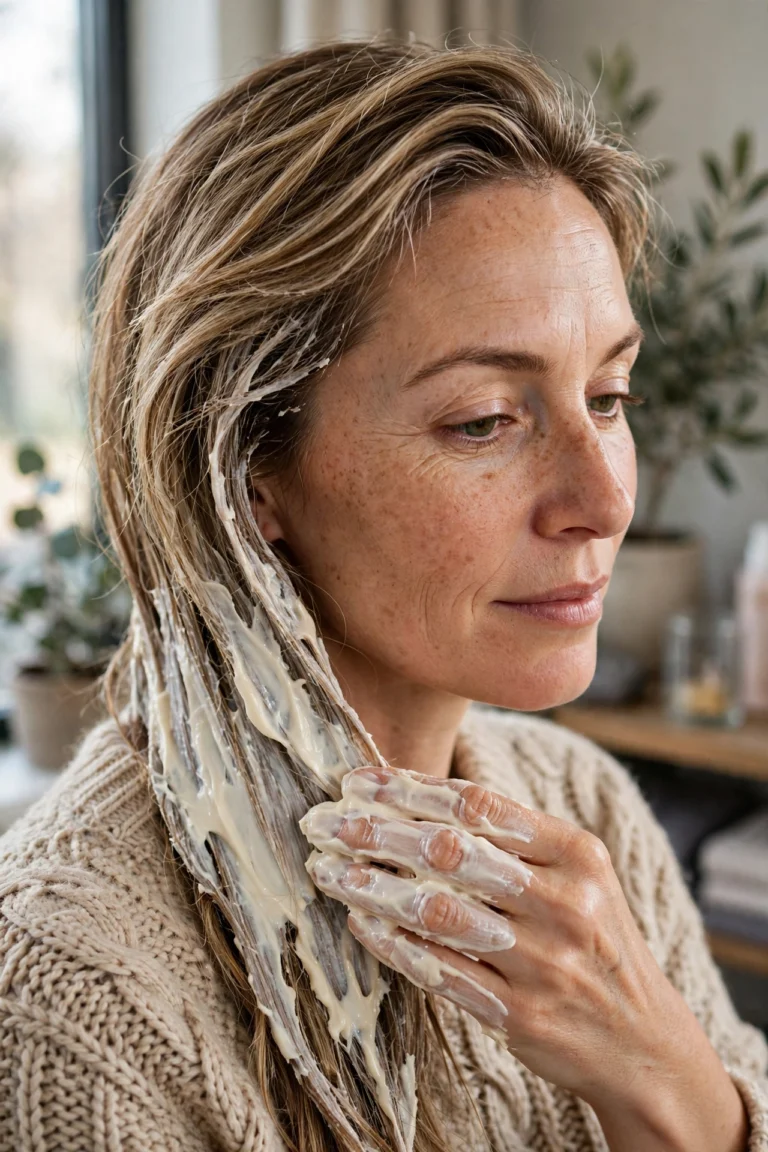
Home toning is where oxidised copper is won or lost. The right toner keeps the orange away; the wrong one — or the right one used too often — pushes the shade grey, green or muddy. The rule is simple: tone little and rarely. One toning wash a week, left on for three to five minutes, is enough for most brunettes. If the hair still looks warm after that, the problem is the underlying lift, not the toner, and no amount of toning will fix it.
The technique, step by step
Wash with your normal colour-safe shampoo first, then apply the toning wash to damp hair from mid-lengths to ends, leaving the roots for the last minute only. Rinse with cool water, follow with conditioner, and check the result in daylight — bathroom light lies about copper. Keep a note of how many minutes you left it on, so the next wash repeats what worked.
Common mistakes to avoid
Toning every wash, which builds up and dulls the shade within a fortnight. Using a purple toner meant for blonde hair — it does nothing for copper and can leave a grey cast. Leaving a blue-green toner on for ten minutes “to be sure” — five minutes is the ceiling for this shade, and the ends always grab faster than the roots.
Products and tools that help
One blue-green toning wash or mask made for copper and red hair, a colour-safe shampoo, and a wide-tooth comb for even application. Do not mix two toning products in the same wash, and do not use a toning product on the same day as a copper-depositing mask — one or the other, never both.
Who Should Skip It: Skin Tones and Bases That Fight the Shade
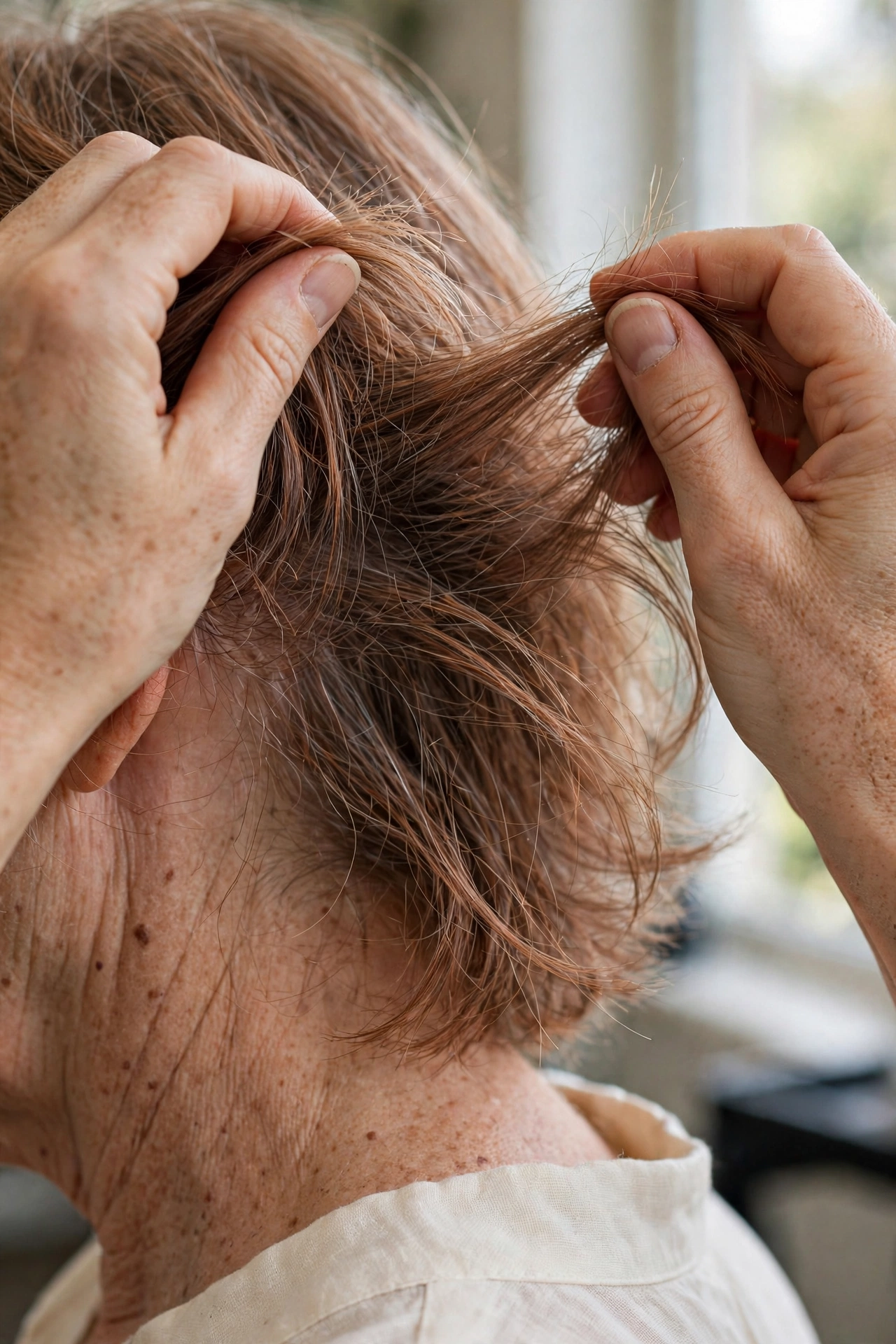
Oxidised copper is forgiving, but it is not for everyone. Very cool, pink-toned skin can clash with even muted copper, making both the skin and the hair look redder than they are — a strand test near the face settles this in one afternoon. Hair that has been bleached white or lifted to pale blonde will grab copper hard and unevenly, and hair with heavy old black dye underneath will lift in patches, so the muted result never lands evenly.
Best for: hair types and face shapes
Warm and neutral skin tones, olive skin, and natural brunette bases from level 4 to level 7. Wavy and curly hair shows the weathered dimension best; straight hair suits the balayage version, where the placement creates the movement the shade needs.
The exact salon wording
“Before we commit, can we do a strand test on the underneath layers and hold it against my face in daylight? If it pulls orange or fights my skin tone, I would rather hear that now than after a full head.” A colourist who welcomes that question is the right colourist for this shade.
Maintenance schedule
If you skip this shade, the maintenance question answers itself — but if you are on the borderline, try the balayage version first with a six-week review. If the fade still looks good at six weeks and your skin still looks calm next to it, the full-head version is a safe next step.
What to ask your stylist: “I want oxidised copper — muted and weathered, not bright. Can you lift me only as far as we need, fill with a muted copper, and finish with a cool gloss? And can you show me what it will look like at week eight, not just today? My biggest fear is orange, so I would rather it start too subtle than too bright.”
Salon Script: Words and Photos to Bring
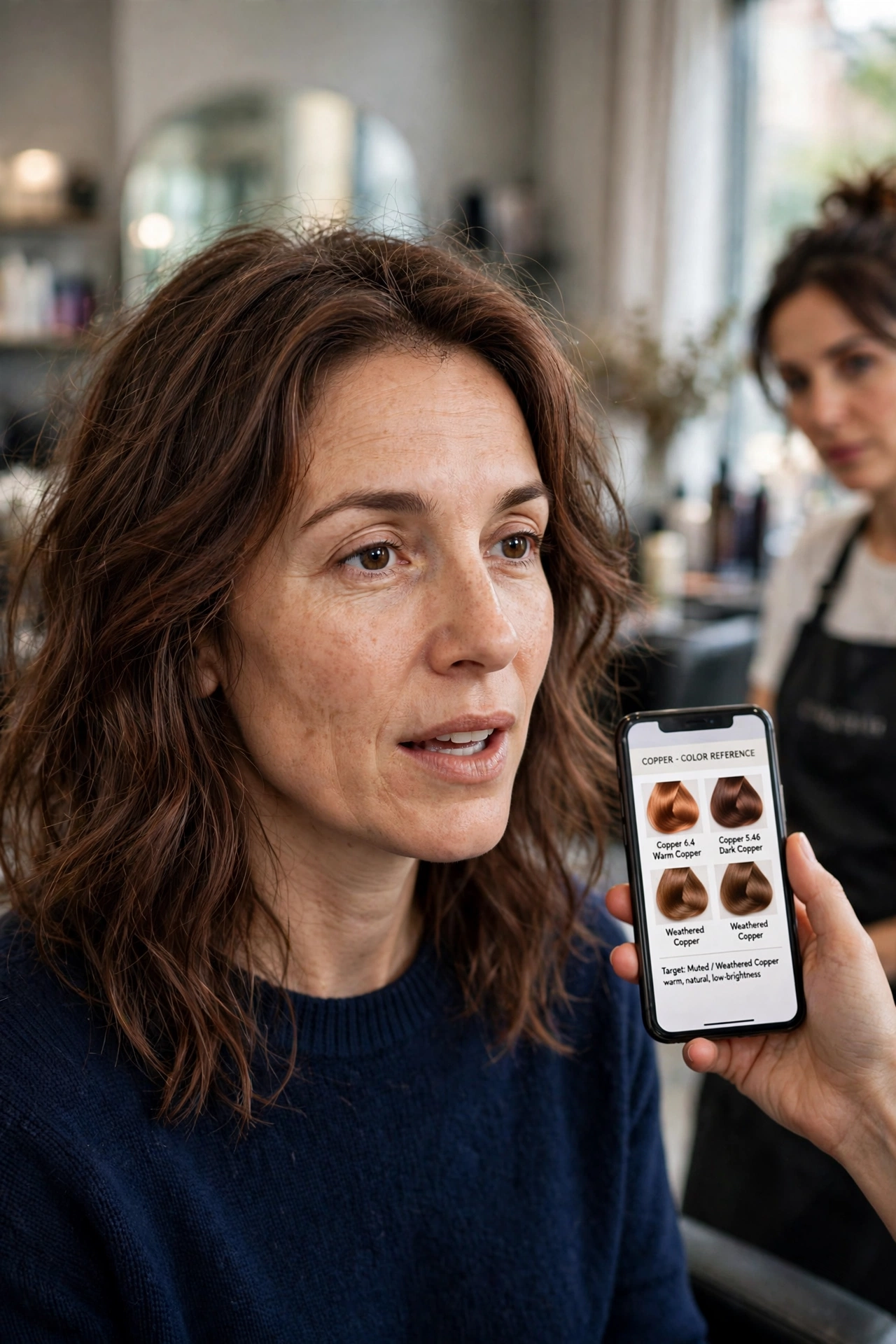
The appointment goes well when the colourist hears the same shade you are picturing, and photos are the fastest way to close that gap. Bring three: one of the muted, weathered copper you want, one of the bright orange copper you do not want, and one of your own hair in daylight so the starting point is honest. Say the words out loud too — “oxidised, muted, weathered” — because a photo alone can be read as brighter than you mean it.
What it looks like in real life
A good consultation takes ten minutes and ends with the colourist repeating the plan back to you: lift level, copper formula, gloss, and the week-eight expectation. If the consultation is thirty seconds and a nod, the shade is a gamble, and this is the shade where gambles turn orange.
Variations worth trying
Ask for the formula written down — level, toner and gloss — so any future colourist can repeat it. Ask for a photo of your hair in daylight at the end of the appointment, so you have an honest reference for the fade. And ask what to do if it does go warm: the answer should be a toning wash, not a darker dye over the top.
When to skip it
Skip the appointment if the colourist will not do a strand test, will not discuss the fade, or promises the colour “will not fade at all”. Copper fades; anyone who says otherwise is selling the appointment, not the shade.
Frequently Asked Questions
What is oxidised copper hair?
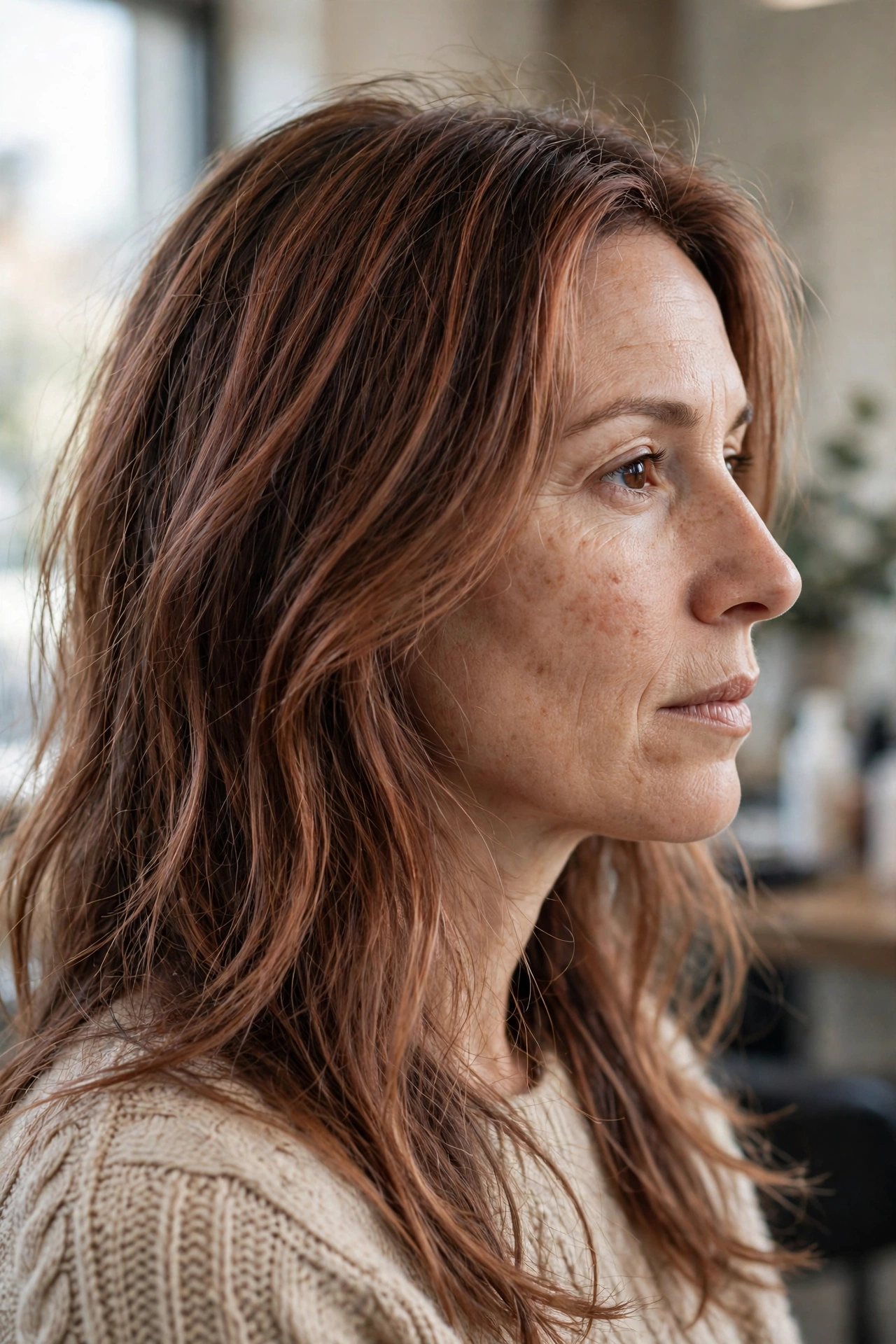
Oxidised copper is copper with the shine knocked back — a muted, weathered copper built on a cool or neutral base, so it reads as a rich brunette with warmth rather than bright orange hair. It is a technique and a tone, not one shade on a chart, and it is designed to fade back toward brunette instead of turning brassy.
How does copper hair fade on brunettes?
On brunettes it fades over about eight weeks: richest in week 1, softer by week 4, and a warm brunette with a copper memory by week 8. Oxidised copper fades more gracefully than bright copper because it starts muted — a gloss at week eight brings the tone straight back without a full recolour.
How do I stop copper hair looking orange?
Start darker and more muted than you think you need, with a cool gloss on top, and keep orange away with a blue-green toning wash once a week for three to five minutes. Wash with cool water, wash less often, and do not over-tone — if the hair still looks orange after correct toning, the underlying lift was too strong and needs a colourist, not more toner.
Conclusion: Oxidised Copper for Brunettes Who Hate Orange — Your Next Step

Oxidised copper works because it respects the fear instead of dismissing it. It starts muted, it fades toward brunette instead of toward orange, and it gives you a way back — a gloss, a toning wash, a balayage that lives far from your roots — at every step. Book the consultation, bring the three photos, say the words “muted, weathered, oxidised”, and ask what week eight will look like. If the answer is honest, you have found the copper that brunettes who hate orange can actually live with.
📌 Save this before your appointment — the salon script and the fade timeline are the two parts you will want open on your phone in the chair.