Mocha Balayage on Naturally Black Hair: 12 Formulas That Show Up Without Going Orange
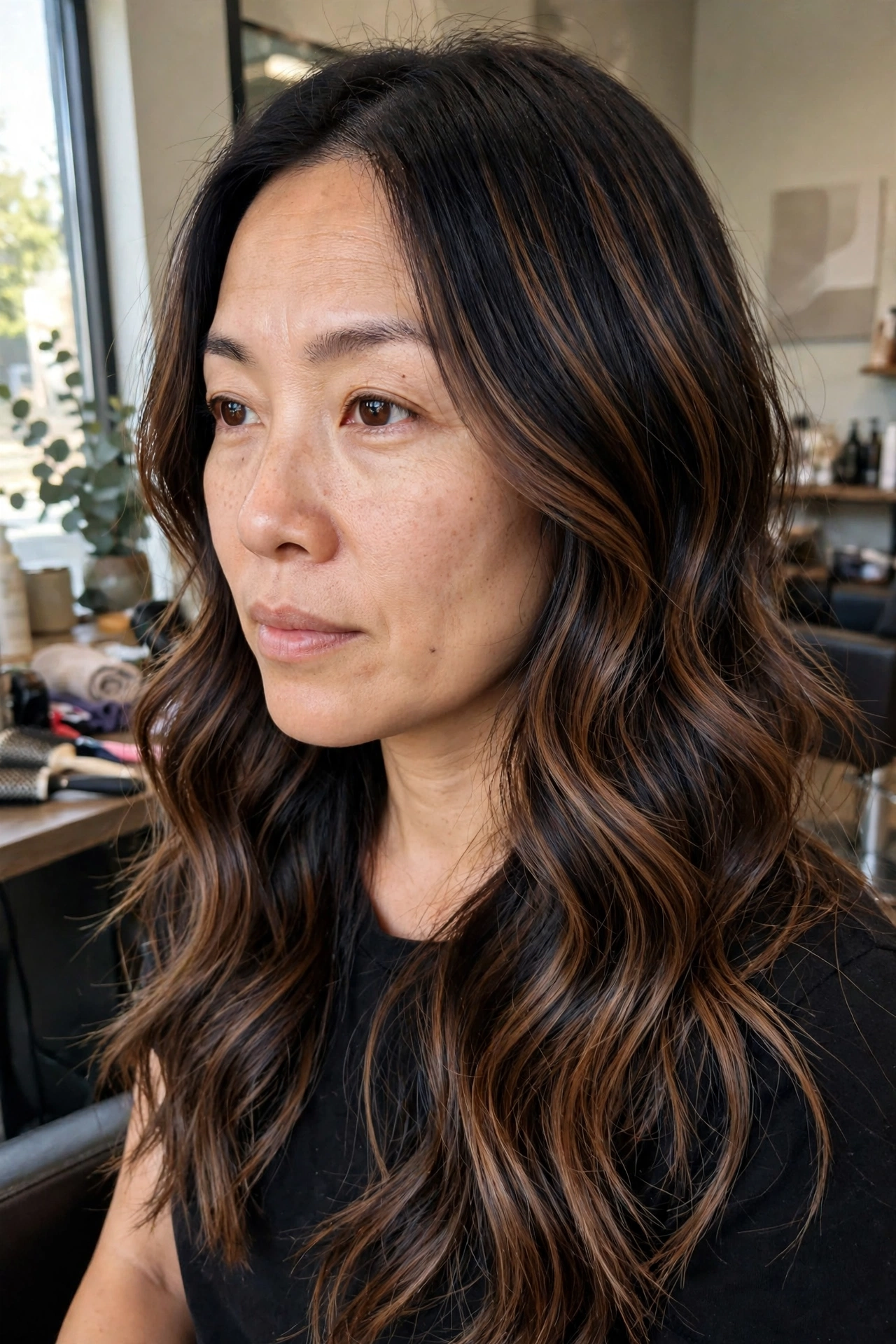
You saved the photos. You booked the appointment. And two weeks later your expensive new balayage turned the colour of a traffic cone. If you have naturally black hair, that story is common — almost every mocha balayage guide is written for hair that is already brown. This one is not. Every formula below is built for naturally black hair, levels 1 to 3, designed to show up without sliding into orange. Inside: 12 formulas in five colour families, exact salon wording, a toner cheat sheet, and an honest answer on sessions. Pinterest searches for mocha balayage jumped +949% in Pinterest’s Beauty Trend Report (6 October 2026). The trick is getting the brown to stay brown.
Quick answer: Lift black hair slowly, only to level 5–6, then tone with a cool ash-mocha gloss — never golden. That is what keeps it brown instead of orange.
Why Black Hair Lifts Orange First (and Why Mocha Works With It)
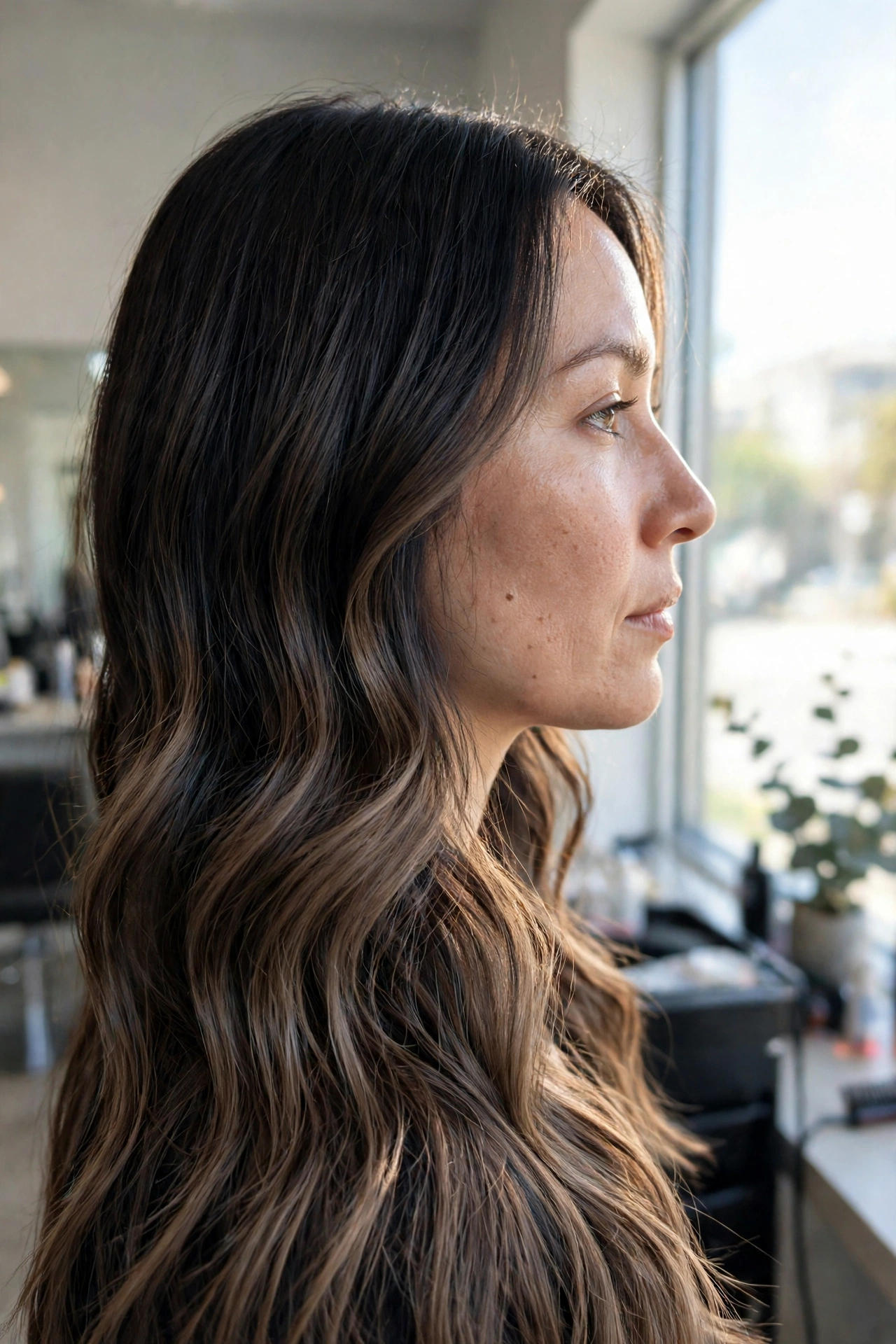
Black hair holds more red and orange underlying pigment than any other natural colour. Lightener does not take it straight to brown — it travels: black, dark red-brown, red, orange-red, orange, then yellow. The skill is stopping at the right stage and neutralising what remains. Mocha works with that journey: a cool-to-neutral brown — coffee with milk — so a level 5–6 lift plus a cool mocha toner lands on rich brown, while golden toners turn it brassy within a fortnight. Hair dyed black before lifts unevenly, in patches — a strand test is non-negotiable.
The technique, step by step
Strand test first. Lift slowly, 20-volume developer, to level 5–6 maximum — never blonde first. Paint mid-lengths and ends, keep roots black, tone ash-mocha, finish with a root melt.
Common mistakes to avoid
Lifting to blonde then toning down; a golden toner; skipping the final gloss; box “mocha” dye, which cannot lift black hair and fades patchy.
Products and tools that help
A bonder, blue colour-depositing conditioner, sulphate-free shampoo, lukewarm water, heat protectant.
Cool Mocha on Level 2–3 Black Hair
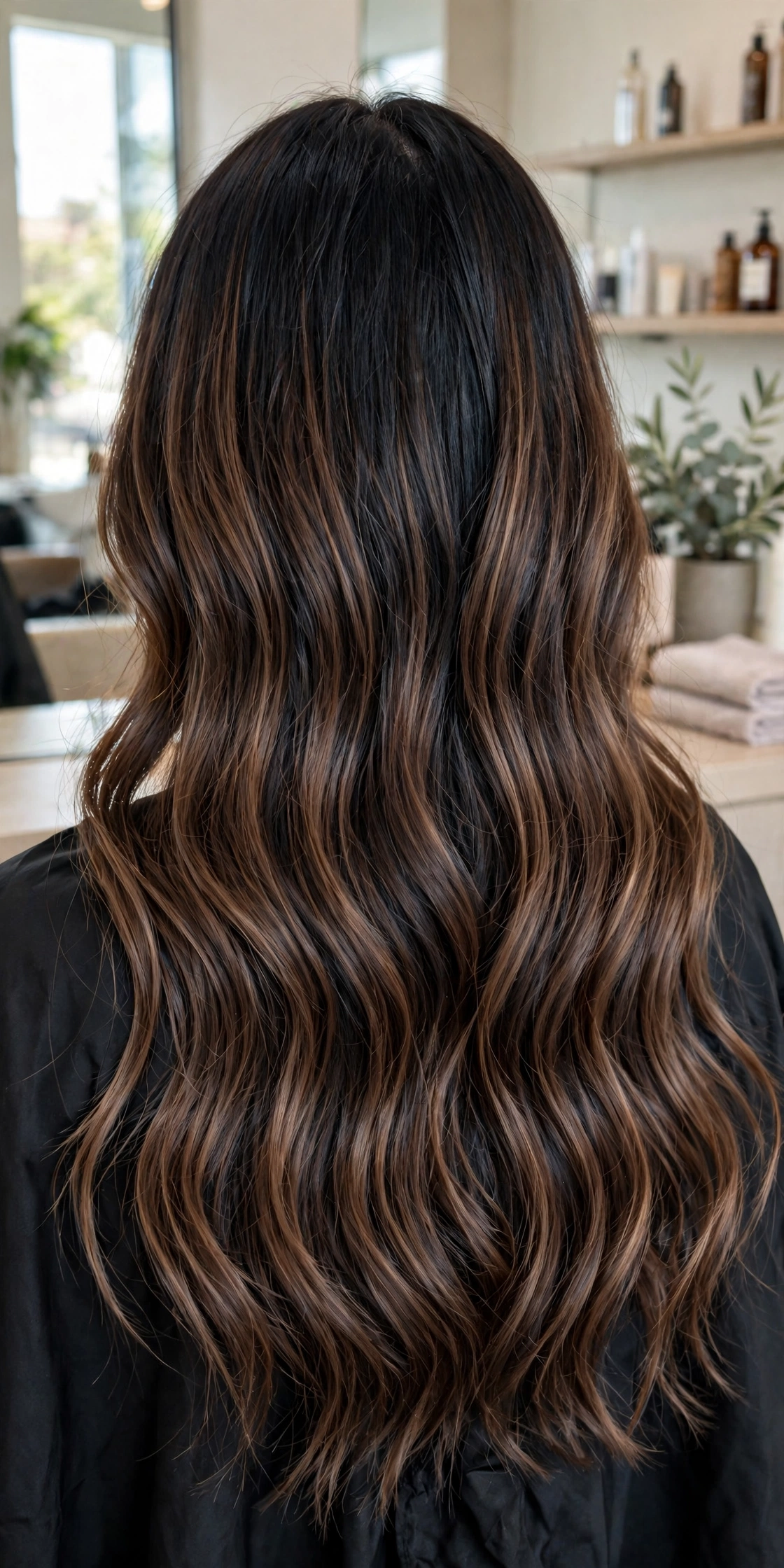
Formula 1 — Classic Cool Mocha. The reference look for the darkest bases: lift to level 5, tone cool mocha, roots untouched. Subtle indoors; clearly brown in daylight. The lift stays low, so there is barely any orange to fight — the safest first balayage on virgin black hair. Formula 2 — Cool Mocha on previously dyed black hair: same shade, gentler route — lower lift, gloss-led first session, strand test to map the old dye; full depth arrives at session two.
Best for: hair types and face shapes
Straight and wavy hair show this blend best; low placement suits every face shape. It flatters fair and medium skin most; on deep skin ask for neutral-cool, not grey-ash. Fine hair? Finer, fewer ribbons — and a fuller-looking cut, like those in our bob hairstyles for thin hair guide.
The exact salon wording
“My hair is naturally black, level 2–3. I want mocha balayage lifted to level 5 maximum, toned cool ash-mocha, root melt in my natural colour. No blonde ends, no golden toner. Can you strand-test first?”
Maintenance schedule
Gloss every 6–8 weeks, full re-balayage every 3–4 months, blue conditioner weekly.
Chocolate-Mocha Melt for Level 4 Brunette-Black Hair
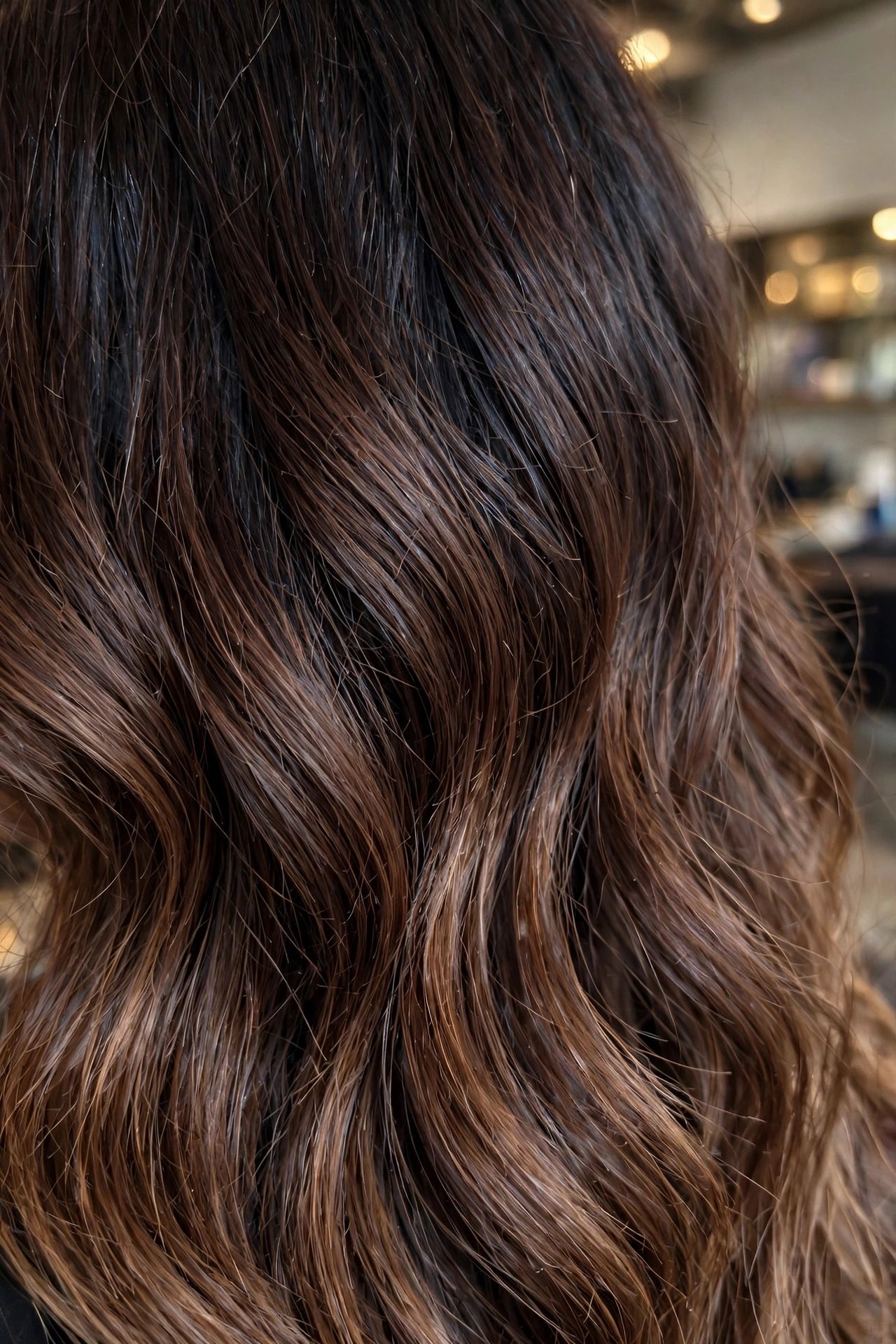
Formula 3 — Chocolate-Mocha Melt. If your natural hair is level 4 — the deepest brown that still reads brown in sunlight — you start one step ahead. Chocolate-mocha is deeper and warmer, with a hint of chocolate-red that appears only in direct sun. The discipline is the toner: keep it cool-mocha, not warm-chocolate, or by week four the red takes over and the colour reads auburn.
What it looks like in real life
Indoors: almost black, with movement you can see but not name. In sunlight: a rich chocolate-brown wash. Judge it from the back, where bad blends show stripes — this one simply melts.
Variations worth trying
Formula 4 — Deep Chocolate-Mocha for long hair. Formula 3 half a shade deeper, through the lower two-thirds. The depth stops long ends looking thin — the best autumn–winter version.
When to skip it
Skip the melt if your hair pulls strongly red — chocolate amplifies it — or you want high-contrast lightness. Cool Mocha (Formula 1) serves you better.
Espresso-Mocha With a Soft Money Piece
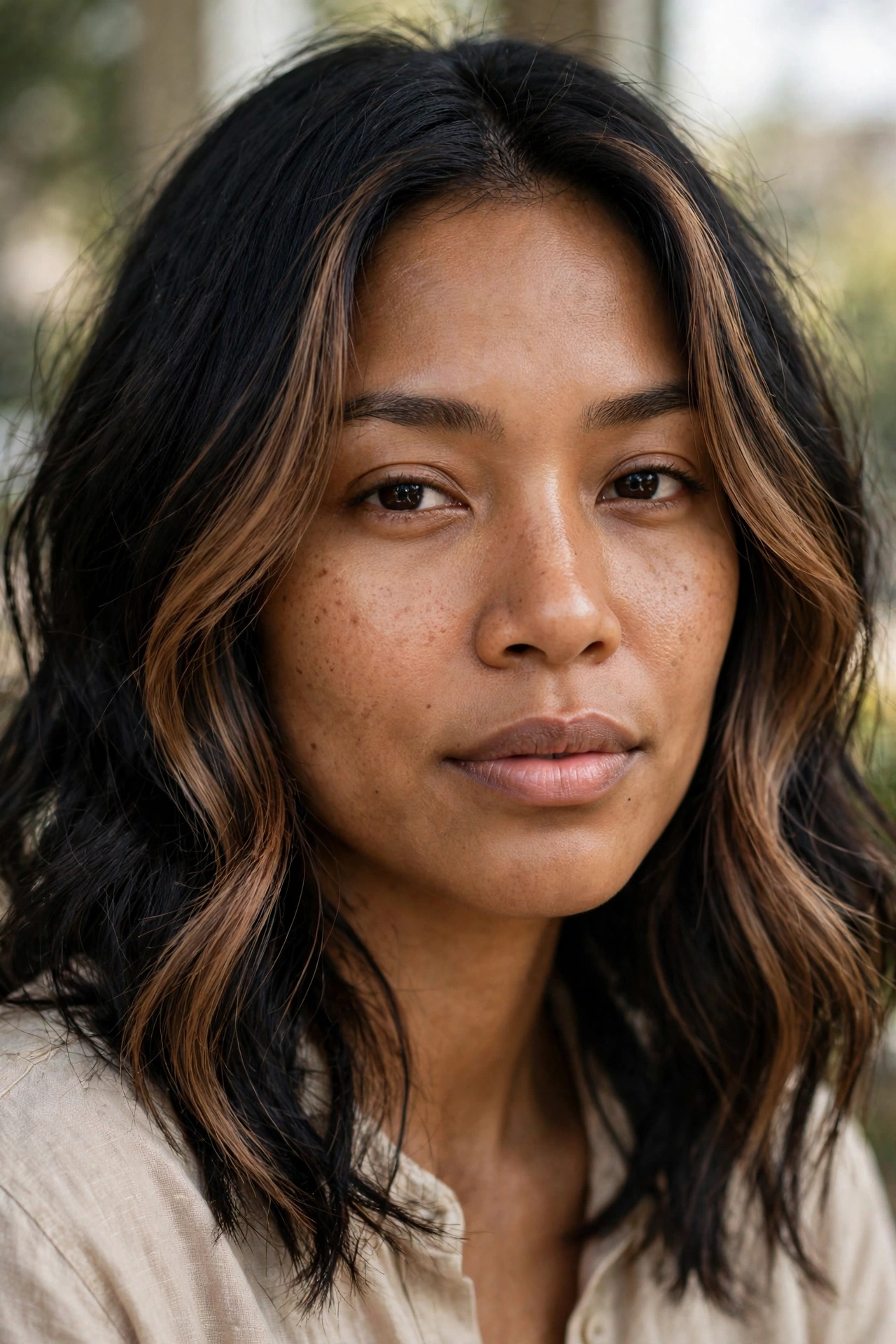
Formula 5 — Espresso-Mocha lengths with a soft money piece. Espresso-mocha is mocha at its quietest: level 4–5, one step lighter than black, visible mainly where light hits. The brightness comes from two face-framing pieces — the money piece — kept one level lighter than the lengths, same ash-mocha tone, so they read as lighter, never a different colour. Formula 6 — Money piece only. Just the face frame: roughly half the price, an hour less in the chair, grows out invisibly.
Who it suits best
First-timers, strict workplaces, and anyone nervous about lightening all their hair. On dark and warm skin the face frame genuinely glows — hold a swatch against your jawline in daylight first.
How to ask for it (or do it at home)
Ask for “espresso-mocha through the lengths, a soft money piece one level lighter, same ash-mocha tone, nothing golden near my face.” At home: gloss refresh yes, lightening no — that is where orange is born.
Styling and upkeep
Loose waves show it best; a low ponytail with the front pieces out is the two-minute version. Re-tone the face frame at every gloss visit — it fades fastest.
Ash-Mocha for Hair That Always Pulls Warm
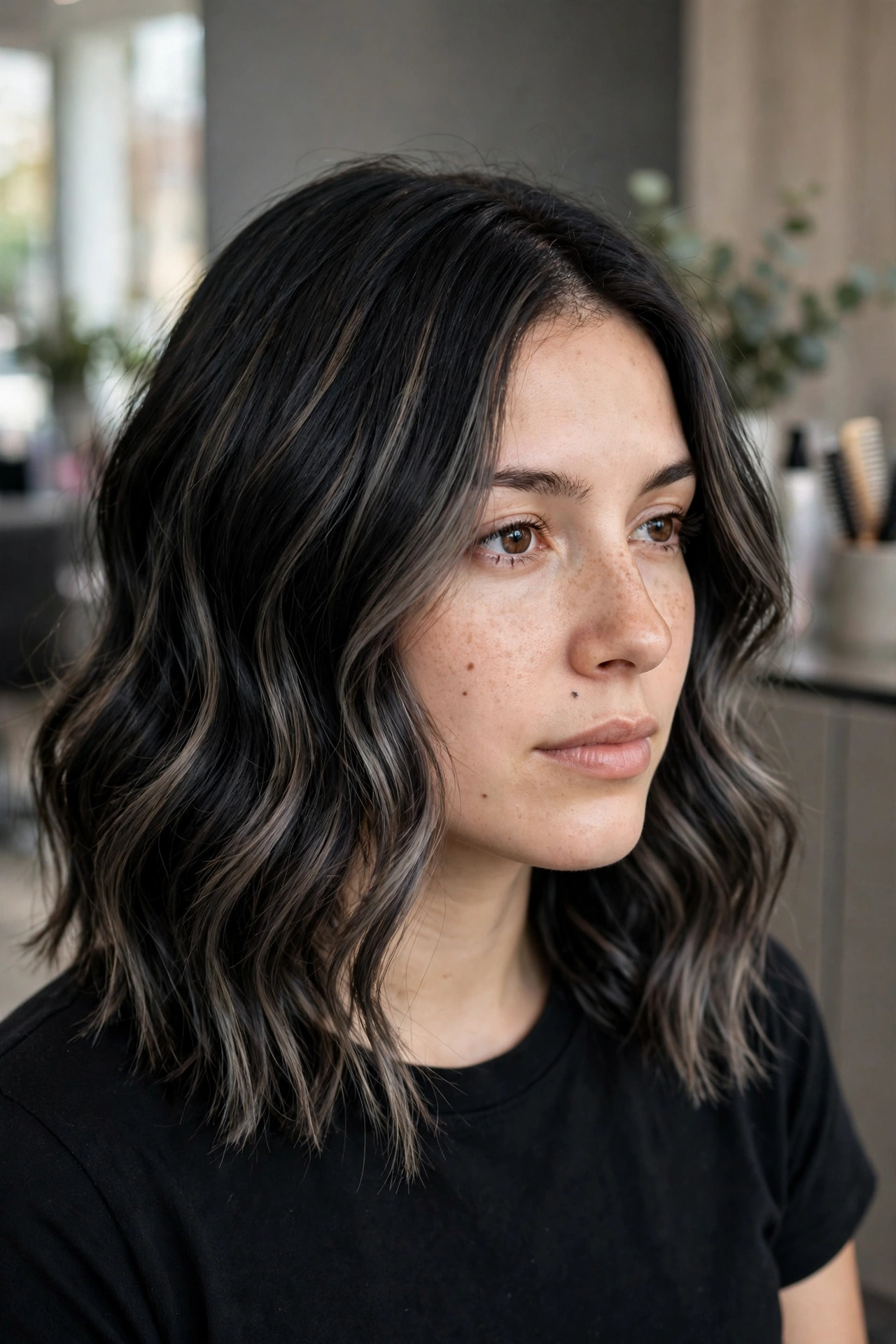
Formula 7 — Ash-Mocha. Some black hair pulls warm no matter what: tone it cool on Saturday, and by the next weekend it glows copper again. That hair needs the coolest seat in the mocha family — lift to level 6, tone ash-mocha (in salon lines, usually the .12, .7 or .17 families, never the .3 or .4 golden families), finish with a smoke-toned gloss. Formula 8 — Smoke-Mocha. For the strongest warm-pullers: same lift, ash one notch cooler, gloss left smokier. It photographs almost mushroom-brown — the hardest of all twelve formulas to push orange.
The technique, step by step
Resist over-lifting — warm-pulling hair is usually lifted too far, exposing more orange than any toner can hold. Tone on damp hair and watch the clock: ash grabs fast on porous ends.
Common mistakes to avoid
Leaving ash toner on “a bit longer for luck” — porous ends repay you with a grey-green cast. And put down the purple shampoo — purple neutralises yellow, not orange.
Products and tools that help
Blue-based shampoo or conditioner weekly (blue cancels orange — see the cheat sheet below), a weekly moisture mask, gloss at six weeks, not eight.
Lived-In Mocha Ribbons for Thick, Long Hair
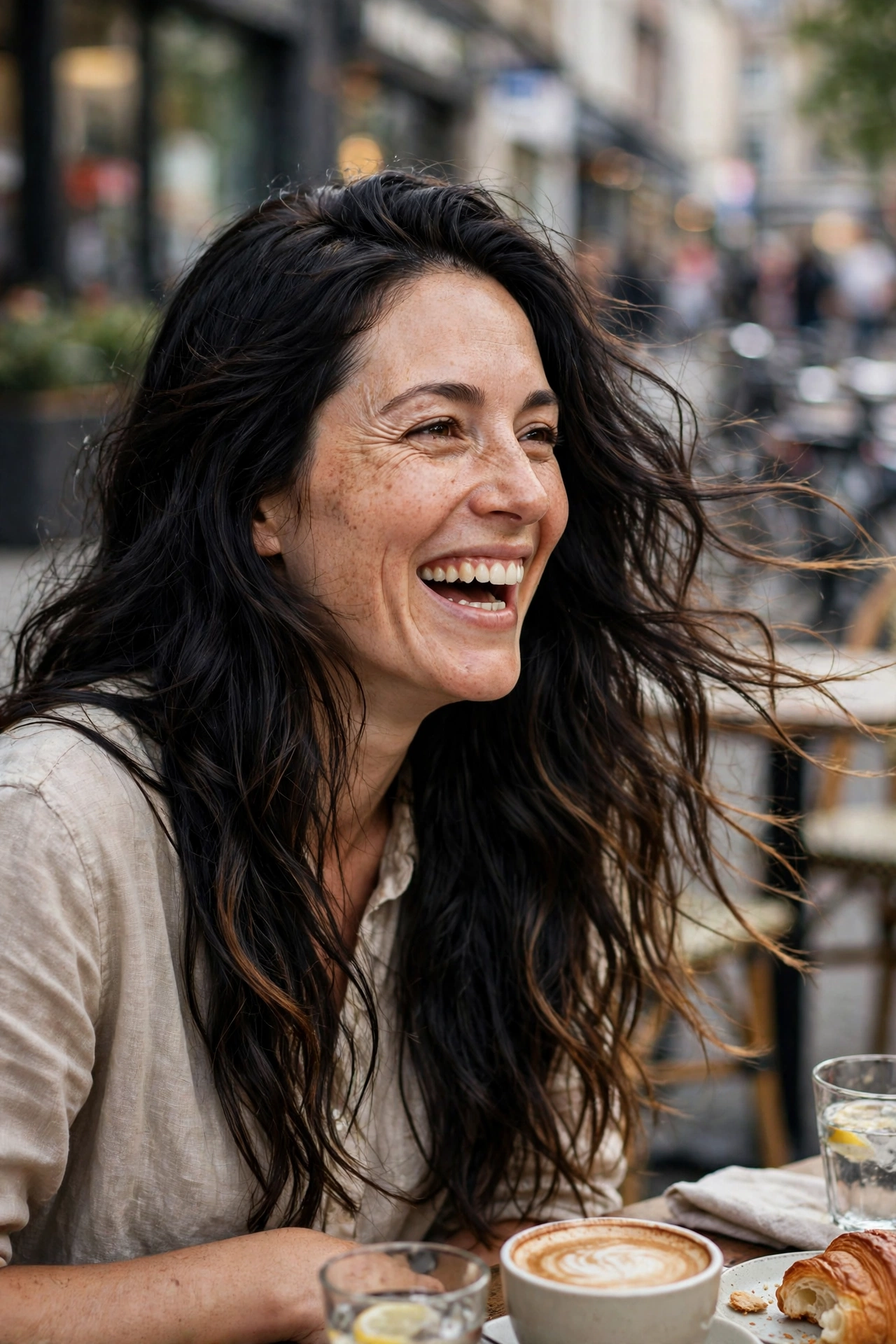
Formula 9 — Lived-In Ribbons. For thick, long hair, the most flattering placement is the laziest-looking: fine mocha ribbons of colour through mid-lengths and ends, top third left black. Grow-out is the softest here — three to four months between full appointments, only a gloss in between. Formula 10 — Shoulder-length lived-in mocha: the same idea compressed, colour starting lower, lightest only at the ends (see the cuts in our shoulder-length hairstyles guide). Formula 11 — Curly mocha ribbons: painted on the outer curls only, because colour inside a curl pattern disappears — and go half a level darker than your chosen swatch, since curls read lighter once dry.
Best for: hair types and face shapes
Thick, wavy and curly hair wear this best; fine hair should borrow Formula 1’s finer placement. Ribbons at cheekbone height lengthen a round face.
The exact salon wording
“Lived-in mocha balayage — fine ribbons through mid-lengths and ends only, top third stays my natural black, toned ash-mocha, root melt in my own colour.”
Maintenance schedule
Full balayage every 3–4 months, gloss every 6–8 weeks, weekly deep mask, trim at every second gloss.
Mocha Gloss Refresh Between Salon Visits
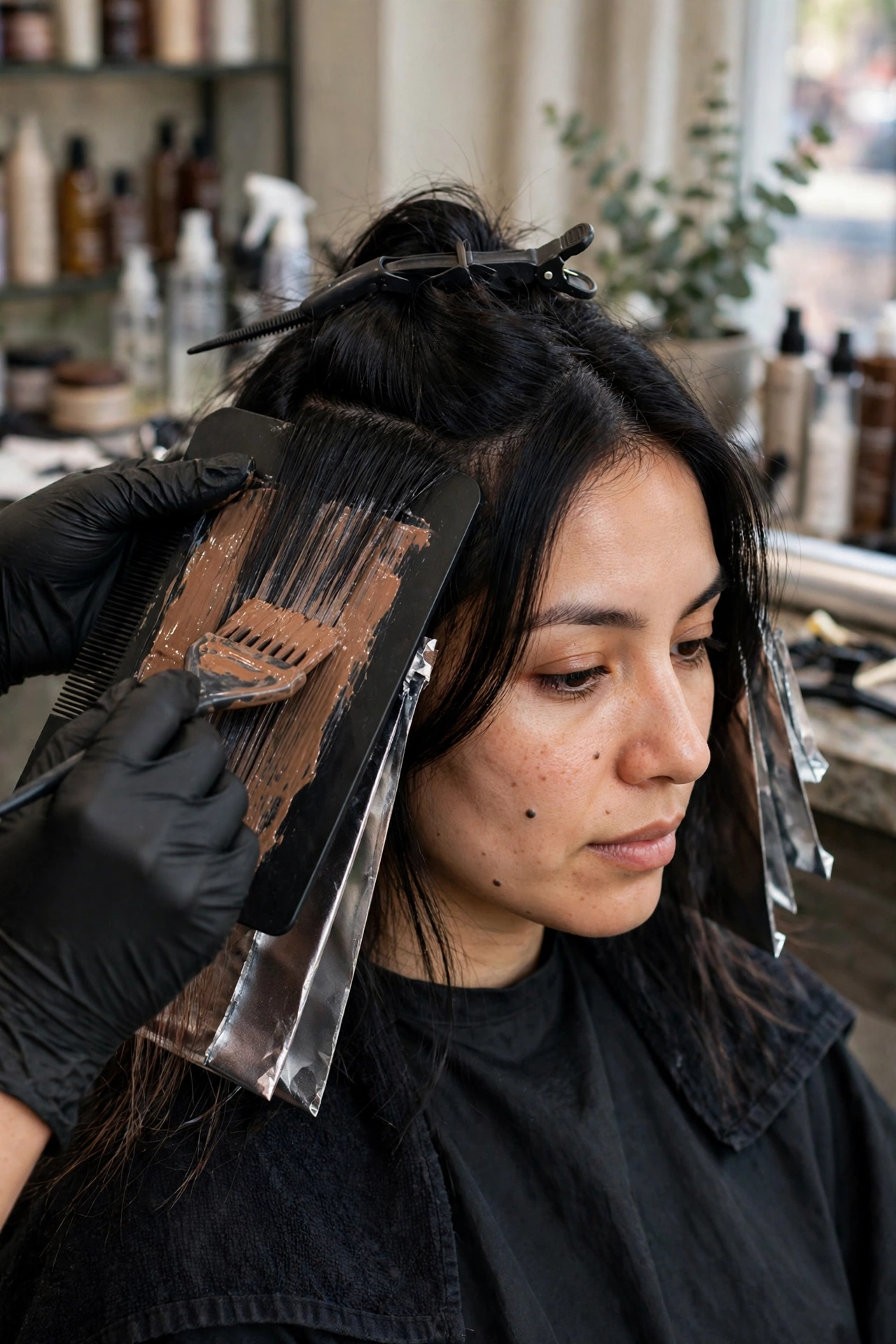
Formula 12 — The gloss refresh (no re-lightening). This formula makes mocha balayage affordable across a year. At six to eight weeks your placement is still perfect — only the tone has faded. A demi-permanent mocha gloss takes twenty minutes, restores the cool brown, seals the cuticle and adds shine — zero extra lightener damage. One full balayage plus three glosses a year beats three full balayages on price, time and condition.
What it looks like in real life
Weeks 1–2: richest and coolest — the photo colour. Weeks 3–4: slightly warmer, still brown indoors. Weeks 5–6: ends may look brassy in sunlight — the booking signal, not a disaster. Week 8 with no gloss: orange at the ends — normal, and reversible in one appointment.
Variations worth trying
A clear gloss when only the shine has gone, or a mocha gloss half a level deeper for winter.
When to skip it
Grown out past four months, or showing bands and stripes? A gloss will not fix it — gloss restores tone, not placement.
The Toner Cheat Sheet: Blue, Violet and Smoke
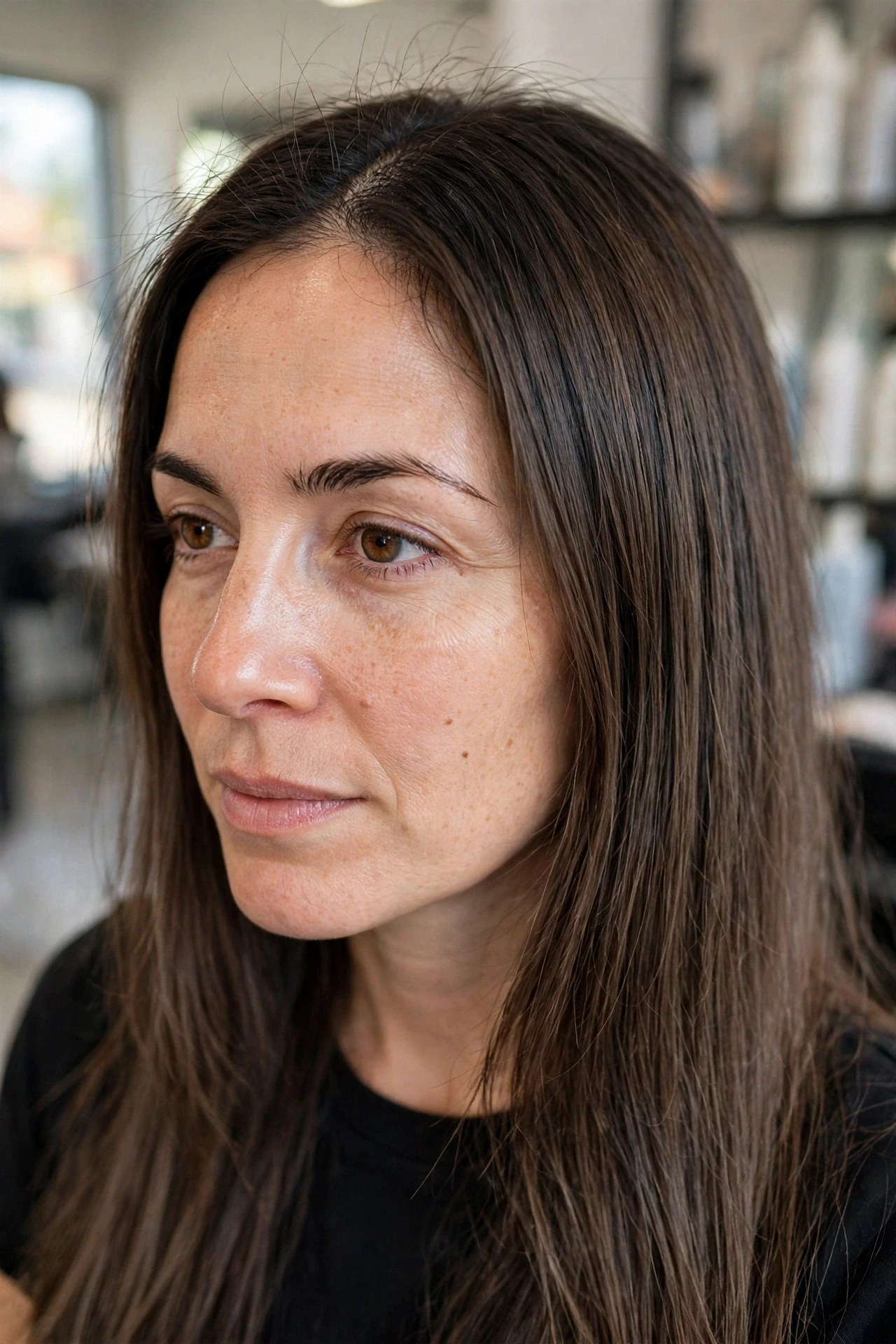
Toner choice follows one colour-wheel rule: the opposite tone cancels the unwanted one. Orange → blue: lengths at level 5–6 showing orange need a blue-based ash-mocha toner or gloss. Yellow → violet: yellow means the hair was lifted further than mocha needs — violet neutralises it, but lift less next time. Brassy orange-yellow → blue-violet smoke, the in-between stage most black hair lands in. Faded but not brassy → a neutral mocha gloss. And golden toners on black hair? Never — gold plus orange equals brass, every time.
Who it suits best
Anyone choosing a toner with their colourist. Bring this section to the appointment — it turns “make it less warm” into a precise request.
How to ask for it (or do it at home)
Ask your colourist to write down the exact gloss formula, so any salon can repeat it and you can match a depositing conditioner to it. At home, deposit-only products only — home lightener is not beginner territory.
Styling and upkeep
A mocha tone lasts six to eight weeks. Heat fades it fastest — faster than washing — so heat protectant is not optional.
Save the cheat-sheet image above to your hair board before your appointment — blue for orange, violet for yellow is the one table you’ll want open in the salon chair.
How Many Sessions to Book (and What to Ask For)
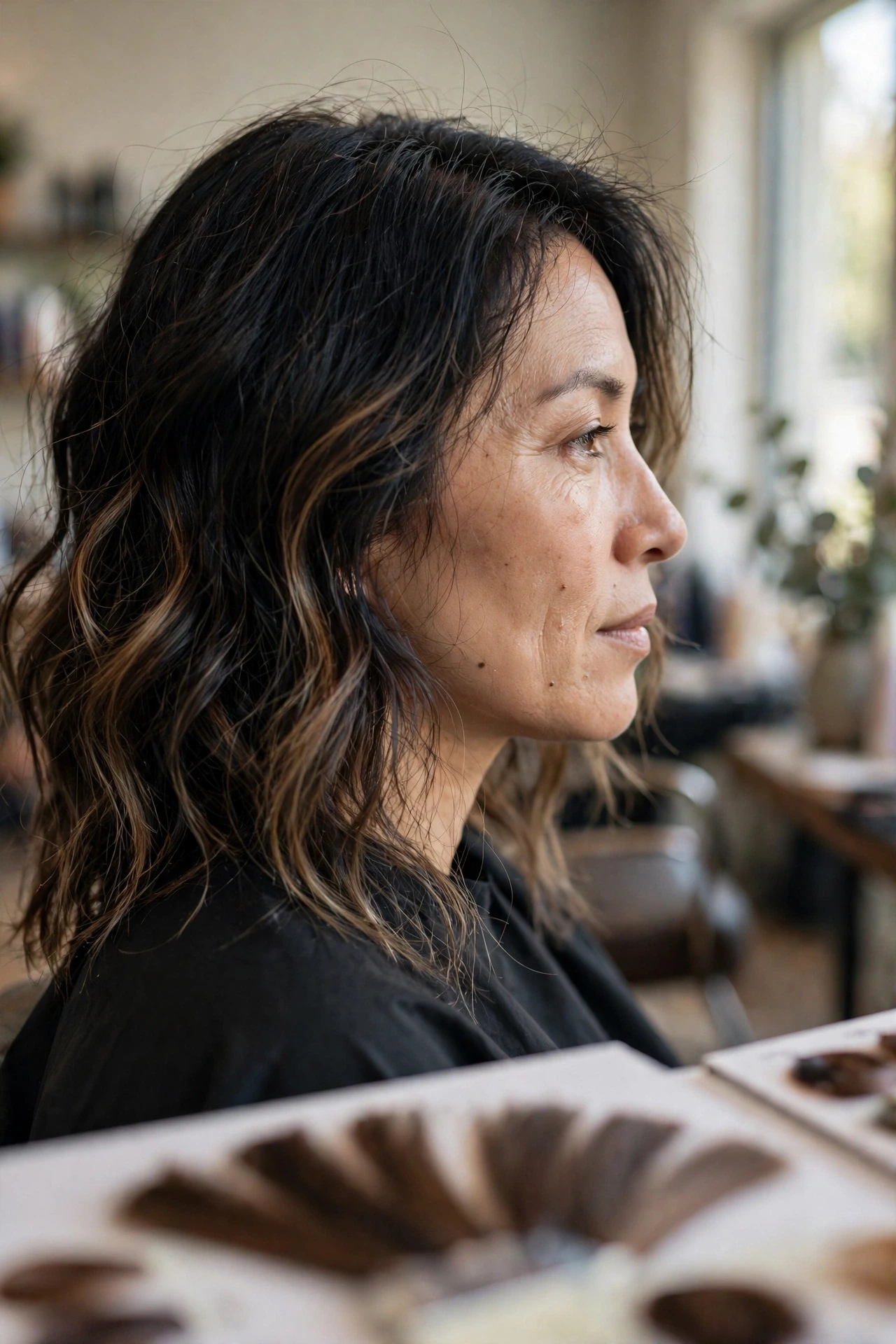
The honest answer: most naturally black hair needs exactly one session — mocha only asks for a level 5–6 lift. Book two sessions if your hair has been dyed black before (old dye lifts in patches), if it is very long or thick, or you want the brightest level 6. A strand test settles it — if a colourist will not do one, find another. Allow 2.5 to 4 hours for long hair, about 2 for shoulder-length. As a rough guide, US salons typically charge $150–$350 and UK salons £120–£280 for a full balayage on black hair, a money piece around half that. Get the quote in writing.
The technique, step by step
Consultation and strand test first, then agree the plan before any lightener is mixed: target level, developer volume, toner family, first gloss date.
Common mistakes to avoid
The expensive one is silence: not mentioning the black box dye from two years ago. It is still in your lengths and will lift orange in bands.
Products and tools that help
Ask three questions: What developer volume? (20, for mocha.) Will you use a bonder? (Yes.) How long will the gloss last? (Six to eight weeks is honest.)
Frequently Asked Questions
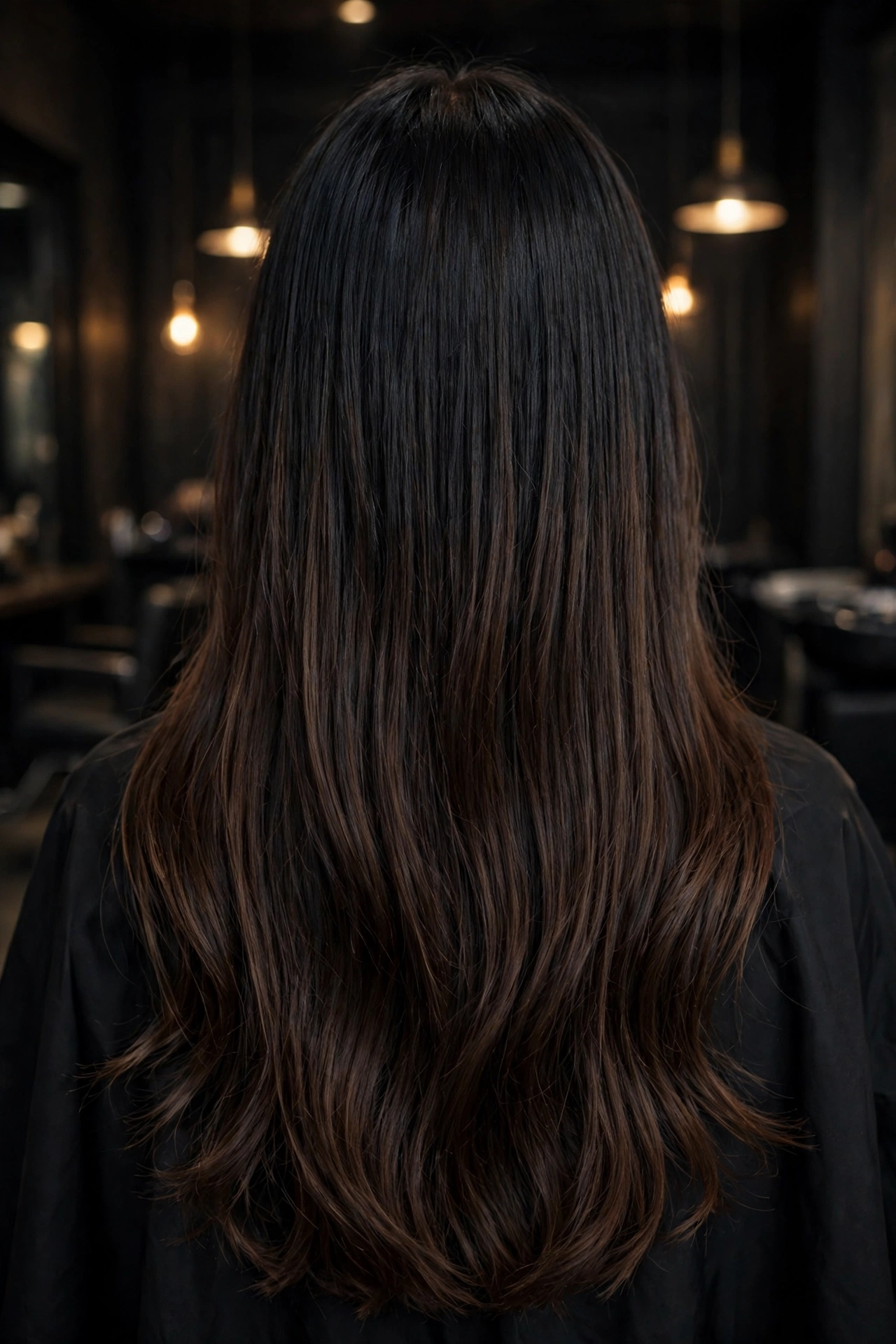
Why does balayage go orange on black hair?
Because black hair carries the most red-orange underlying pigment of any natural colour, and lightening exposes it. Balayage turns orange when the hair is lifted too far or too fast, or toned with something warm. Lift slowly to level 5–6 and tone cool-mocha, and the orange is neutralised instead of displayed.
What toner cancels orange after balayage on dark hair?
A blue-based toner — in practice, an ash-mocha gloss: blue sits opposite orange on the colour wheel and cancels it directly. Violet toner cancels yellow, not orange; using it on orange hair is the most common at-home toning mistake. Between orange and yellow? A blue-violet smoke toner covers both.
How many sessions does mocha balayage on black hair take?
Usually one. Mocha needs only a gentle lift to level 5–6, which never-dyed black hair reaches in one 2–4 hour appointment. Previously dyed black hair, or very long and thick hair, usually takes two sessions spaced a few weeks apart.
Conclusion: Mocha Balayage on Naturally Black Hair — Your Next Step
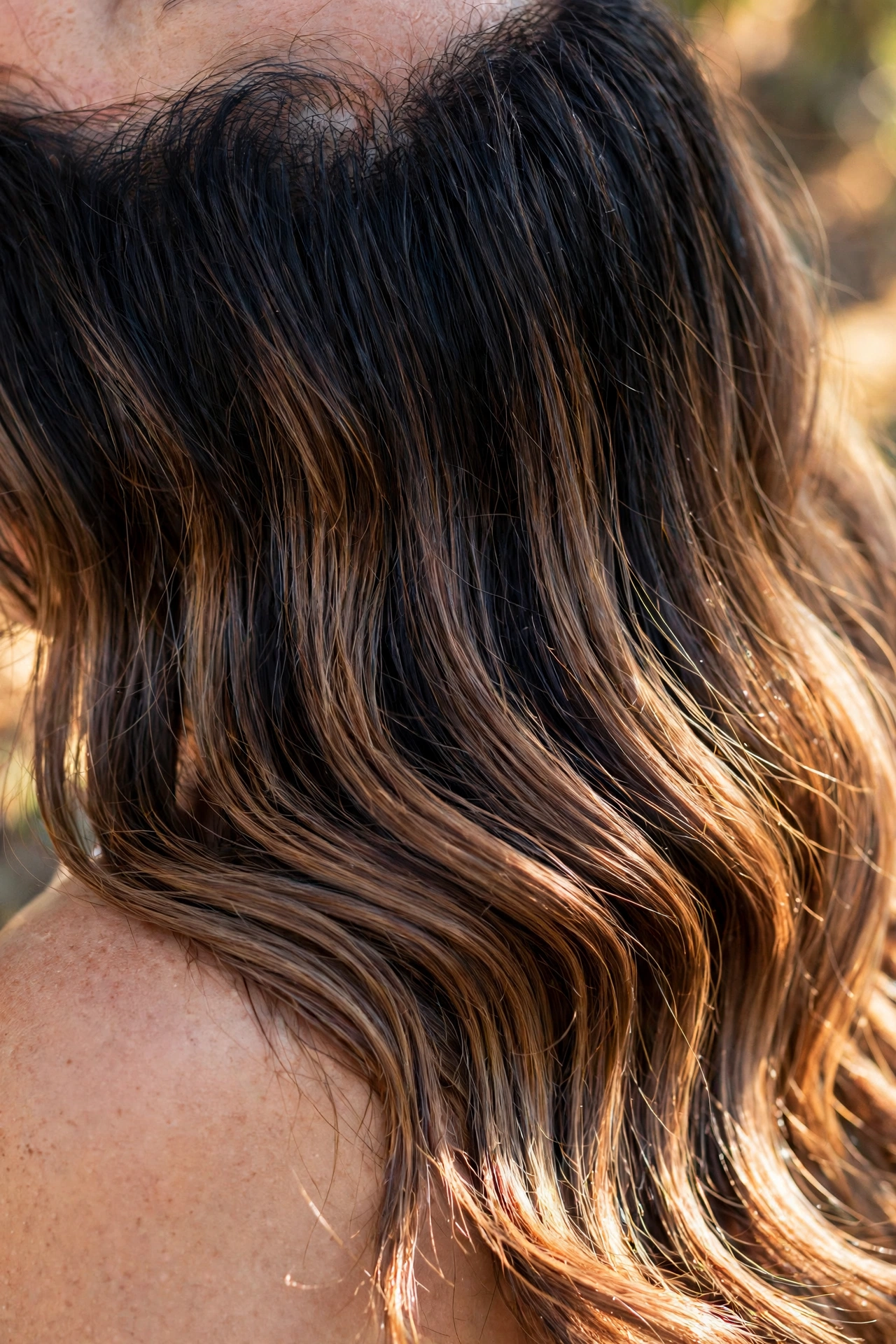
Mocha balayage on naturally black hair is not about going lighter — it is about going browner, in the right undertone. Lift low, tone cool, gloss on schedule, and black hair stays rich brown instead of orange. So pick your family — Cool Mocha, Chocolate-Mocha Melt, or Espresso-Mocha with a money piece — save the photo at the top to Pinterest, and show your colourist the exact wording from that section. And insist on the strand test — it tells you how your hair lifts, which toner it needs, and whether your colourist truly understands black hair.
Images are original illustrations created for this article, not photographs of real salon clients.


