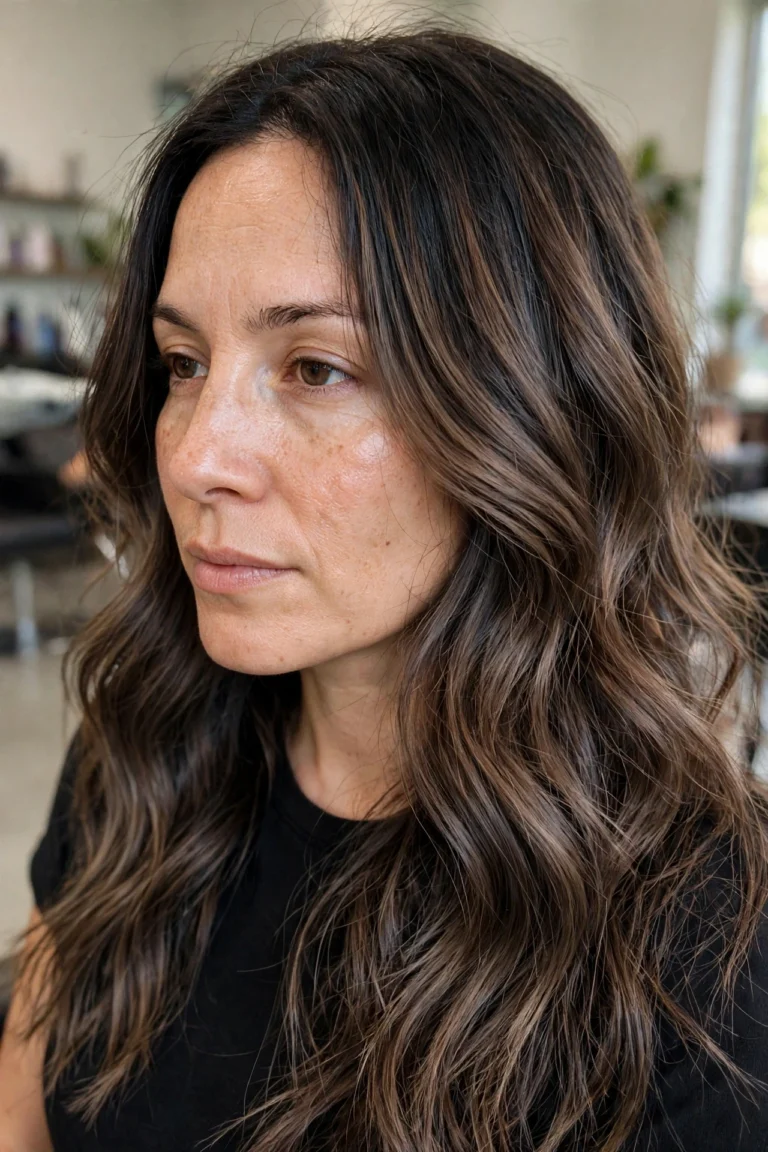
Winter Hair Care Routine for Dry, Static-Prone Hair: The Moisture-First Reset

You walk out with smooth, brushed hair, and by the time you reach the car it is standing up, crackling, and clinging to your scarf. Winter does this to almost everyone, but it is worst on hair that is already dry, fine, colour-treated, or long. This article is for that exact reader. The fix is not one miracle product. It is a small routine, done in the right order, that puts moisture back in before winter air takes it out.
Quick answer: Wash less often with a gentler cleanser, deep-condition once a week, layer a leave-in under a light oil, and cut static at the source with silk, loose braids, and less friction. Most hair feels softer within a week.
Why Winter Air Steals Moisture (Cold Outside, Heating Inside)

Cold air holds very little moisture, and heated indoor air is even drier, so your hair loses water from both sides all day. The outer layer of each strand lifts slightly in dry air, letting moisture escape and static charge build up. That is why winter hair feels rough, looks dull, and flies away the moment you take a hat off.
What it looks like in real life
Hair that was soft in October turns straw-like by December: ends that catch on each other, flyaways around the parting, and strands clinging to wool jumpers. The scalp often joins in, feeling tight and flaky.
Variations worth trying
Fine hair needs moisture on the lengths only, kept off the roots. Thick or curly hair can take a richer cream and a weekly oil soak on the ends. Colour-treated hair benefits most from a monthly salon gloss.
When to skip it
Skip heavy oils and butters if your hair is very fine and goes limp easily — they weigh it down faster than they help. Skip daily washing too; it strips the little natural oil winter hair has left.
The Wash-Day Swap: Cleansers That Don’t Strip
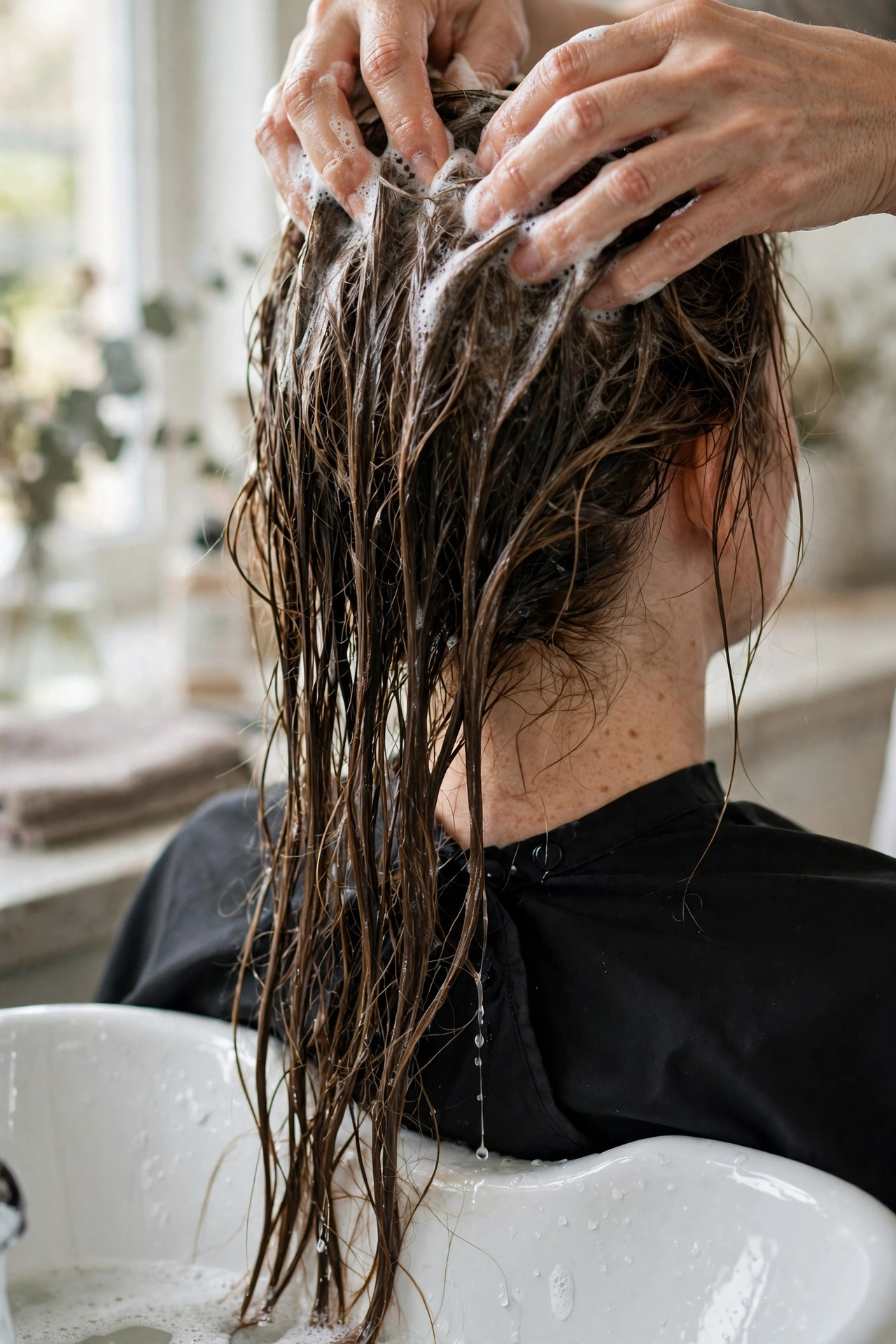
The single biggest winter upgrade is the shampoo itself. A strong clarifying shampoo that felt fine in summer can leave winter hair squeaky, tangled, and twice as static-prone. Swap it for a gentle, sulphate-free or low-lather cleanser, wash two or three times a week instead of daily, and let the conditioner do the heavy work.
Who it suits best
Almost everyone with dry or static-prone hair, especially colour-treated, bleached, or heat-styled hair. Fine hair suits a lightweight hydrating shampoo; thick or curly hair suits a cream cleanser or co-wash on alternate days.
How to ask for it (or do it at home)
At home, shampoo the scalp only and let the lather run down the lengths — never scrub the ends. Rinse with lukewarm water, not hot, and follow with conditioner from mid-lengths to ends for two to three minutes.
Styling and upkeep
On non-wash days, refresh with a light leave-in spray instead of another wash. Keep a gentle clarifying wash once a month only, so product does not build up, then return to the gentle cleanser.
Weekly Deep Conditioning: The Non-Negotiable Mask Slot
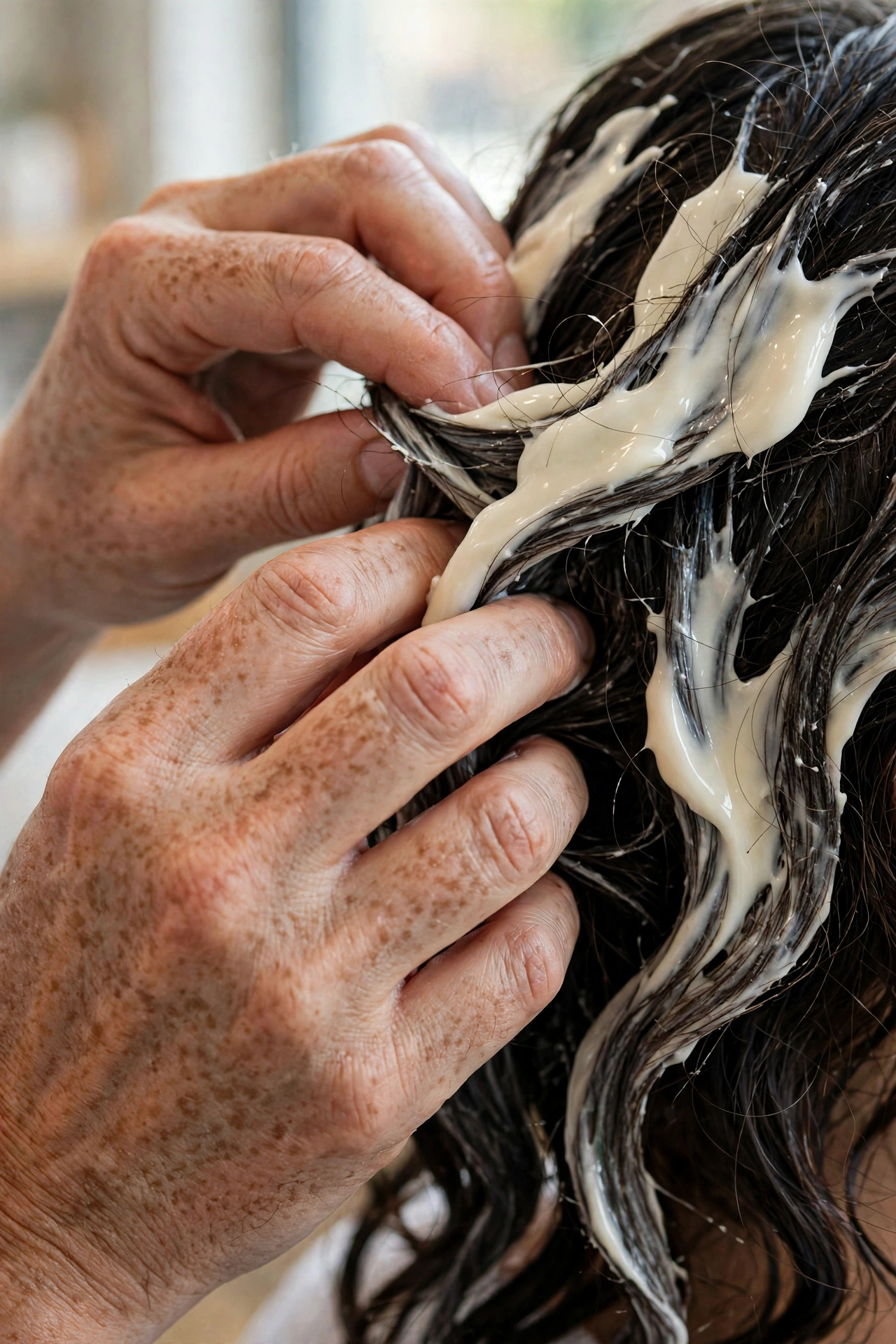
If you change one thing this winter, make it this: one deep-conditioning mask every week, at the same time, without skipping. A weekly mask is the backbone of any winter hair care routine for dry hair, because daily conditioner only smooths the surface while a mask has time to soften the strand itself. Pick one evening a week and leave it in for ten to fifteen minutes.
What to ask your stylist: “I want a winter moisture treatment — a deep-conditioning mask or a gloss, not a colour service — and a dusting trim, just the very ends. My hair is dry and static-prone, so please use something hydrating and lightweight, nothing heavy at the roots.”
The technique, step by step
Shampoo gently, squeeze out excess water, and apply the mask from mid-lengths to ends — never on the scalp. Comb it through, clip the hair up, and leave it for ten to fifteen minutes. Rinse with cool water to seal the cuticle.
Common mistakes to avoid
Using a mask every day overloads fine hair, and applying it to the roots flattens volume. Rinsing with very hot water undoes the smoothing you just did. More product is not more moisture — a coin-sized amount per section is enough.
Products and tools that help
A rich mask with shea, ceramides, or hyaluronic acid, a wide-tooth comb, and a shower cap or warm towel to hold in heat. Keep one mask only — rotating through five half-used tubs is how the weekly slot gets skipped.
📌 Save this for your next wash day — the mask slot is the one step that makes the rest of this routine work, and the easiest one to forget once the week gets busy.
Leave-Ins and Oils: Layering Without Grease
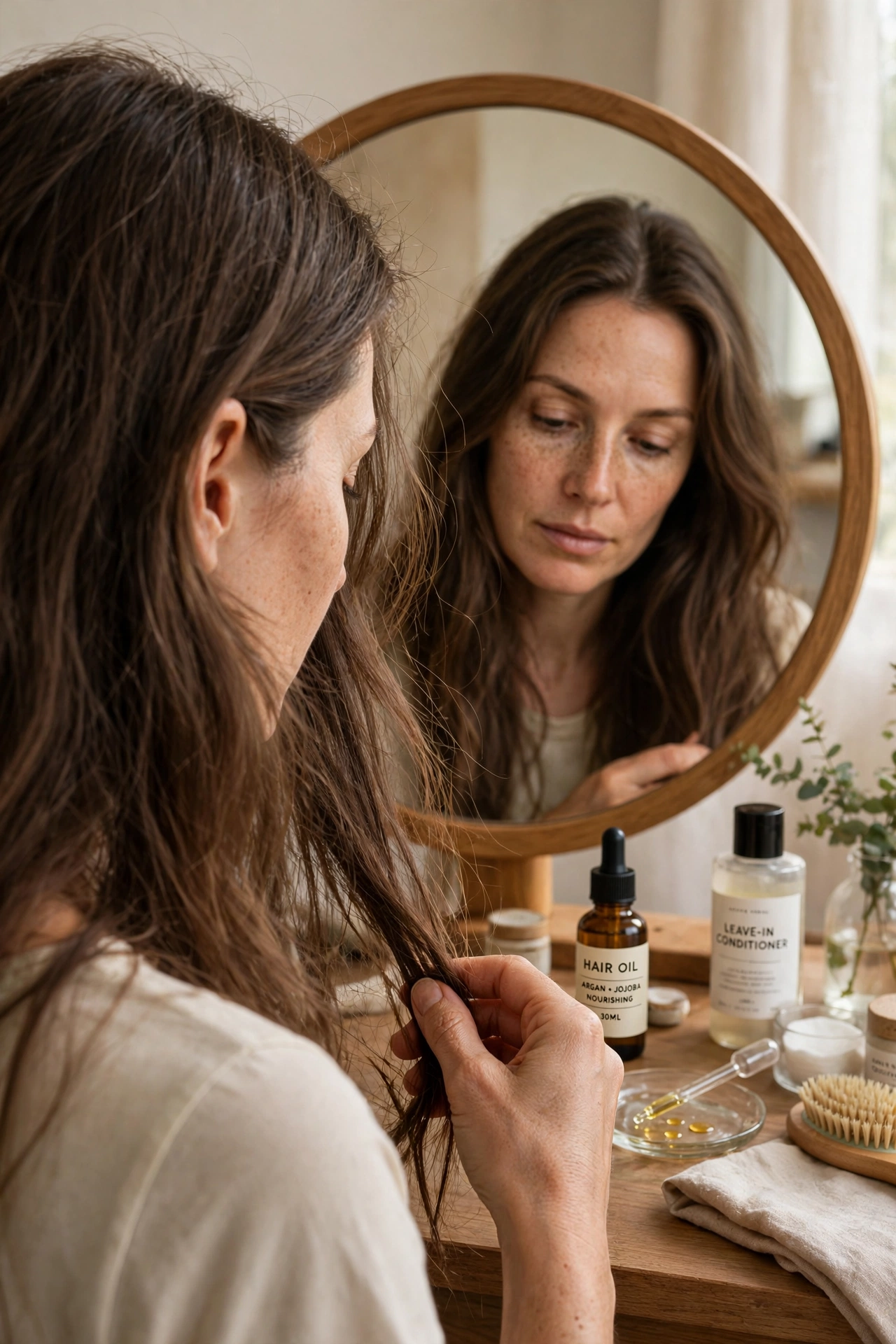
Leave-in conditioner and oil do different jobs, and winter hair usually needs both — in the right order and in small amounts. The leave-in adds water-based moisture; the oil seals it in. Used the other way round, the oil blocks the moisture from getting in, and hair ends up greasy on the surface and dry underneath.
Best for: hair types and face shapes
Fine hair suits a spray leave-in and one drop of light oil on the ends only. Thick, wavy, and curly hair can take a cream leave-in plus a little more oil. Long hair benefits most, as the ends are the oldest and driest part.
The exact salon wording
“My ends are dry and static-prone — can you recommend a leave-in and a light oil for my hair type, and show me how much to use? I do not want anything heavy at the roots.” Ask them to apply it on damp hair so you can feel the right amount first.
Maintenance schedule
Apply leave-in to damp hair after every wash, and oil to the ends daily if needed — a single drop, warmed between the palms first. Reapply oil midweek only on the ends, and clarify once a month to prevent build-up.
Static Control: Scarves, Wool and the Flyaway Fix
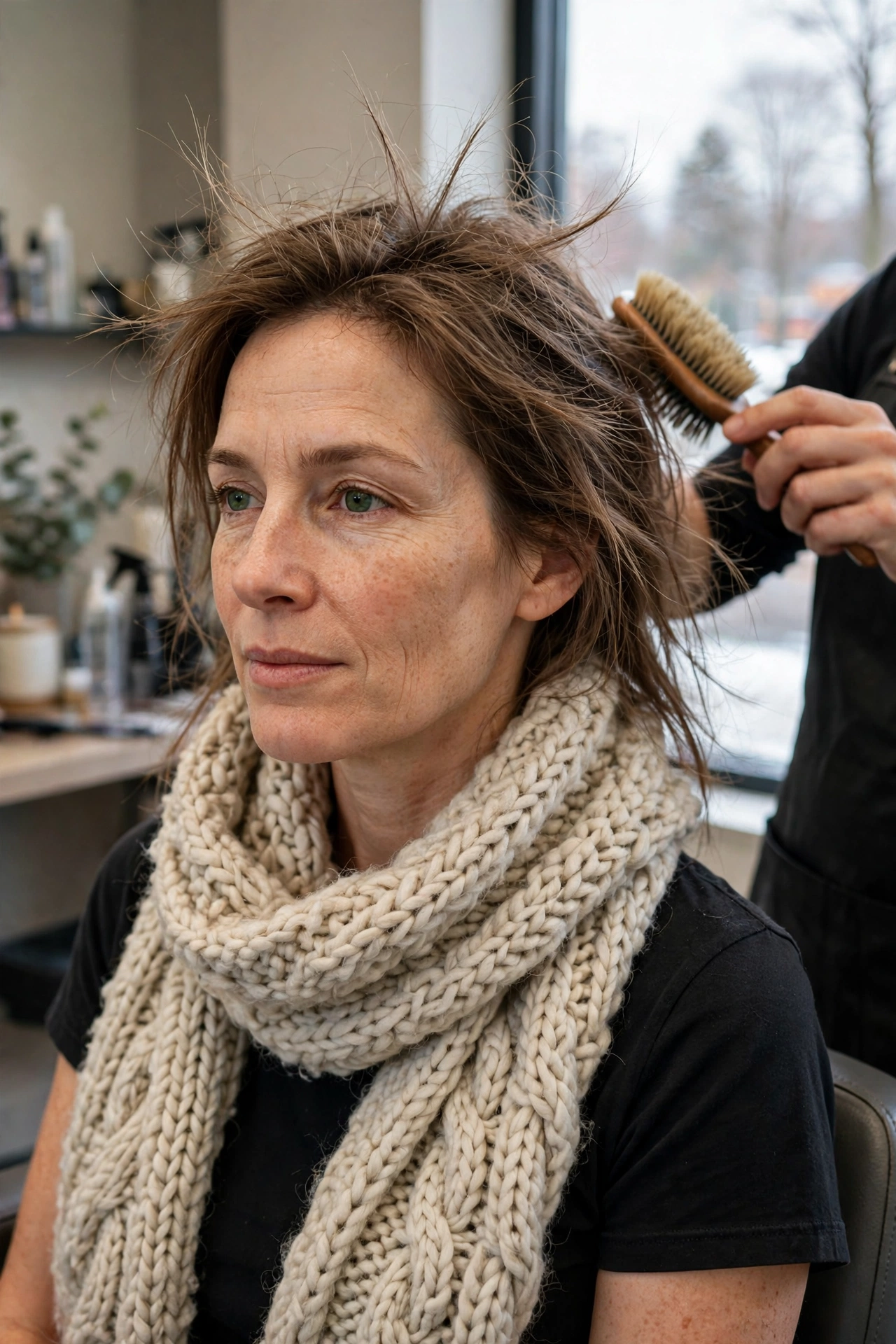
Static is not a hair problem on its own — it is a friction problem, and winter gives it everything it needs: dry air, wool, scarves, hats, and coat collars rubbing the same strands all day. The fix is to reduce the rubbing and give the charge somewhere harmless to go. Moisturised hair holds far less static than dry hair, which is why the wash and mask steps matter here too.
What it looks like in real life
Hair lifts off your shoulders when you take a jumper off, strands stick to your face and neck, and a halo of flyaways appears that no brushing fixes — brushing dry hair in winter usually makes it worse, not better.
Variations worth trying
Line a wool hat with silk, or wear a silk scarf under a wool one so wool never touches your hair. Carry a tiny bottle of leave-in spray for midday flyaways, and switch to a wooden or metal comb, which creates less charge than plastic. On the worst days, a low bun or loose braid keeps hair contained — see our 50 powerful hairstyles for women for styles that hide flyaways completely.
When to skip it
Skip anti-static sprays with heavy silicones if your hair is fine — they can flatten it within an hour. Skip brushing dry hair to “smooth” static; smooth it with damp hands and a drop of oil instead.
Night Routine: Silk, Braids and Friction Control

You spend roughly a third of your life asleep, and cotton pillowcases spend all of it rubbing your hair. A silk or satin pillowcase cuts that friction dramatically, which means fewer tangles, less breakage, and less static by morning. Add a loose braid and the difference in a week is visible: ends that stay smooth instead of matting overnight.
Who it suits best
Long hair gains the most, because it tangles the most overnight, but fine hair benefits too — less friction means less breakage at the crown. Curly and wavy hair holds its pattern better on silk, and a dry, flaky scalp feels less irritated.
How to ask for it (or do it at home)
At home, brush gently before bed, apply a drop of oil to the ends, and put the hair in one loose braid — never tight, and never with a metal clasp. A silk scarf or bonnet works if a silk pillowcase is out of budget; satin is the cheaper stand-in.
Styling and upkeep
Wash the pillowcase weekly so product does not build up, re-braid loosely each night, and skip the tight topknot for sleeping — it creases the hair and stresses the same spot every night. In the morning, undo the braid and shake the hair out.
The 7-Day Winter Reset Schedule
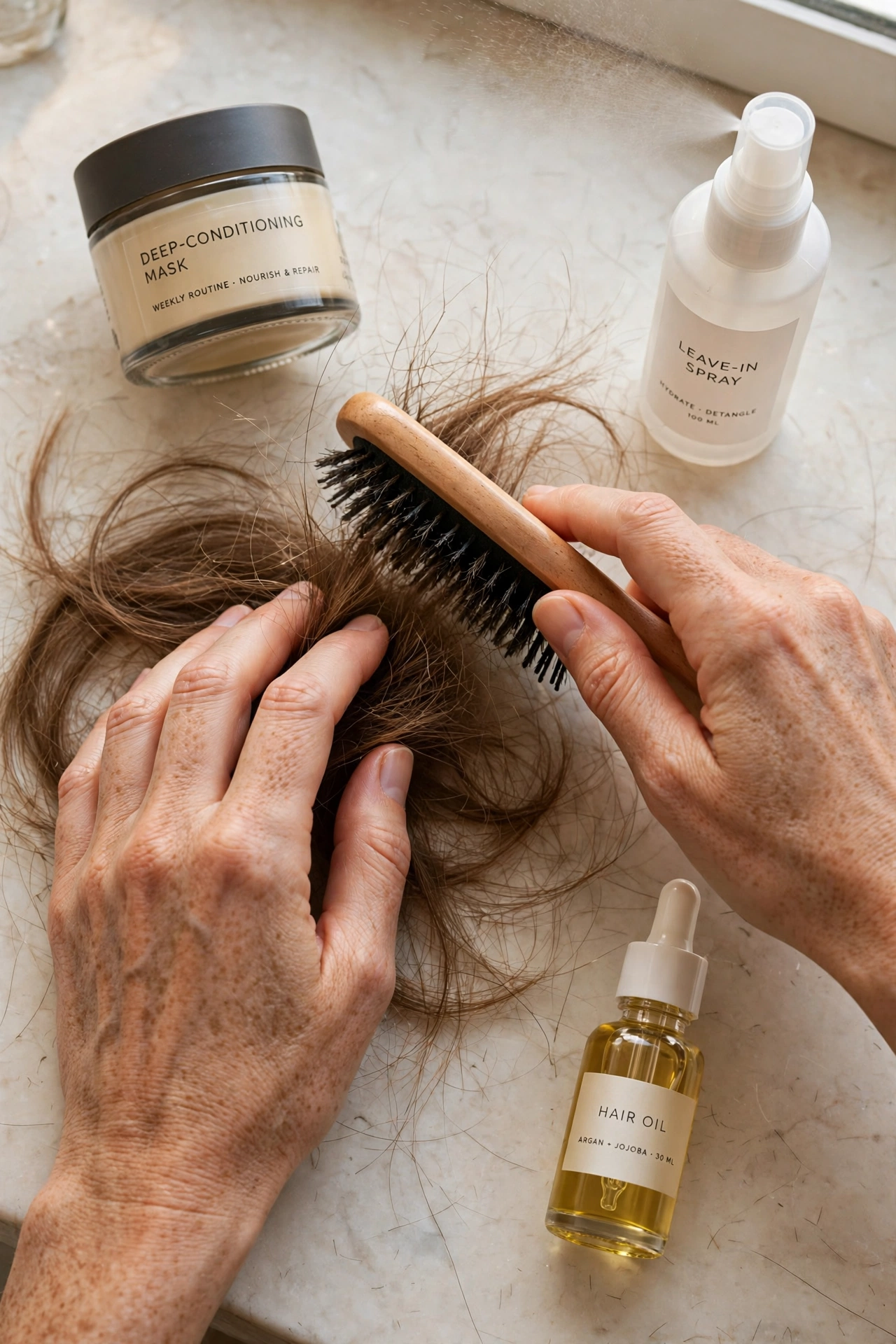
A routine only works if you know which day does what, so here is the whole week in one place. It is built around two wash days, one mask night, and daily habits that take under two minutes. Nothing here needs a new purchase to start — use the gentlest shampoo and richest conditioner you already own, and add the mask and silk pillowcase first.
The technique, step by step
Monday: gentle wash, conditioner, leave-in, one drop of oil on the ends. Tuesday: no wash — refresh with leave-in spray, loose braid if static is bad. Wednesday: mask night — wash, mask for fifteen minutes, cool rinse, leave-in. Thursday: no wash, silk scarf under any wool. Friday: gentle wash and style as usual. Saturday: oil the ends only, loose braid overnight. Sunday: rest day — brush gently, check the ends, note what felt dry.
Common mistakes to avoid
Washing daily “because it feels dirty” — in winter that feeling is usually dryness, not dirt. Skipping the mask when the week gets busy. Using hot water because it feels good on a cold morning. Changing three products at once, so you cannot tell what actually helped.
Products and tools that help
One gentle shampoo, one rich conditioner, one mask, one leave-in, one light oil, a wide-tooth comb, and a silk pillowcase. That is the whole kit. If a product runs out, replace it with the same type — do not use the reset week to test a new range.
When Dryness Is Actually Damage: Signs to Book a Trim

Some winter dryness is seasonal and reverses with the routine above. Some of it is damage, and no mask fixes damage — it only disguises it for a wash or two. The difference matters, because damaged ends keep splitting upward, and the longer you wait, the more length a trim eventually costs you. A small dusting trim now saves inches later.
Best for: hair types and face shapes
Fine hair shows damage first, as see-through ends and breakage at the crown. Thick hair hides it longer but splits just as surely. Long hair is most at risk, because the ends are years old; short hair can usually be rescued with one good trim.
The exact salon wording
“The ends feel dry no matter what I use — can you check for split ends and give me a dusting trim, just the damaged tips, keeping as much length as possible? And can you tell me honestly whether it is dryness or damage?” A good stylist will show you the splits before cutting.
Maintenance schedule
Check the ends every four weeks in winter, and book a dusting trim every eight to ten weeks. Between trims, keep the ends oiled and braided at night, and avoid heat styling on the oldest two inches of hair — that is where the damage lives.
Frequently Asked Questions

How often should you wash dry hair in winter?
Two or three times a week, using a gentle, sulphate-free cleanser. Washing daily strips the natural oils winter hair is already short of, so on non-wash days refresh with a leave-in spray instead of another wash.
Does hot water make winter hair dryness worse?
Yes. Hot water lifts the hair’s outer layer and strips natural oils, leaving strands rougher, duller, and more static-prone. Wash with lukewarm water and finish with a cool rinse, which helps the cuticle lie flat and seals in the conditioner.
Can you fix static hair without products?
Mostly, yes. Moisturised hair holds less charge, so the wash and mask steps help on their own — and a silk pillowcase, a silk-lined hat, and a loose braid cut the friction that creates static. A drop of oil on the ends helps most if you use just one product.
Conclusion: Winter Hair Care Routine for Dry, Static-Prone Hair — Your Next Step

Winter hair does not need a shelf of new products — it needs a gentler wash, one weekly mask, a leave-in sealed with a drop of oil, and less friction day and night. Start tonight with the mask slot and the loose braid, follow the 7-day reset for one full week, and judge by how your ends feel on day seven, not day one. If the ends still feel rough after two good weeks, book the dusting trim — that is dryness telling you it was damage all along.
📌 Save this routine for the coldest weeks ahead — the 7-day reset schedule is the part you will want back in January, when the heating has been on for a month and your hair needs it most.