
Cloud Bangs With a Cowlick (or a Receding Hairline): Who Should Skip Them and What to Ask for Instead
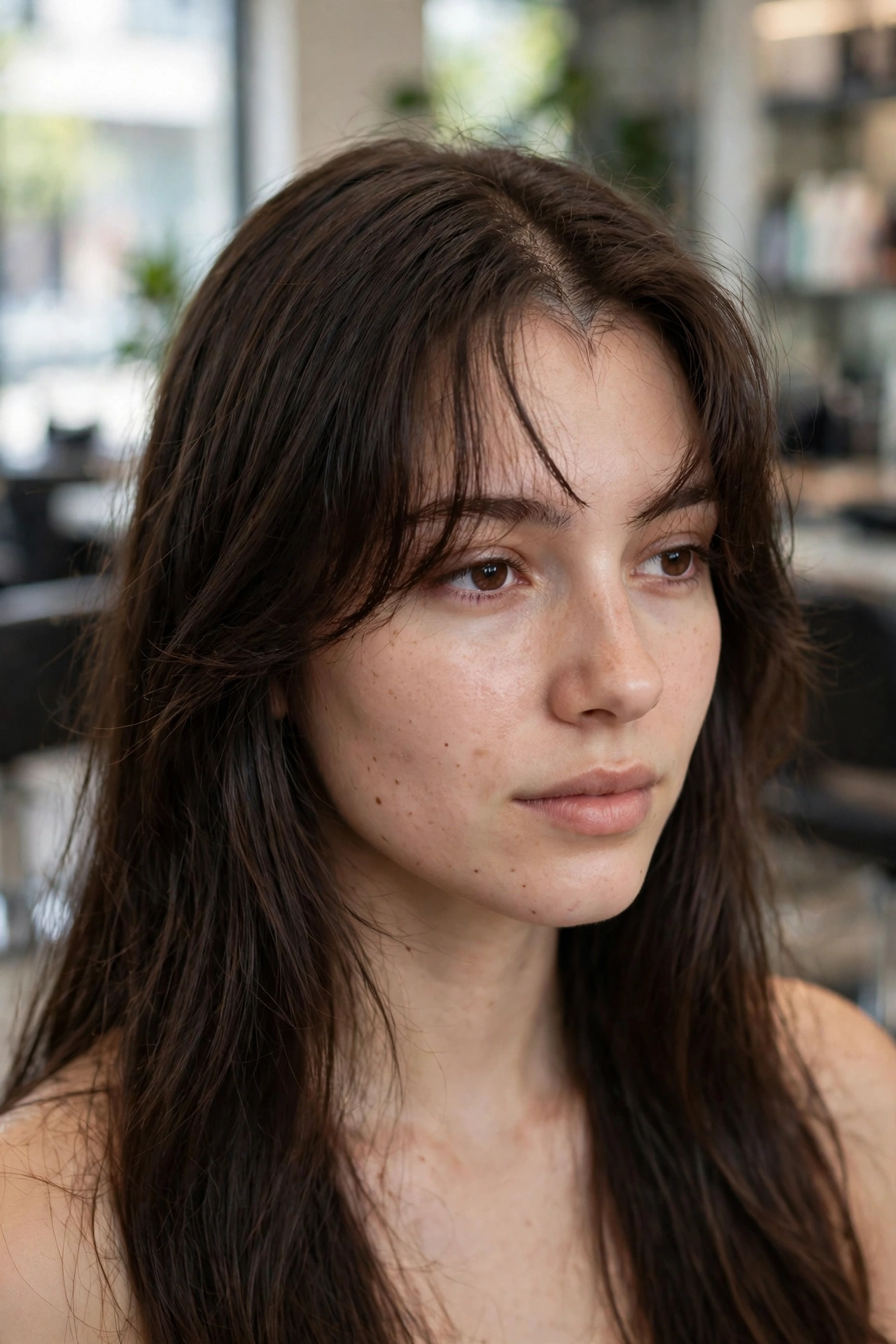
You have seen the photos: a fringe so light it barely looks like a fringe at all, wisps drifting across the forehead, nothing heavy, nothing to grow out for months. Then you remember the cowlick at your hairline — the one that splits every fringe you have ever tried — or the hairline that has crept back a little further each year. This article is for that exact reader. Cloud bangs are the Fall 2026 answer to a fringe that does not commit you to anything, and they work with a cowlick or a receding hairline more often than a blunt fringe does — but only if the placement is right.
Quick answer: Start the fringe beside the cowlick, never on top of it, and set the fringe line a little higher than usual for a receding hairline. If your cowlick splits dead centre, or your hair is very fine with wide gaps at the front, skip cloud bangs and ask for a side-swept feathered fringe instead.
What Cloud Bangs Actually Are (Point-Cut, Airy, Fuller Than Wispy)

Cloud bangs arrived in Fall 2026 as the lightest fringe of the season. Hairstylist Dimitris Giannetos created the look for Camila Cabello — a fringe “a bit more wispy and airy than the curtain bangs”, usually with a middle part and a V opening so the forehead stays partly visible. The difference from a blunt fringe is the edge: a blunt fringe uses a heavy, straight section and a hard line, while cloud bangs use a smaller, lighter section, point cut so the ends feather out.
Best for: hair types and face shapes
Oval and heart-shaped faces, hair with a natural wave or bend, and anyone whose forehead is on the smaller side — the fringe adds softness without shortening the face. Straight hair works too; it just needs the 3-minute blow-dry below.
The exact salon wording
“I want cloud bangs — a soft featherlight fringe, point cut, not blunt, with a middle part and a soft V opening. Light section, forehead still partly visible.”
Maintenance schedule
Trims every 3–4 weeks keep a cloud bang at the right length; longer than that and the wispy ends start to look grown out rather than intentional.
The Cowlick Test: Where Your Part Wants to Live
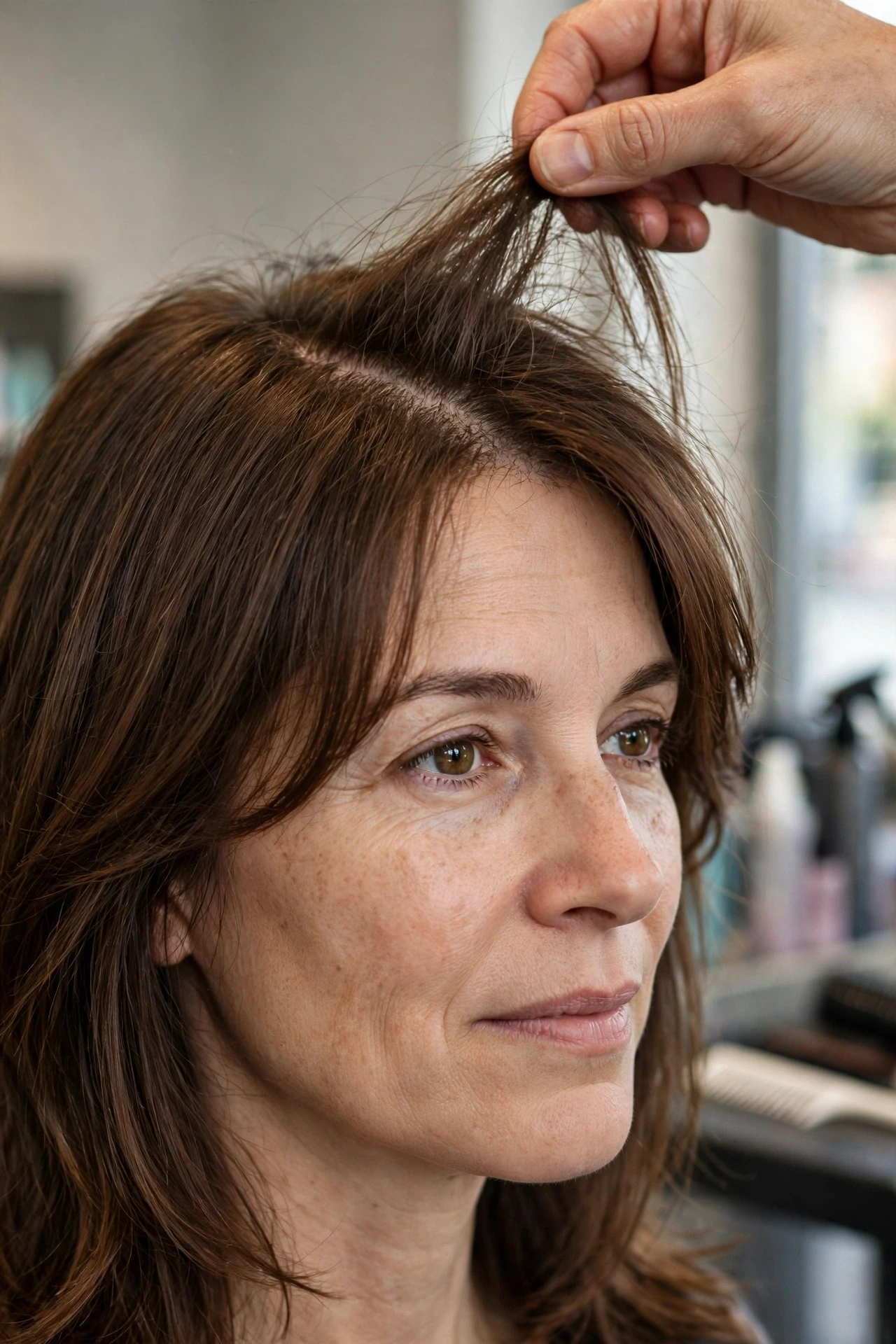
A cowlick does not prevent bangs. It decides where the bangs start — that is the placement rule everything else follows. Cut a fringe starting exactly where the cowlick sits and the hair sticks up at the root and splits; start it slightly to the side and it lays flat. Before anything is cut, find the cowlick: let your hair dry naturally first — a cowlick hides when hair is wet — and watch where the hair wants to part. That natural part is where your fringe should live.
What it looks like in real life
On a good morning the fringe falls to one side in soft, uneven wisps. On a bad morning it splits at the root and sticks up — which almost always means the fringe was started on top of the cowlick, not beside it.
Variations worth trying
A zigzag parting softens the swirl by breaking the straight line the cowlick wants to form, and a slightly deeper cut at the crown adds weight that helps hold the swirl down.
When to skip it
Skip the classic centre-parted cloud bang if your cowlick sits dead centre and pushes hair to both sides — a middle-parted fringe will split exactly where the cowlick wants it to, every morning. Skip it too if your hair is very fine with wide scalp gaps at the front: a light fringe shows more scalp, not less. A slightly heavier side fringe covers more — see the fuller options in our 30 hairstyles ideas for fine hair guide.
Cloud Bangs on a Strong Cowlick: The Longer, Swept Version

When the cowlick is strong, the answer is not a shorter fringe — it is a longer, swept version. A heavier bang can work because the extra hair weighs the swirl down, and cutting extra deep at the crown adds that weight. But a very heavy blunt fringe right at the hairline is the worst fight of all. The safe shape is wispy and side-swept: longer at the sides, feathered at the ends, starting beside the cowlick.
Who it suits best
Anyone whose cowlick sits off-centre, or is strong but not dead centre. Thick, wavy hair holds the swept shape best; fine hair can wear it if the fringe is kept a touch longer at the sides.
How to ask for it (or do it at home)
“I have a cowlick here” — point to it — “so please start the fringe beside it, not on top of it. I want a soft featherlight fringe, point cut, not blunt, side-swept, with the fringe line set a little high. Please check it dry before you finish.” At home, never try to flatten a dry cowlick with a straightener — it just bakes the split in.
Styling and upkeep
Style the bangs when they are 90–100% wet, rather than the 60–80% that works without a cowlick. Blow-dry downward on medium-low heat with the nozzle pointing against the hair, use a light hairspray on the cowlick area only, and clip the roots flat with duckbill clips, taking them out last.
Receding Hairline? The See-Through Alternative That Works Better
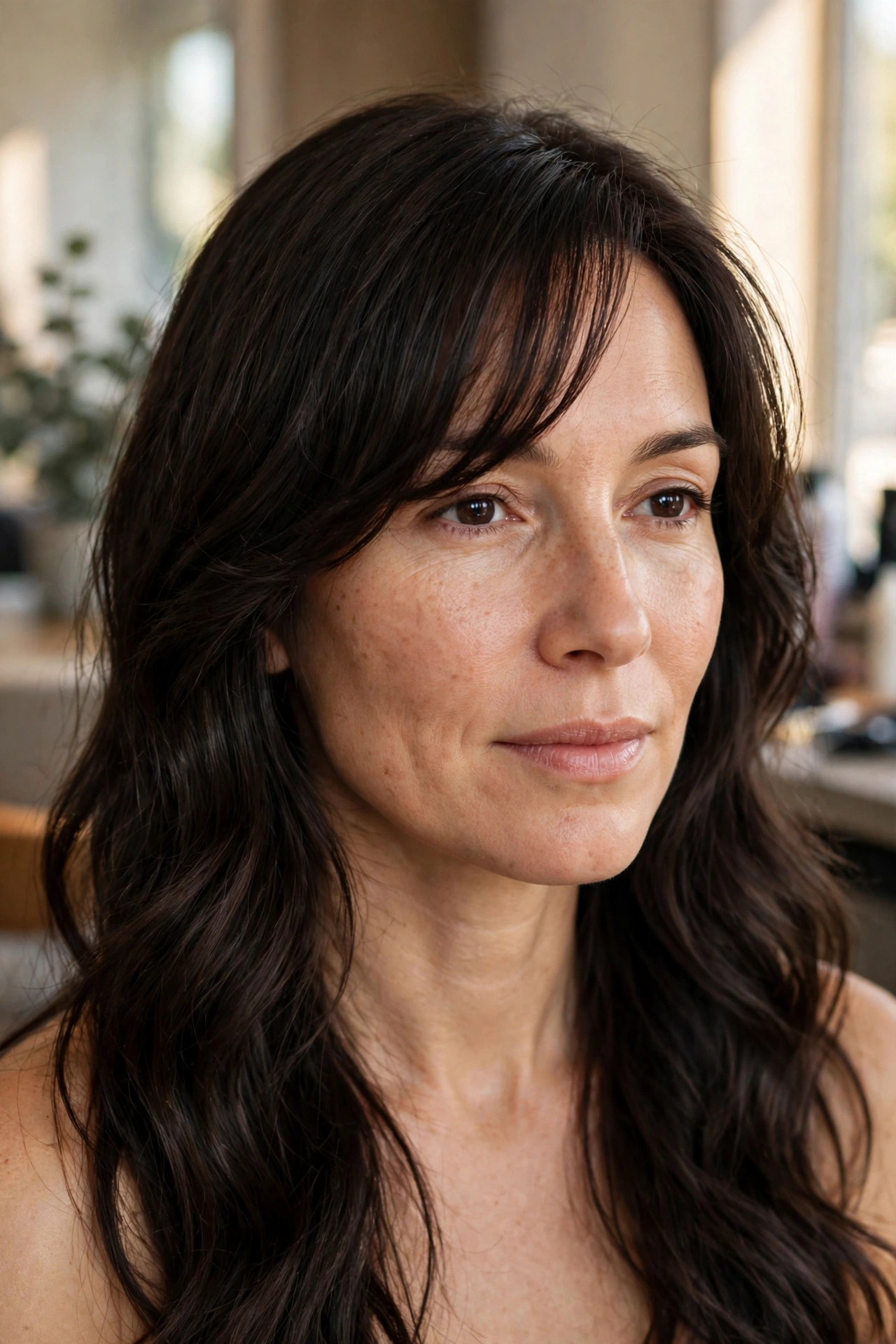
For a receding hairline, the best fringe is longer, wispier, and swept to the side — never short, heavy, or blunt. Longer, wispy side-fringe varieties move attention from the top of the head to the front of the face, and a front fringe or curtain bang can disguise a receding hairline well. Stylists recommend longer and choppy options over heavy blunt cuts that expose scalp gaps: a feathered bottleneck fringe or a soft sweep disguises gaps better than a straight-across line, because the uneven edge breaks up the line where hair meets forehead.
The technique, step by step
Set the fringe line slightly higher than a traditional fringe rather than chasing the hairline down — chasing it down just moves the problem lower and makes the fringe heavier where the hair is thinnest. Keep the ends feathered and uneven, sweep to the fuller side, and let the longest pieces blend into the face-framing layers.
Common mistakes to avoid
A short blunt fringe that exposes scalp gaps; cutting the fringe down to the hairline; and a middle part with straight hair, which emphasises a receding forehead. If a fringe is not the answer, the no-bangs alternative works just as well: an asymmetrical bob with a deep side part covers the thinning side.
Products and tools that help
A light volumising mousse at the roots, a small round brush for the sweep, and a flexible-hold spray — nothing stiff, because a stiff fringe shows gaps the moment it moves. If your hairline is changing quickly, or you are considering any treatment for hair loss, see a doctor — this article is styling only.
Cloud Bangs by Face Shape: Round, Long and Square
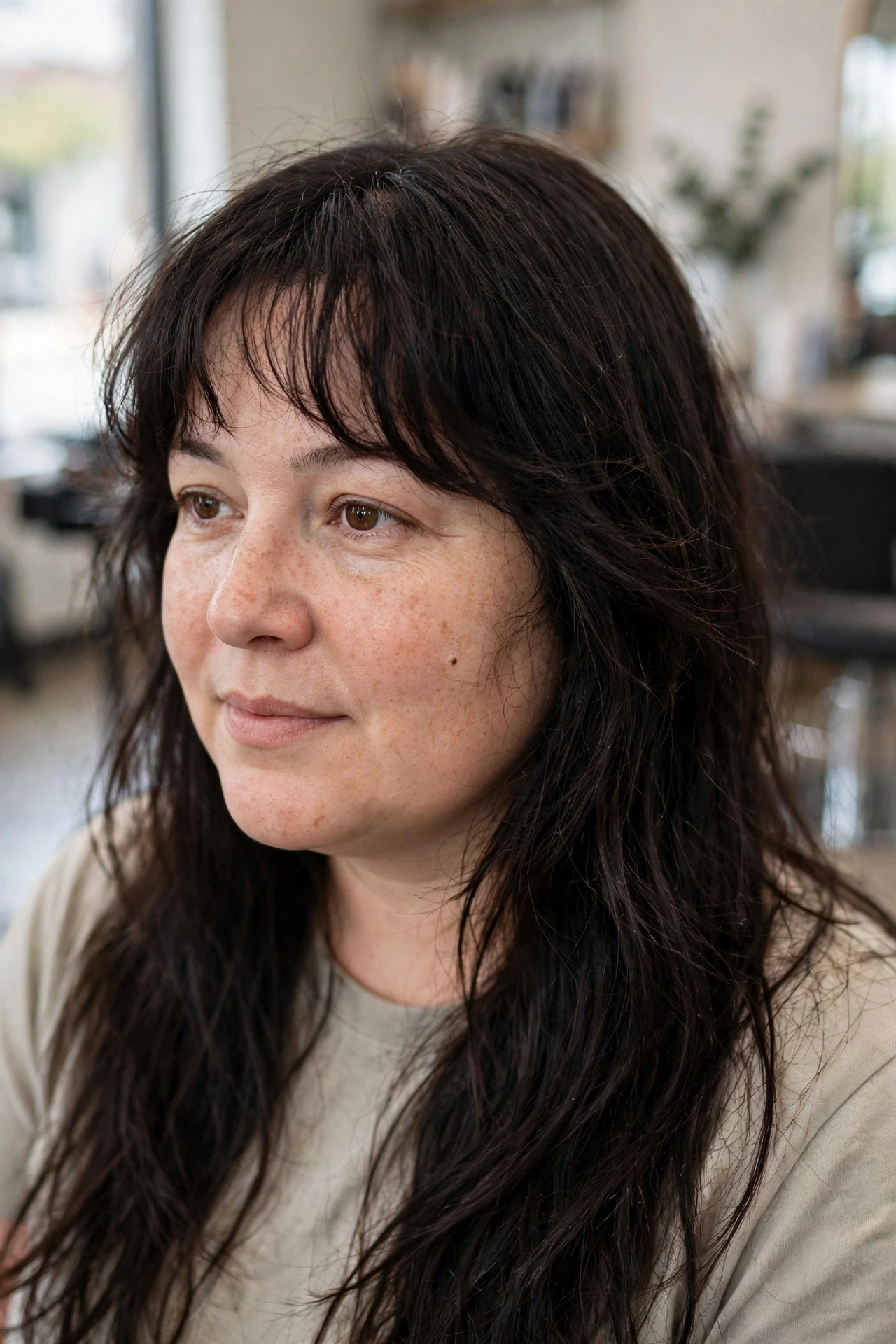
The same fringe reads differently on every face, because the V opening and the side length do the shaping work. On a round face, the soft V opening adds a vertical line that lengthens the face — keep the sides longer, past the cheekbones. On a long face, the fringe shortens the forehead visually, so a fuller cloud bang works better than a barely-there wisp. On a square face, the feathered ends soften the jaw — sweep to one side rather than parting dead centre.
Best for: hair types and face shapes
Round faces suit the longer, side-swept version; long faces suit the fuller version with more brow coverage; square faces suit the wispy, side-swept version. Hair with a natural wave or bend shows the shape best on every face.
The exact salon wording
“My face is [round / long / square], so I want the cloud bang shaped for that — longer at the sides for round, fuller across the brow for long, side-swept and wispy for square. Point cut, not blunt.”
Maintenance schedule
Face-shape shaping is lost first at the sides, so ask for the side pieces to be checked at every 3–4 week trim, not just the centre length.
Styling Cloud Bangs in 3 Minutes (No Round-Brush Battle)

Cloud bangs look effortless and are not — without a quick blow-dry, the wispy ends flip in different directions and the fringe looks untidy rather than airy. The whole routine takes about three minutes: dampen the fringe roots, blow-dry downward for about two minutes with the nozzle against the hair, a light mist of hairspray only where the cowlick or the gap is, duckbill clips while you finish getting ready.
What it looks like in real life
Done right, the fringe falls in soft, uneven wisps with the forehead partly visible and the V opening sitting just off-centre. Done on dry hair, or skipped entirely, the ends flip and the fringe reads as messy rather than airy.
Variations worth trying
On a no-wash day, dampen the roots thoroughly, add a little product, and redirect with the dryer and a brush — that resets the growth direction without a full wash. On humid days, swap the hairspray for a pea-sized amount of styling cream.
When to skip it
If you air-dry and go, choose a longer curtain bang you can tuck behind your ears, or skip the fringe entirely. Anyone unwilling to blow-dry the fringe for two minutes should not get cloud bangs — the style depends on that one habit.
Grow-Out Plan: From Cloud Bangs to Curtain Fringe in 8 Weeks
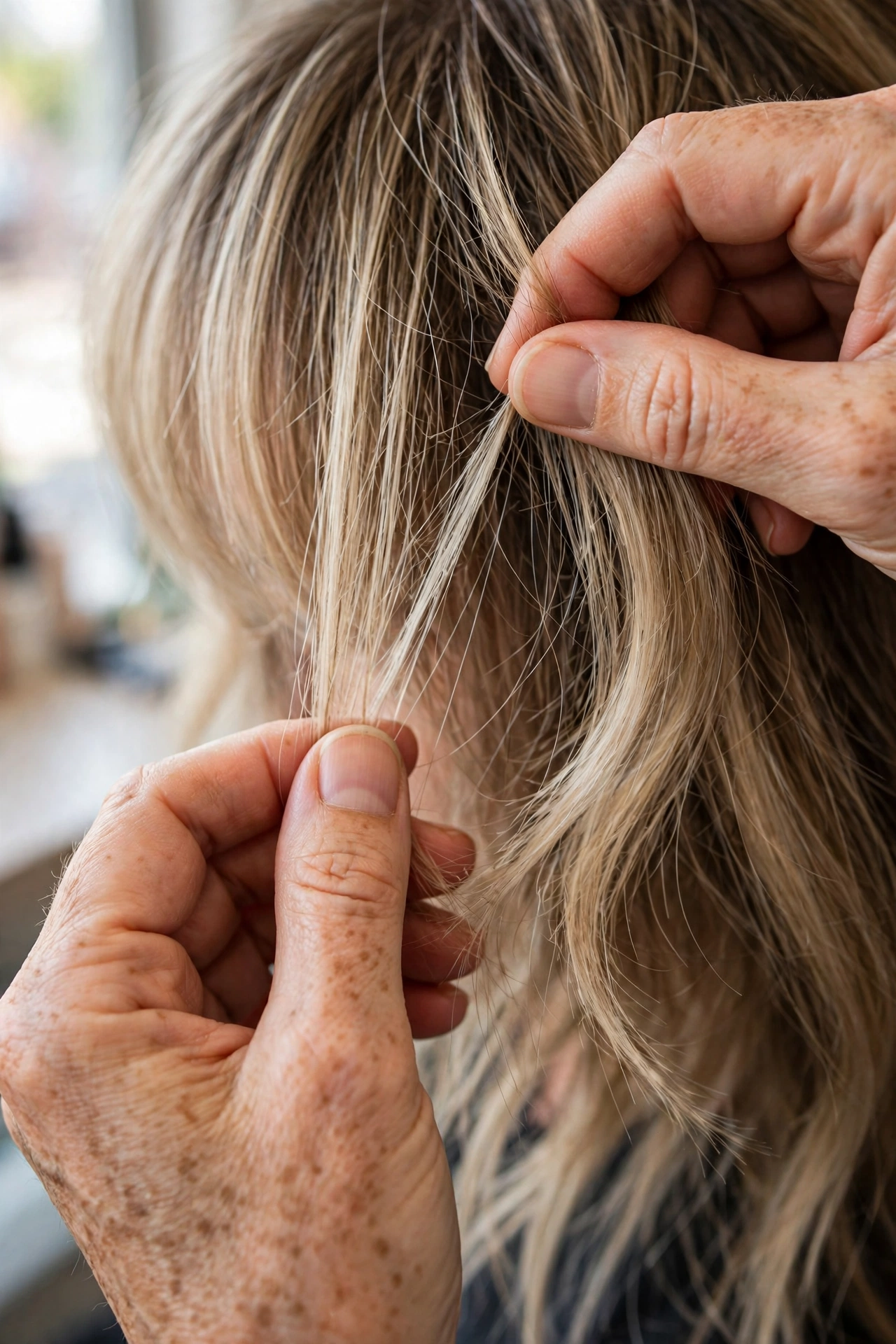
Growing cloud bangs out is the easy part, and it is the reason to choose them. A blunt fringe takes months to grow past your eyes; cloud bangs can be swept aside in a week and grown into curtain bangs in a month. The plan: let the centre grow first while keeping the sides trimmed, so the fringe lengthens evenly. By week four it reads as curtain bangs; by week eight it has blended into face-framing layers.
Who it suits best
Anyone who wants to try a fringe without marrying it — first-time fringe wearers, people between cuts, and anyone whose cowlick made past fringes a regret. Change your mind in week two and you have lost nothing: sweep the fringe aside and it is gone.
How to ask for it (or do it at home)
At the same appointment, ask: “When this grows out, I want it to become curtain bangs — how long before I need a reshape, and what should I ask for at the next trim?” At home, trim only the very ends between appointments, and never cut the centre shorter than the sides — that is what creates the shelf.
Styling and upkeep
Weeks 1–4: the daily 3-minute routine, trims every 3–4 weeks. Weeks 5–8: switch to a centre part, let the sides catch up, and use a light cream instead of spray so the longer pieces fall smoothly into the layers.
What to Say to Your Stylist: Photo Language That Works

Bring photos, but bring the right kind: three photos of cloud bangs on hair like yours — same thickness, same wave pattern, same cowlick position if you can find one — beat ten photos of the fringe on someone else’s hair type. Point at the photo and name what you want: the lightness, the V opening, the side sweep. Then say the cowlick or hairline part out loud — do not assume the stylist has spotted it.
The technique, step by step
Show the photos. Point to your cowlick or hairline and say where it is. Ask for point cutting, not blunt. Ask for the fringe line set a little high. Ask for a dry check before the final cut. Book the next trim before you leave — 3–4 weeks out.
Common mistakes to avoid
Saying only “bangs” with no reference photo; letting the fringe be cut on wet hair with no dry check; not mentioning the cowlick until the fringe is already splitting; and asking for the fringe to be cut down to a receding hairline instead of set higher.
Products and tools that help
Duckbill clips for root training, a light-hold hairspray for the cowlick area only, a small round brush for the sweep, and a volumising mousse if your hair is fine. Nothing heavy — heavy product collapses a featherlight fringe.
Frequently Asked Questions

Can you get bangs with a cowlick?
Yes. A cowlick does not prevent bangs — it decides where they start. Start the fringe beside the cowlick, not on top of it, choose a side-swept feathered shape, and style the roots 90–100% wet with a downward blow-dry.
What fringe is best for a receding hairline?
A longer, wispy, side-swept fringe — feathered or bottleneck, never heavy and blunt — with the fringe line set slightly higher than usual. If a fringe is not right for you, an asymmetrical bob with a deep side part covers the thinning side.
Cloud bangs vs curtain bangs — what is the difference?
Cloud bangs are lighter, wispier and more asymmetric, with a blurred edge and a partly visible forehead — the lowest-commitment fringe, easiest to grow out. Curtain bangs are fuller, with a more defined part and more coverage, and need more daily styling.
Conclusion: Cloud Bangs With a Cowlick (or a Receding Hairline) — Your Next Step

Cloud bangs are the easiest fringe to try and the easiest to leave — and that is exactly why they work with a cowlick or a receding hairline, as long as the placement respects the hair you actually have. Start beside the cowlick, set the line high for a receding hairline, and ask for the fringe in the exact words above. If your cowlick splits dead centre or your hair is very fine with wide gaps at the front, skip the classic cloud bang and take the side-swept feathered fringe instead.