Cherry-Cola Brunette Without Bleach: Gloss and Demi Options for Dark Hair (and How It Fades by Week 6)

Cherry-cola brunette is the colour dark hair has been waiting for: deep brown with a red-cherry cast that shows up in sunlight and evening light, but never turns orange, never needs bleach, and never leaves you with fried ends. It is the drink-name colour that actually delivers — cola-dark at first glance, cherry-red when the light catches it — and it works because it builds colour on top of dark hair instead of stripping the hair first. If your base is dark brown or black, you do not need to lighten to get here. A gloss or a demi-permanent cherry can sit on your natural depth and give you the red you can see, without the damage you cannot undo.
Quick answer: Yes — dark hair can go cherry-cola without bleach. A clear or cherry gloss gives the softest, most natural red for about 4–6 weeks; a demi-permanent cherry-cola goes deeper and lasts 6–8 weeks. Neither lifts your natural colour, so the result is always a rich, dark cherry rather than bright red — which is exactly what makes it wearable. Expect the red to be strongest in weeks 1–2, to soften to a warm brunette by week 3, and to settle into a soft cherry-brown by week 6. Wash cold, use colour-safe shampoo, and refresh with a cherry gloss at week 4–5 if you want the red to last.
The No-Bleach Reality Check: What Dark Hair Can and Can’t Show
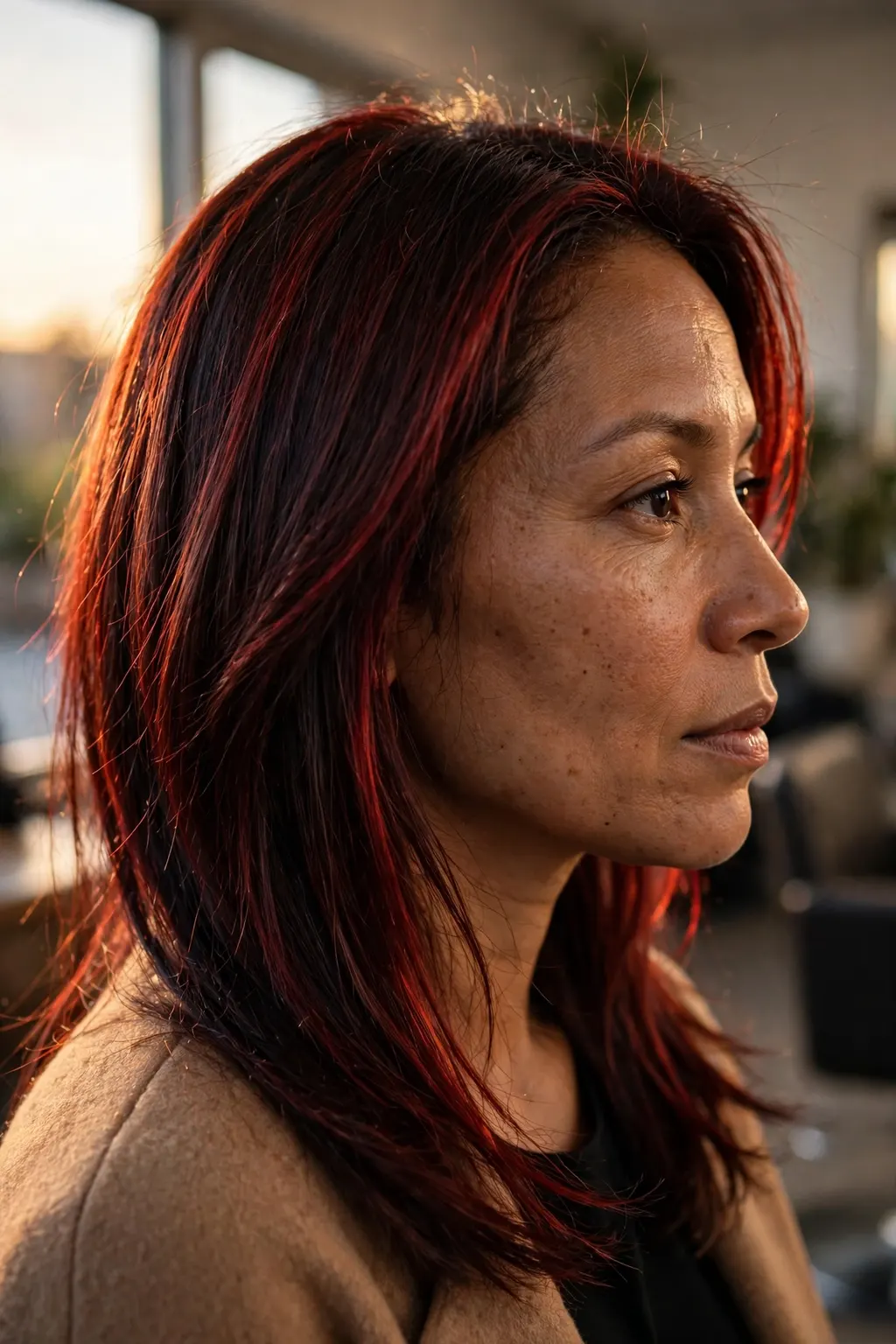
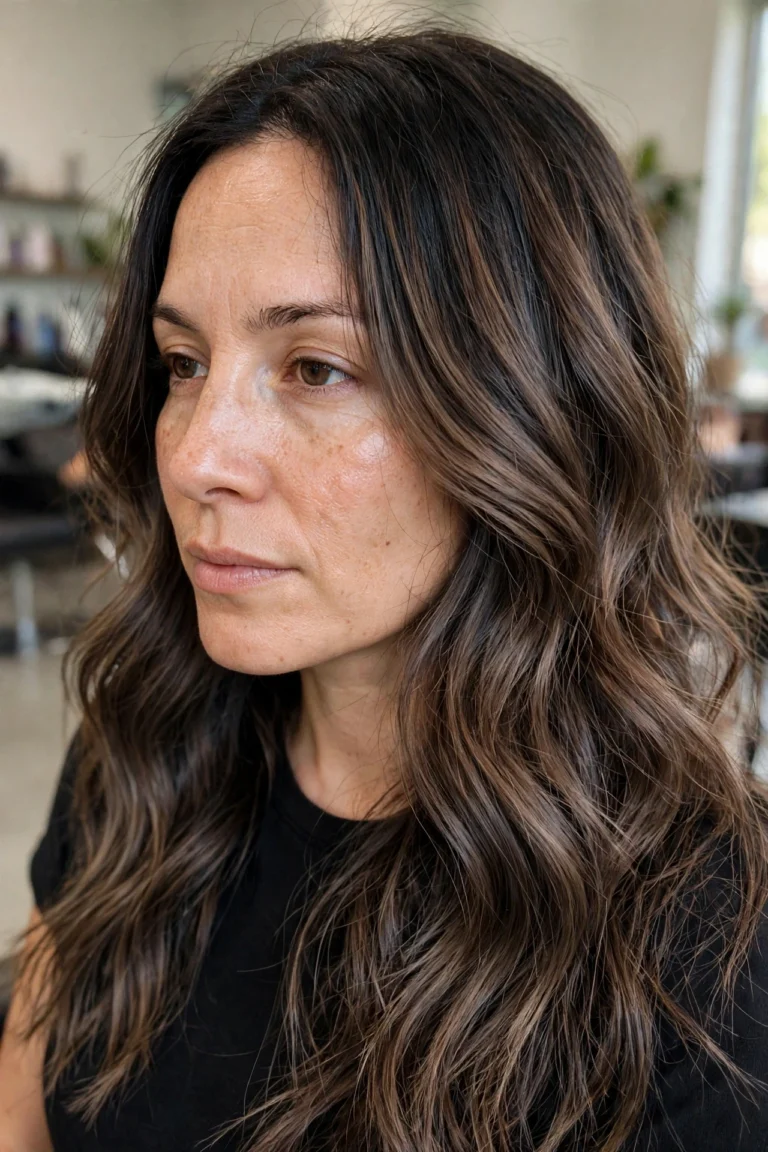
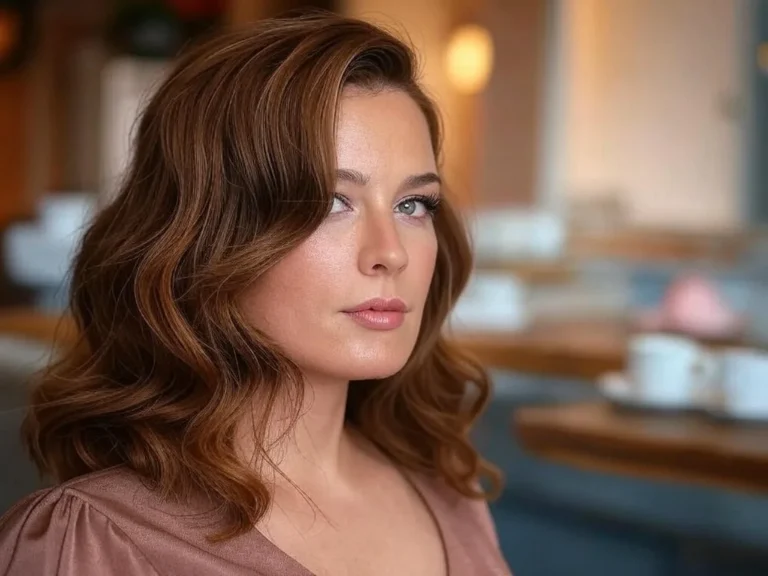
The first thing to understand about cherry-cola on dark hair is what bleach-free colour can and cannot do. Gloss and demi-permanent colour do not lift — they cannot make your hair lighter than it already is. What they can do is deposit a red-cherry tone on top of your natural depth, and because your base is dark, that tone reads as a deep, glossy cherry rather than a bright, candy red. Indoors, under normal light, the colour looks like a rich dark brunette with warmth. Step into sunlight or warm evening light and the cherry wakes up: red ribbons, a cola glow at the ends, a warmth that looks expensive rather than dyed.
That is the honest trade, and it is a good one. Bleach would give you a brighter, truer cherry, but it would also give you the damage, the orange stage, the grow-out line and the maintenance that comes with it. The no-bleach route gives you a colour that fades gracefully, grows out invisibly, and leaves your hair in the same condition it started in — or better, since gloss seals the cuticle and adds shine. The only people this route disappoints are the ones who wanted fire-engine red on black hair. If you want cherry-cola — the actual drink, dark with a red cast — this is the right way to get it.
Who it suits best
Cherry-cola suits warm and neutral skin tones best, because the red in the colour picks up the warmth in the skin and makes it glow. Cool-toned skin can wear it too, but ask for a cooler, more burgundy-leaning cherry rather than a warm copper-cherry, or the red can make the skin look flushed. It suits dark brown and black hair of any texture — straight hair shows the gloss best, wavy hair shows the ribbons best, and curly hair holds the colour beautifully because the curls catch the light in layers. It is particularly good on hair that has been coloured dark for years and feels flat: the cherry adds dimension without changing the depth you are used to, so it reads as a refresh, not a reinvention.
How to ask for it (or do it at home)
Say: “I want cherry-cola brunette without bleach — a deep brown with a cherry-red cast that shows in the light, not a bright red. A gloss if I want it soft, or a demi if I want it deeper. No lightener, no orange stage.” That sentence rules out the two mistakes that ruin this colour: a stylist reaching for bleach to “make the red show”, and a formula with too much copper that turns orange in week two. At home, use a cherry gloss or a demi-permanent kit in a level 4 or 5 cherry-brown — never a permanent red, which lifts and warms unpredictably on dark hair. Strand-test first, on the hair underneath at the nape, and check it in daylight before you commit the whole head.
Styling and upkeep
Style cherry-cola the way you would style any dark glossy colour: the shine is the point, so a smooth blow-dry or a pass with a flat iron on low heat shows it off best. Rough, air-dried texture hides the cherry, while a smooth finish lets the light hit the red. Upkeep is mostly about washing — cold water, colour-safe shampoo, and no clarifying shampoo unless you are deliberately trying to fade it. A silk pillowcase helps more than people expect: cotton rubs the cuticle and dulls gloss colour faster, while silk lets it slide. And keep one rule from day one: the colour will fade, and that is fine. Plan for the fade rather than fighting it, and the colour will look intentional at every stage.
Gloss-Only Cherry: The One-Hour Salon Option
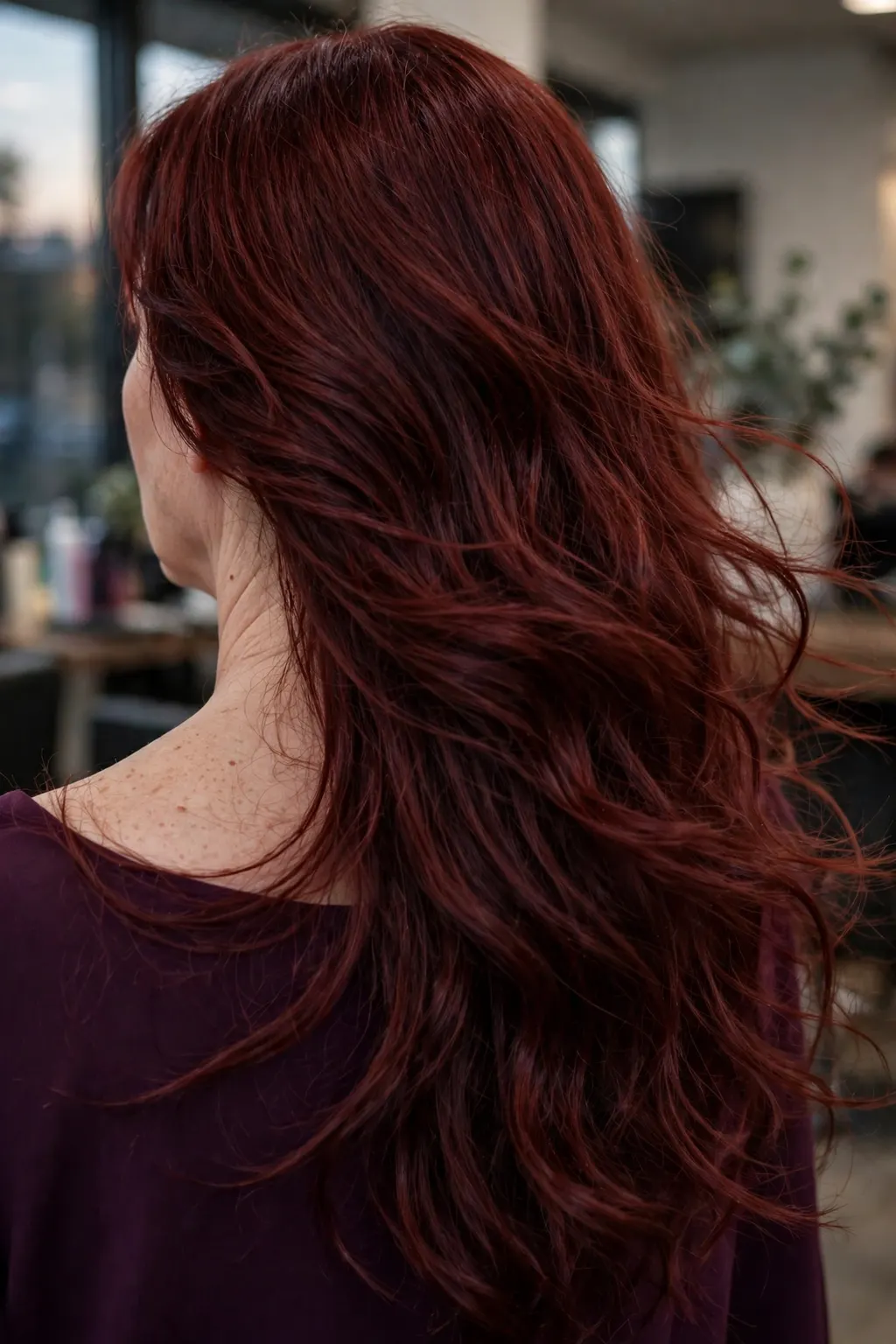
A gloss is the gentlest way into cherry-cola, and for most dark-haired first-timers it is the right first step. A clear or cherry-tinted gloss is a semi-permanent colour that coats the outside of the hair shaft rather than opening it up: it adds tone, seals the cuticle, and washes out gradually over 4–6 weeks without a line. In the salon it takes about an hour, including the consultation, and you walk out with hair that is shinier than when you walked in. The cherry it gives is soft — a warm red cast that is obvious in sunlight and subtle indoors — which is exactly what makes it low-risk. If you hate it, it is gone in a month. If you love it, you have found your colour without any commitment.
The gloss route is also the best one for hair that has been through a lot already: previously bleached ends, heat damage, hair that is fine and breaks easily. Because a gloss does not lift or open the cuticle aggressively, it can actually improve the condition of tired hair — the coating smooths the surface, reflects more light, and makes damaged ends look healthier than they are. It is the only colour service that doubles as a treatment, and on dark hair the effect is dramatic, because dark hair shows shine more than light hair does. One hour, no damage, and a colour you can walk away from. For a first cherry, start here.
The technique, step by step
Step one is the consultation and the strand test: the stylist checks your base depth, your previous colour history, and whether any old permanent colour is sitting on the ends, because gloss behaves differently over old colour than over virgin hair. Step two is the wash: clean hair, no conditioner, towel-dried, so the gloss grips evenly. Step three is the application — the cherry gloss is brushed through from roots to ends, or painted on the lengths only if the roots are already dark enough, and left to process for about 20 minutes. Step four is the rinse in cool water and a colour-safe conditioner. Step five is the reveal in daylight: ask the stylist to show you the colour by the window, not just under the salon lights, because salon lights are warm and flattering, and daylight is where you will actually live in it.
Common mistakes to avoid
The most common mistake is expecting a gloss to look like a permanent red — it will not, and if you push the formula darker or redder to force it, you get a flat, muddy brown instead of a cherry. Let the gloss be what it is: a soft, shiny red cast. The second mistake is washing it out too soon with hot water or a clarifying shampoo — the first wash matters most, so go cold and gentle for the first week. The third is applying gloss over hair full of silicone-heavy products: the coating sits on the surface and blocks the gloss, so it slides off unevenly. Wash with a plain shampoo the day before, skip the leave-in, and let the gloss meet clean hair. The fourth mistake is skipping the strand test because “it is only a gloss” — even a gloss can grab unevenly on porous ends, and a test at the nape costs five minutes and saves a month of regret.
Products and tools that help
You need almost nothing for a gloss: the gloss itself, a colour-safe shampoo and conditioner, and a cool rinse. At home, a cherry gloss in a bottle (the kind sold as a colour-depositing gloss, not a permanent dye) applied to clean, towel-dried hair for 20 minutes gives a very similar result to the salon version — the salon’s advantage is even application and the right formula for your base, not magic. A shower filter helps if your water is hard: mineral buildup dulls red tones faster than anything else. And keep a colour-depositing conditioner in cherry-brown for week three, when the gloss starts to soften — one use brings the red back without a full re-application. That one bottle is the difference between a gloss that lasts four weeks and one that feels gone in two.
📌 Save this before you book — gloss first, demi second. Try the one-hour gloss, live with it for a month, and only go deeper if you still want more red at week four.
Demi-Permanent Cherry-Cola: Deeper, Longer, Still Gentle
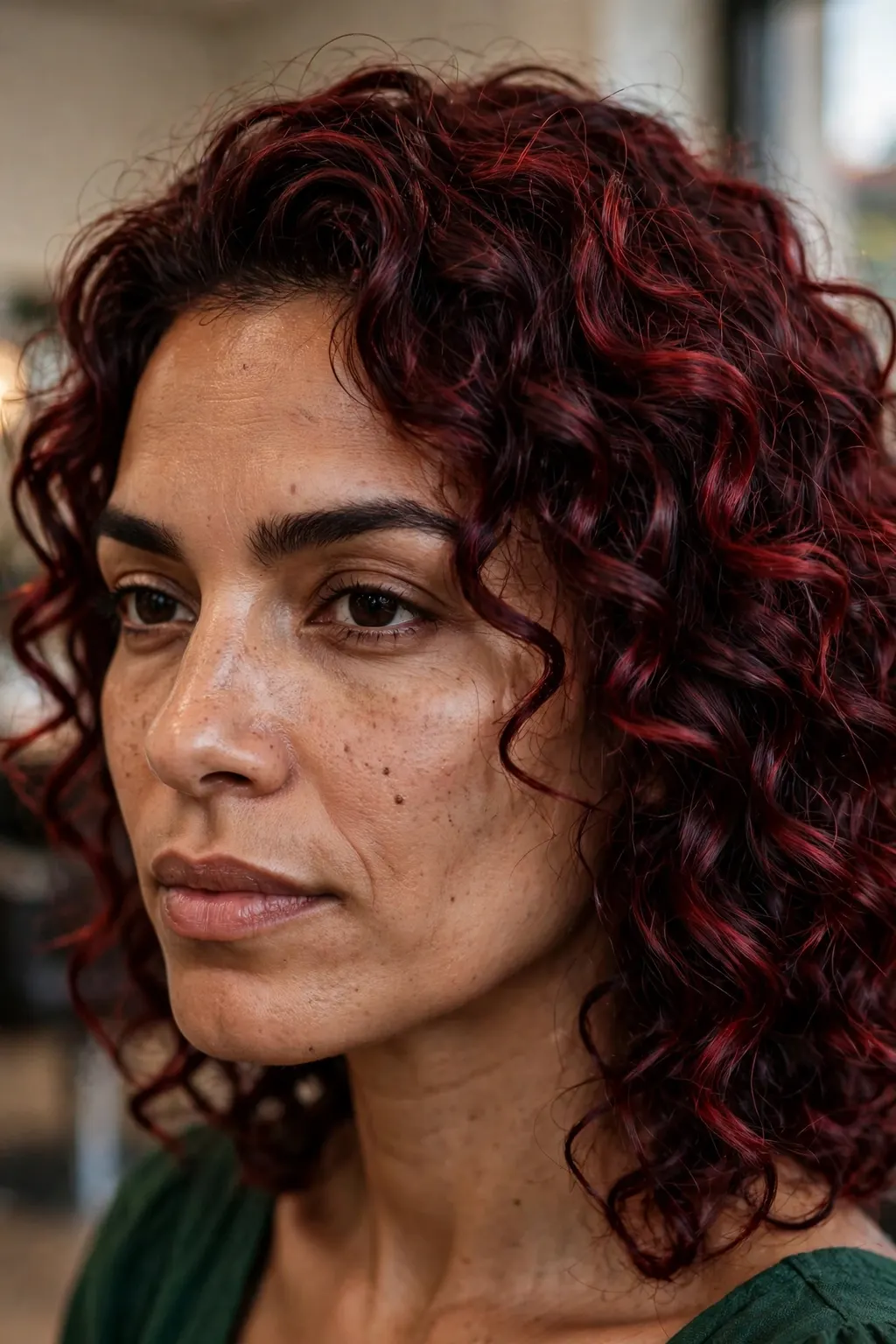
If the gloss feels too soft and you want the cherry to actually show indoors as well as in sunlight, demi-permanent is the next step — and it is still bleach-free. A demi-permanent colour uses a low-volume developer to open the cuticle just enough for the cherry tone to sit inside the hair, not just on top of it. The result is deeper, richer and longer-lasting than a gloss: 6–8 weeks instead of 4–6, with a red that reads clearly even in a dim room. It still does not lift your natural colour, so it still cannot make you brighter than your base — but on dark hair, the depth it gives is exactly what cherry-cola needs to look like a colour rather than a shine treatment.
The trade is a small one: demi-permanent is slightly more commitment than gloss, and it fades a little less evenly, because the tone sits inside the hair and washes out gradually from the inside. But the grow-out is still invisible — there is no line, because the colour was never lighter than your base — and the condition impact is minimal with a low-volume developer and a good conditioner. For most people who know they want cherry-cola and not just a taste of it, demi is the sweet spot: real colour, real longevity, no bleach, no orange stage, and a fade that still looks deliberate. If the gloss is the trial, the demi is the decision.
What to ask your stylist: “Can you do this as a demi-permanent cherry-cola — level 4 or 5, cherry-brown, no lightener? I want the red to show indoors, not just in sunlight, and I want it to fade to a warm brunette, not orange. Please strand-test at the nape first and show me the result in daylight.” Bring a photo of the exact cherry you want in daylight, not under salon lights, and ask what the formula will fade to at week six — a stylist who can answer that knows the colour, and one who cannot is guessing.
Best for: hair types and face shapes
Demi cherry-cola suits the same people as the gloss, with one difference: it suits people who want the colour to be noticed. If your work, your wardrobe or your photographs are mostly indoors, the gloss may disappear in flat light, while the demi still reads as cherry. It suits thick hair particularly well, because thick hair drinks up gloss and can make it look patchy, while demi deposits more evenly through the bulk. It suits long hair too, for the same reason: the ends of long hair are more porous and grab gloss unevenly, while demi evens that out. Face-shape-wise nothing changes — the colour suits warm and neutral tones best, and cool tones should lean burgundy — but the depth of the demi means the colour frames the face more strongly, so a soft face-framing layer or a curtain fringe pairs with it better than a blunt, heavy fringe, which can make the whole look feel dark and closed in.
The exact salon wording
Say: “Demi-permanent, level 4 cherry-brown, no bleach, no lift — I want cherry-cola, not copper and not burgundy. I want it to fade warm, and I want to know what it will look like at week six before we start.” The words “level 4” and “no lift” are the whole brief: they tell the stylist the depth and the rule, and they rule out the permanent red that would lift your base and turn orange as it fades. If the stylist suggests adding bleach “just on the ends so the red pops”, say no — that is a different colour with a different maintenance bill, and it is not cherry-cola without bleach. If the stylist suggests a gloss instead because your hair is fine or damaged, listen: on very fine hair, demi can grab too dark at the roots, and a gloss may be the better first step after all.
Maintenance schedule
Demi cherry-cola needs a little more care than a gloss, but not much: cold washes, colour-safe shampoo, and a cherry-depositing conditioner once a week from week three. Book a gloss refresh at week four or five — a 20-minute cherry gloss over the demi brings the red back to week-one brightness without re-doing the whole colour, and it is the cheapest maintenance in the whole routine. Avoid heat without protectant, because heat opens the cuticle and lets the red escape faster, and avoid swimming in chlorinated water without wetting the hair first and coating it with conditioner — chlorine strips red tones faster than any shampoo. With that routine, a demi lasts a full 6–8 weeks, and the fade is a slow slide from cherry to warm brunette, never a sudden drop to orange.
Cherry Ribbons Through Dark Hair (Foilayage-Lite)
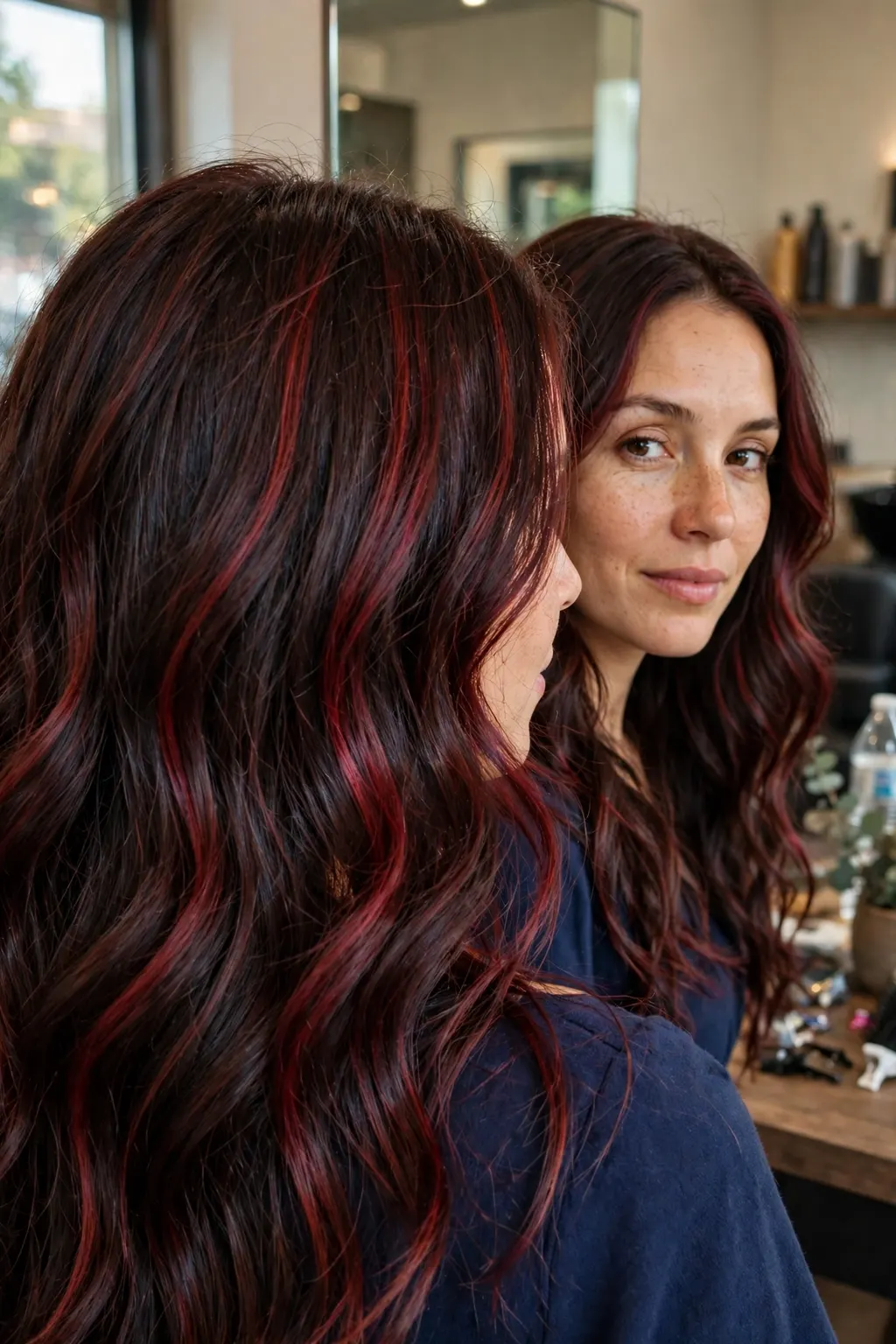
Full-head cherry is not the only way to wear this colour, and for many people it is not the best way. Cherry ribbons — fine, hand-painted strands of cherry through dark hair, sometimes called foilayage-lite — give you the red in movement rather than in a solid block. When the hair is still, it reads as dark brunette. When it moves, when the light catches it, when you turn your head, the ribbons flash cherry. It is the most flattering version of the colour for people who are nervous about going red, because it keeps most of the hair dark and lets the cherry be an accent, and it is the most forgiving version for grow-out, because there is no solid colour line to grow out at all.
The technique is simple in concept and fussy in execution: the stylist paints cherry gloss or demi onto selected strands — the pieces around the face, a few through the crown, more at the ends — and leaves the rest of the hair its natural dark. No bleach is involved, so the ribbons are dark cherry rather than bright red, which is exactly what makes them look expensive: they read as dimension, not as highlights. The placement matters more than the formula. Ribbons at the front frame the face and catch the light in photographs; ribbons through the lengths give movement when the hair swings; ribbons only at the ends give a dipped, cola-bottle effect that is subtle and very wearable. Ask for fewer ribbons than you think you want — you can always add more at the refresh, and you cannot take them out without growing them out.
What it looks like in real life
In real life, cherry ribbons look like your hair, only better — the way dark hair looks in golden-hour sunlight, all the time. Indoors they are a quiet warmth, a richness in the brown that people notice without being able to name. Outdoors they are unmistakable: red threads running through the dark, brightest at the ends and around the face. The effect is strongest on wavy and curly hair, where the ribbons follow the wave pattern and catch the light at every turn, and on long hair, where the ribbons have room to show. On straight, shoulder-length hair they are more subtle — a flash at the ends, a warmth at the front — which is why the length matters: if your hair is shoulder-length and you want the ribbons to show, the 20 Stunning Shoulder-Length Hairstyles in 2025 guide is the next read, because it covers the cuts that give cherry ribbons the movement they need at that length.
Variations worth trying
If full ribbons feel like too much, try a face-frame only: cherry on the two front sections, nothing through the back. It gives you the red where you see it — in the mirror, in photographs — and keeps the rest of the hair dark, which makes it the cheapest and lowest-maintenance version. If you want more, try ribbons concentrated at the ends: a cherry melt from mid-lengths down, darkest at the roots, reddest at the tips, which reads as a cola fade and grows out with no line at all. For curly hair, try ribbons painted onto the curls that sit on top of the canopy — the curls that catch the light — and leave the underlayers dark, which gives dimension without bulk. And for a party version, add a cherry gloss over the whole head at the week-four refresh: the ribbons stay brighter than the rest, and the whole head gets a wash of cherry that ties it together.
When to skip it
Skip ribbons if your hair is very dark black and you want the red to be obvious indoors — without bleach, ribbons on black hair are subtle, and you may be disappointed by how quiet they are in flat light. Skip them if your hair is heavily layered with very short pieces at the crown, because short pieces grab colour unevenly and the ribbons can look patchy. And skip them if you are planning to go lighter in the next few months: ribbons are easy to grow out, but they are still colour in the hair, and a future lightening service will have to work around them. In all three cases the better choice is a full-head gloss first — it gives you the cherry everywhere, evenly, and you can decide from there whether ribbons are the next step or whether the gloss was enough on its own.
The Fade Diary: Weeks 1, 3 and 6
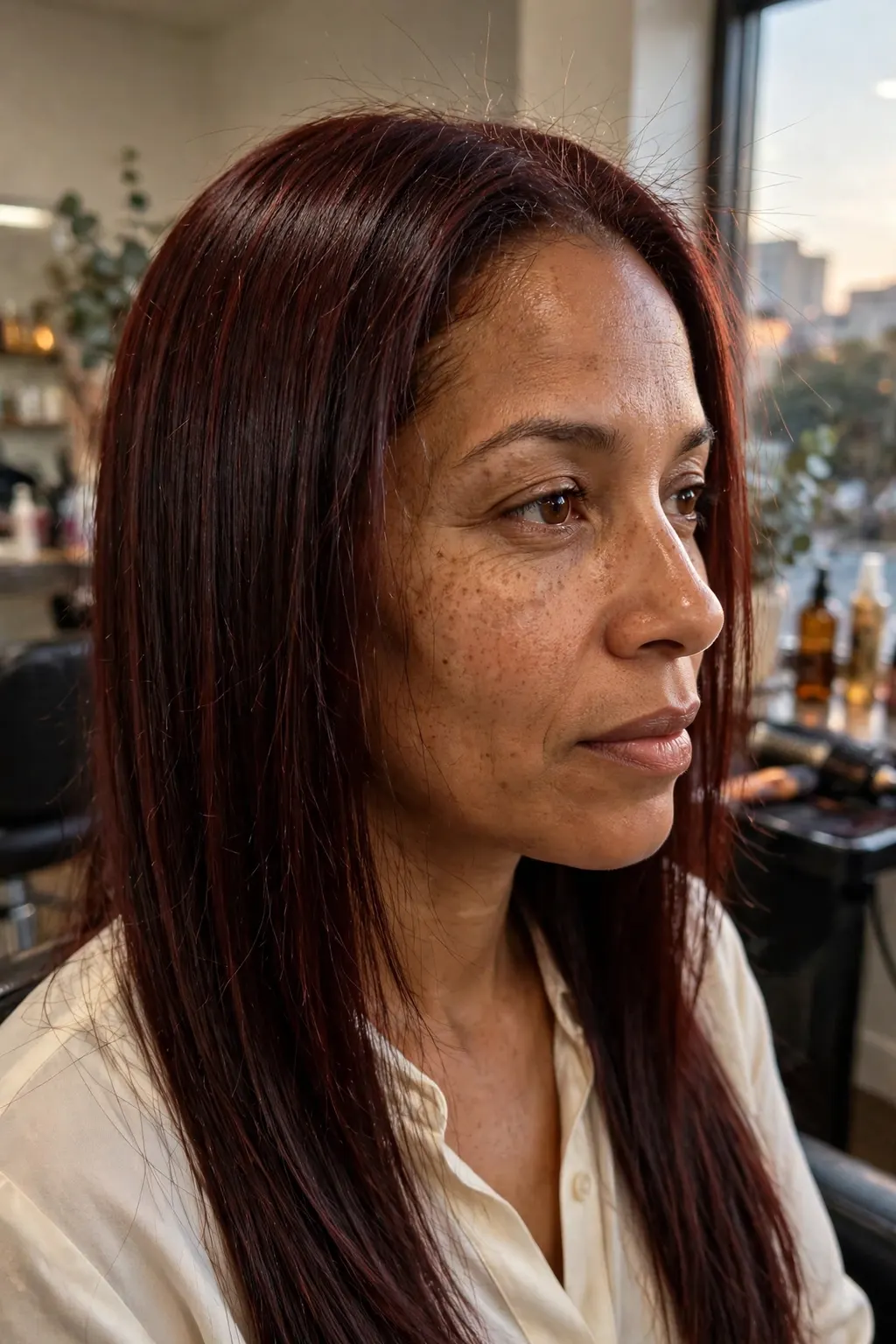
Every red fades, and cherry-cola is no exception — but because there is no bleach underneath, it fades the way a good colour should: gradually, evenly, and into something that still looks intentional. Here is the honest diary, so you know what to expect and when to act. Week 1 is the brightest you will ever see it: the cherry is vivid in sunlight, clearly red indoors, and the shine is at its peak. This is the week to take the photographs. Wash cold, wash rarely — two or three times a week at most — and let the colour settle. Week 2 is the settling week: the brightest red softens by a shade, the gloss shine stays, and the colour starts to look like it belongs to you rather than like a fresh dye job. Most people say week 2 is when they like it best.
Week 3 is the turning point, and the week most people panic about for no reason. The red has softened to a warm brunette with a cherry cast — still clearly cherry-cola in sunlight, more quietly warm indoors. This is the week to start the cherry-depositing conditioner once a week: one use brings the red back a full shade without a salon visit. Week 4 to 5 is the refresh window: book the 20-minute gloss refresh, or do a cherry gloss at home, and the colour jumps back to week-two brightness. Skip the refresh and the colour keeps sliding gently toward warm brown. Week 6 is the decision point: with a refresh, you are back to cherry and the cycle starts again. Without one, you have a soft cherry-brown that still looks good — warm, glossy, dimensional — and you can either refresh it then or let it fade out completely over the next two weeks, with no line and no orange stage. Either way, you are in control.
Who it suits best
The fade diary suits everyone who wears this colour, but it matters most to two groups: people who wash their hair every day, and people with hard water. Daily washing strips red faster than anything else — if you wash daily, expect the week-3 softening to arrive in week 2, and plan the refresh for week 3 instead of week 4. Hard water does the same thing through mineral buildup, so a shower filter or a final cold rinse makes a measurable difference. It also matters for swimmers and gym-goers: chlorine and sweat both push the fade faster, so wet the hair with clean water and coat it with conditioner before a swim, and rinse it the moment you are out. The diary is not a countdown to a bad colour — it is a schedule, and the people who follow it keep their cherry twice as long as the people who do not.
How to ask for it (or do it at home)
At the salon, say: “Show me what this will look like at week six, not just today — and book me a gloss refresh for week four now, while I remember.” Booking the refresh at the same appointment is the single best maintenance decision in this whole guide, because the people who book it keep the colour, and the people who mean to book it later mostly do not. At home, the routine is: cold water, colour-safe shampoo, conditioner every wash, cherry-depositing conditioner once a week from week three, gloss refresh at week four or five. Write the dates down — week 3 conditioner, week 4 refresh — because the fade is gradual enough that you will not notice it day to day, and by the time you do notice it, you are already at week 5.
Styling and upkeep
Style the fade the way you style the colour: smooth finishes show the cherry best at every stage, so a blow-dry or a low-heat flat-iron pass keeps the red visible even as it softens. As the colour fades toward warm brown, a little extra shine helps — a serum on the ends, a gloss spray on the lengths — because shine is what makes a fading red look glossy rather than dull. Avoid the two things that accelerate the fade most: hot water, which opens the cuticle and lets the red wash out, and clarifying shampoo, which strips it in one wash. And do not try to “top up” the colour with a box red dye from the supermarket when it fades: box reds lift, warm unpredictably, and can turn the whole thing orange. A cherry gloss or a depositing conditioner is the top-up; a box dye is a different colour entirely.
Washing Rules That Keep the Red Alive

Red is the fastest-fading colour there is, and cherry-cola is red — so the washing rules are not optional extras, they are the colour itself. The rules are simple, and they work: wash less, wash cold, wash gentle. Wash less means two to three times a week, not daily, and dry shampoo on the in-between days if the roots need it. Every wash takes a little red with it, so every wash you skip is a week of colour saved. Wash cold means as cold as you can stand it for the rinse, even if the wash itself is lukewarm — cold water closes the cuticle and locks the tone in, while hot water opens it and lets the red run straight down the drain. If you can see pink in the shower water, the water is too hot. Wash gentle means a sulfate-free, colour-safe shampoo, a small amount, lathered at the roots only, and conditioner on the lengths only — never shampoo the lengths directly, because the lengths are where the cherry lives and they do not need scrubbing.
The rest is habit, and habit is where the colour is won or lost. Rinse the hair before you get into a pool, so it absorbs clean water instead of chlorinated water. Wear a hat or a scarf in strong sun, because UV fades red faster than almost anything else — cherry-cola in August sun without protection is a different colour by September. Sleep on silk or satin, because cotton rubs the cuticle overnight and dulls the gloss. And keep the clarifying shampoo on the shelf unless you are deliberately removing the colour: one clarifying wash can undo three weeks of careful cold washing. Follow these rules and the fade diary above stretches by a full week or more; ignore them and the colour is gone in a fortnight, and no refresh can quite bring it back to week one.
The technique, step by step
Step one is the wash itself: wet the hair with lukewarm water, apply a coin-sized amount of colour-safe shampoo to the scalp only, massage gently, and let the lather run down the lengths as you rinse — that is enough cleaning for the lengths, and it is the gentlest way to treat them. Step two is the cold rinse: after the conditioner, turn the water as cold as you can stand for the last ten seconds, which closes the cuticle and seals the cherry in. Step three is the drying: squeeze, do not rub, with a microfibre towel or an old cotton t-shirt, which causes less friction than a bath towel. Step four is the leave-in: a pea-sized amount of colour-safe leave-in or a drop of serum on the ends only, never at the roots. Step five is the heat rule: if you use heat, use protectant, keep the iron under 180°C, and do one slow pass instead of three fast ones. Five steps, every wash, and the red stays where it belongs.
Common mistakes to avoid
The most common mistake is washing with hot water because it feels good — it does feel good, and it is the fastest way to lose the colour. The second is using a dandruff or clarifying shampoo without checking the label: many of them strip colour aggressively, and one wash can take you from cherry to brown. The third is over-washing the lengths: shampoo is for the scalp, conditioner is for the lengths, and mixing the two up is how the cherry ends up down the drain. The fourth is skipping heat protectant because “it is only one pass” — one pass without protectant on cherry hair is enough to dull it visibly, and the dullness does not wash out. The fifth is the purple shampoo trap: purple shampoo is for blonde, not for cherry-cola, and it will muddy the red into a flat brown-purple. Keep it far away from this colour.
Products and tools that help
You need four products, and only four: a sulfate-free colour-safe shampoo, a colour-safe conditioner, a cherry-depositing conditioner for weekly use from week three, and a heat protectant. A shower filter is the fifth, if your water is hard — it is the single best investment for any red, because mineral buildup is the silent killer of cherry tones. A microfibre towel and a silk pillowcase are the cheap wins that make a real difference over six weeks. And a cherry gloss in a bottle, kept in the cupboard for the week-four refresh, is the product that turns a fading colour into a maintained one. Everything else — the masks, the oils, the sprays — is optional. These four, used correctly, are the whole routine.
Refreshing at Home Without Colour Creep
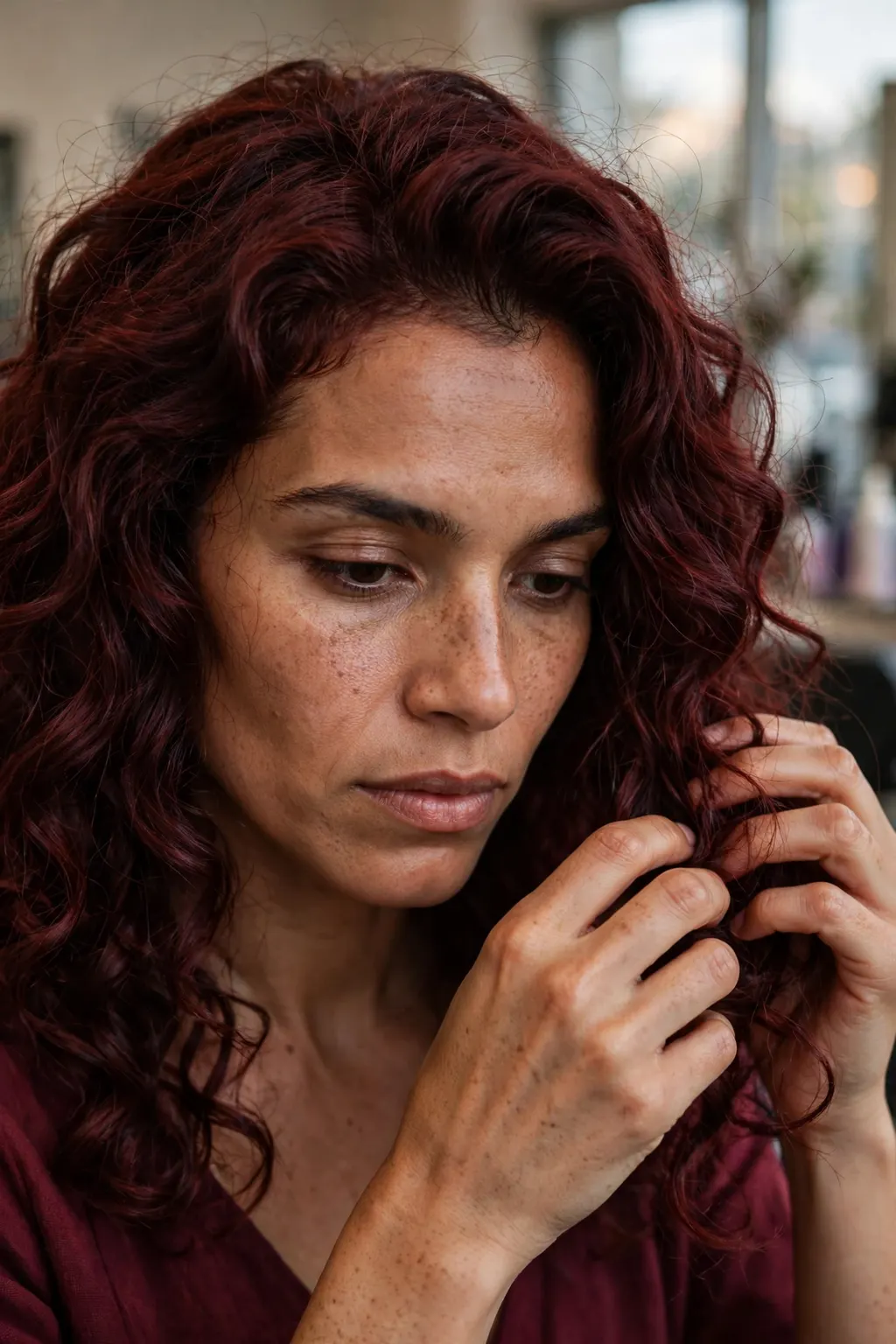
Colour creep is the quiet problem of cherry-cola maintenance: every refresh deposits a little more red, and if you refresh too often, or with too strong a product, the colour slowly creeps darker and redder than you wanted, until the soft cherry becomes a flat, dark red with no dimension left. The fix is to refresh gently and on a schedule, not whenever the colour looks a little faded. A cherry-depositing conditioner once a week from week three is gentle enough to use regularly — it deposits a small amount of tone each time, and it washes out gradually, so it cannot creep. A cherry gloss at week four or five is the bigger refresh, and it should be a one-off, not a weekly habit. And a full demi re-application should wait until week six or eight, when the colour has genuinely faded, not at week three when it has only softened.
The rule is: refresh the tone, not the depth. The tone is the cherry — the red cast — and that is what fades first and what you want back. The depth is the brown underneath, and that does not fade at all, so adding more depth with every refresh is how the colour goes muddy. A depositing conditioner refreshes tone without touching depth, which is why it is safe weekly. A gloss refreshes tone with a little shine, and is safe monthly. A demi refreshes both, and is safe every six to eight weeks. Keep to that ladder — conditioner weekly, gloss monthly, demi every two months — and the colour stays exactly where you put it, bright at the start, soft at the end, and never creeping darker.
Best for: hair types and face shapes
The refresh ladder suits everyone, but it matters most for fine hair and for porous ends. Fine hair grabs colour fast, so a strong refresh product can take it too dark in one use — on fine hair, use the depositing conditioner for half the recommended time the first time, and check the result in daylight before you leave it on longer. Porous ends — the ends of long hair, or hair that has been bleached before — grab colour even faster, and they are where creep shows first, as ends that go darker and redder than the roots. On porous ends, apply the refresh product to the roots and mid-lengths first, and only to the ends for the last few minutes. And for everyone: always strand-test a new refresh product at the nape, even if you have used the brand before, because formulas change and your hair changes, and a test costs five minutes.
The exact salon wording
Say: “I want a gloss refresh, not a re-colour — just the cherry tone back, same depth, no darker. Can you do the gloss only, and leave the demi for week eight?” That sentence tells the stylist exactly what you want and rules out the two most common refresh mistakes: re-applying the full demi too soon, which darkens the colour, and using a stronger formula “to make it last longer”, which does the same thing faster. At home, the equivalent is to read the product label and follow it literally — depositing conditioner, once a week, the time it says, no longer — and to resist the temptation to leave it on “just a bit longer” for a stronger result. Longer is darker, and darker is creep. The colour you liked at week one was the colour at the recommended time, not at double it.
Maintenance schedule
The maintenance schedule for cherry-cola is a rhythm, not a chore: weeks 1–2, wash cold and leave it alone; week 3, start the weekly depositing conditioner; week 4–5, the gloss refresh, salon or at home; week 6, decide — refresh the demi, or let it fade out. After the demi refresh, the cycle starts again from week 1. Put the dates in your phone when the colour goes on, because the fade is gradual and you will not notice it until it is already at week 5. And keep one bottle of the depositing conditioner in the shower and one gloss in the cupboard, so the refresh is always a decision you can make in five minutes, not a shopping trip you keep postponing. The people whose cherry lasts are not the people with the best products — they are the people with the products already in the cupboard.
📌 Save this before your refresh — conditioner weekly, gloss monthly, demi every two months. Refresh the tone, never the depth, and the colour will never creep darker.
When Cherry-Cola Is Wrong for You: Undertones and Wardrobe
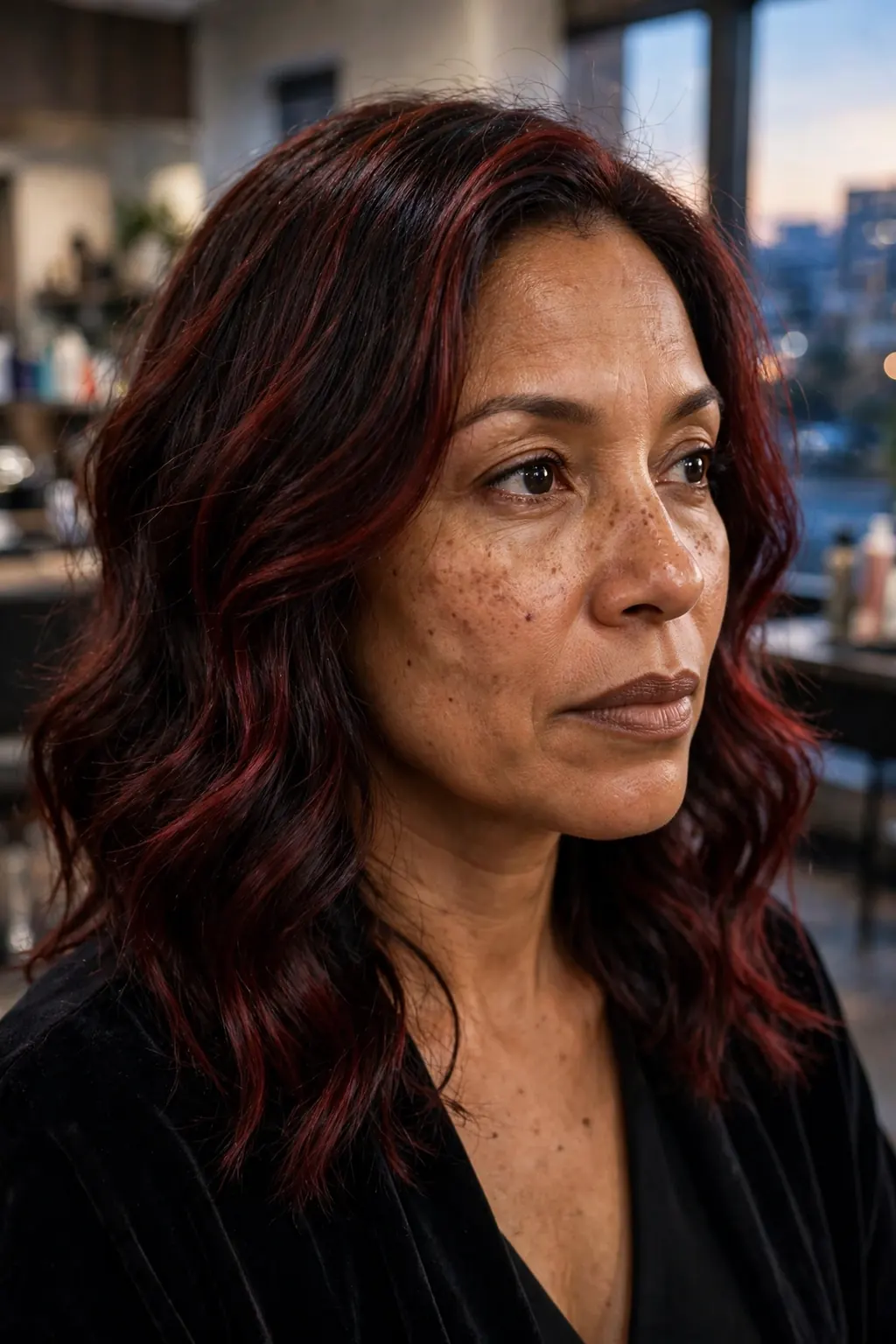
Cherry-cola is a generous colour, but it is not a universal one, and the honest version of this guide says so. It is wrong for you if your skin is very cool-toned and you wear mostly cool colours — silver jewellery, blue-based makeup, icy pastels — because the warm red in the hair will argue with the cool tones everywhere else, and the argument shows in every photograph. It is wrong if your wardrobe is mostly warm orange or yellow, for the opposite reason: warm red hair plus warm orange clothes can turn the whole look brassy, and the hair gets blamed for what the clothes did. It is wrong if you want a colour you can forget about for three months — cherry-cola is a colour you maintain, and if you will not wash cold and refresh at week four, it will fade to a warm brown that you did not ask for, and you will be unhappy with it for the wrong reason.
It is also wrong in one specific, practical case: if your hair is already permanently coloured a very dark black, and that black is sitting on the lengths. Gloss and demi over old black can grab unevenly, and the cherry may show on the roots and disappear on the lengths, which looks patchy rather than dimensional. In that case, the right move is to grow the old black out a little first, or to start with ribbons through the lengths rather than a full-head colour, so the uneven base does not show. None of this makes cherry-cola a bad colour — it makes it a colour with a type, like any other. The people it suits love it for years. The people it does not suit are happiest if they find out before the appointment, not after it.
What it looks like in real life
In real life, the wrong cherry-cola looks like a colour that is fighting the person wearing it: the skin looks flushed, the clothes look wrong, the hair looks like it belongs to someone else. The right cherry-cola looks like the opposite — the skin glows, the wardrobe suddenly works better, the hair looks like it grew that way. The test is the wardrobe test: hold the cherry up against your three most-worn outfits in daylight, and look at the whole picture, not just the hair. If the outfits look better with the cherry in them, the colour is right. If they look worse, the colour is wrong, and no amount of styling will fix it — because the problem is not the hair, it is the harmony. And try the jewellery test too: gold warms cherry-cola up beautifully, silver cools it down and can make it look muddy, so if you are a silver person, ask for the cooler, burgundy-leaning cherry, or skip the colour altogether.
Variations worth trying
If full cherry-cola is wrong for your undertone but you still want the warmth, try a cooler variation: a burgundy-cherry, a black-cherry, or a cherry so deep it reads as dark brown indoors and only shows red in sunlight. Those variations suit cool skin far better than the classic warm cherry, because the red is bluer and the clash disappears. If the wardrobe is the problem, try ribbons instead of full colour: a few cherry strands through dark hair give you the warmth without committing the whole head, and the wardrobe clash is smaller because most of the hair is still dark. And if you love warm red but want something softer than cherry, the Oxidised Copper for Brunettes Who Hate Orange guide covers the copper route that skips the orange stage.
When to skip it
Skip cherry-cola if you are about to go on a beach holiday with daily swimming — chlorine and sun will strip it in a week, and you will come home with a colour you did not pay for. Skip it if you are planning a major colour change in the next two months, because cherry sits in the hair and has to be grown out or removed before the next colour can go on cleanly. Skip it if your hair is very damaged and porous all the way through, because porous hair grabs the cherry unevenly and the result is patchy, not dimensional — in that case, repair the hair first, then colour it. And skip it if you tried a red before and hated the fade: cherry-cola fades the way all reds fade, and if the fade was the problem last time, it will be the problem this time too, no matter how good the formula is.
Frequently Asked Questions
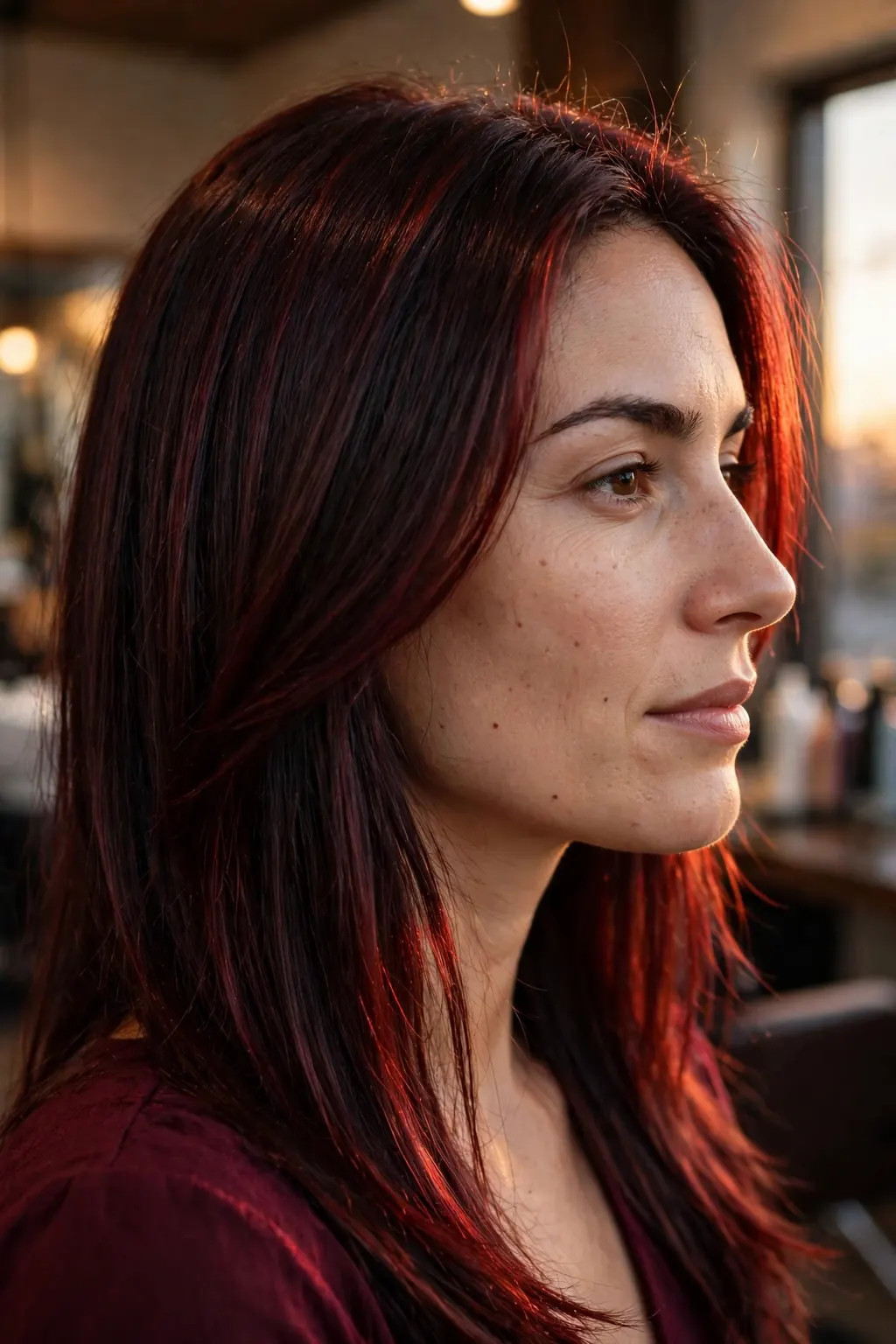
Can you get cherry-cola hair without bleach?
Yes — on dark brown or black hair, a cherry gloss or a demi-permanent cherry-cola deposits red tone on top of your natural depth without lifting it, so no bleach is needed. The result is a deep cherry-brown that shows red in sunlight and evening light, rather than a bright candy red — which is what makes it wearable and damage-free. It will not work the same way on hair that is already very light, where the cherry can go brighter than intended, or on hair with old permanent black sitting on the lengths, where it can grab unevenly. For natural dark hair, gloss first for the softest result, demi for a deeper one, and strand-test at the nape in daylight before you commit.
How does cherry-cola hair fade week by week?
It fades gradually and evenly, because there is no bleach underneath. Week 1 is the brightest, week 2 is the settled sweet spot most people like best, week 3 softens to a warm brunette with a cherry cast, and by week 6 it is a soft cherry-brown — still warm and glossy, never orange. A cherry-depositing conditioner once a week from week 3, and a gloss refresh at week 4–5, brings the red back to week-two brightness. Without a refresh, the colour keeps fading gently over the next two weeks with no line and no orange stage. Cold water and colour-safe shampoo stretch every stage by a week or more.
Gloss vs demi-permanent — which lasts longer on dark hair?
Demi-permanent lasts longer: 6–8 weeks against a gloss’s 4–6, and the red shows indoors as well as in sunlight, because the tone sits inside the hair rather than just on top of it. A gloss is gentler, shinier and lower-commitment — it washes out with no line and actually improves the condition of tired hair — so it is the better first step if you are unsure, or if your hair is fine or damaged. The best routine is both: start with a gloss, live with it for a month, then go demi if you still want more red, and keep the colour alive with a gloss refresh at week four. That way you never commit to a depth you have not already lived with.
Conclusion: Cherry-Cola Brunette Without Bleach — Your Next Step
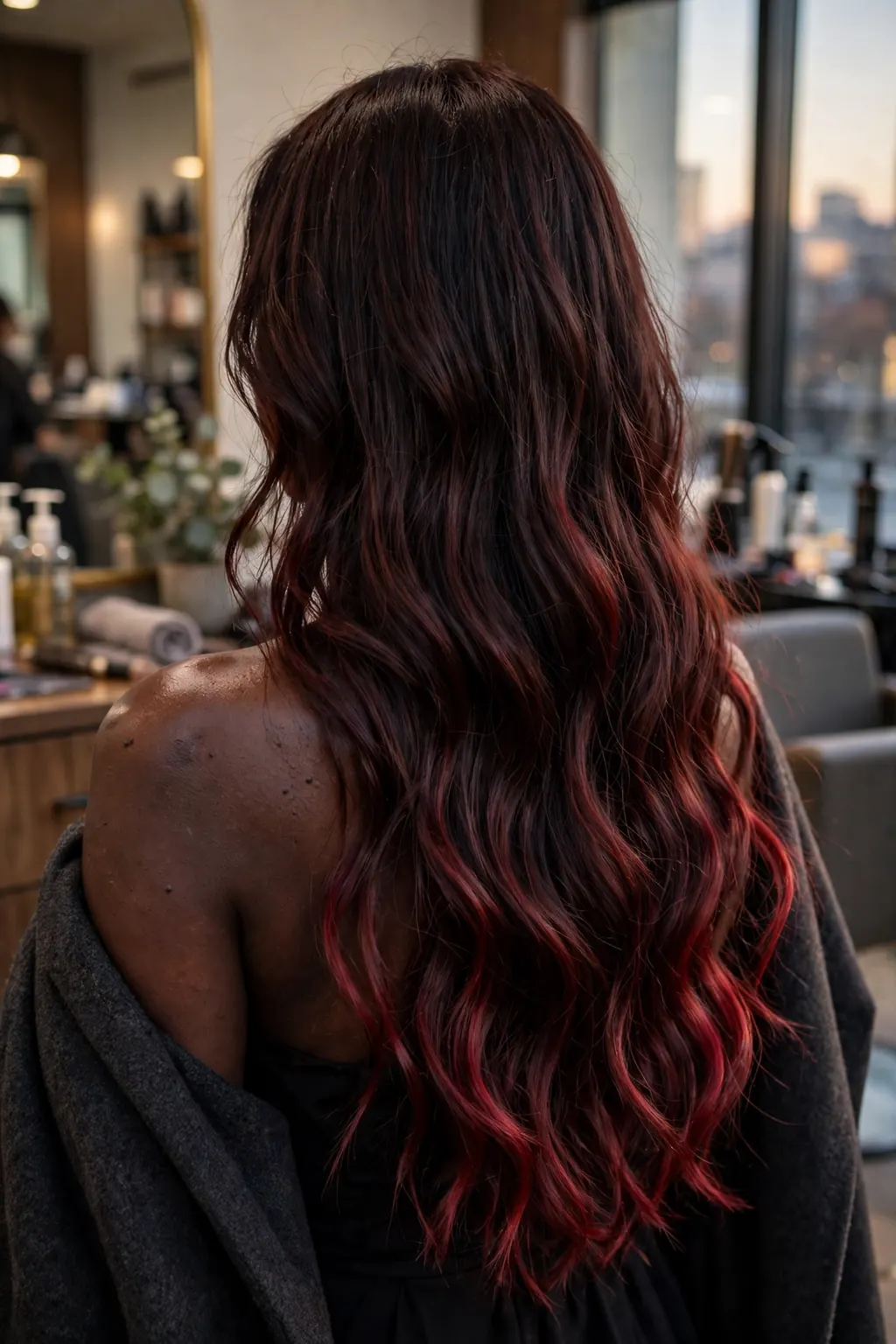
Cherry-cola without bleach comes down to three decisions: gloss or demi, full colour or ribbons, and whether you will maintain it. A gloss is the one-hour, low-risk first step — soft, shiny, gone in a month if you hate it. A demi is the deeper, longer version for people who know they want the cherry to show indoors too. Ribbons are the accent version, for people who want the red in movement rather than in a solid block. Around those three choices, the details do the work: cold water, colour-safe shampoo, a depositing conditioner from week three, a gloss refresh at week four, and the fade diary so you always know which week you are in and what to do about it.
Start with the smallest step that helps most: book the gloss, not the demi, and live with it for a month. Take the photographs in week one, enjoy the sweet spot in week two, and start the depositing conditioner in week three. If you still want more red at week four, the demi is waiting — and you will be choosing it from experience, not from a photograph. And if the gloss was enough, you have found your colour for the price of one hour and no damage at all. Either way, the cherry is yours, the bleach never touched your hair, and the fade — when it comes — will be a slow slide into warm brown, never a crash into orange.
📌 Save this before you book — gloss first, demi second, ribbons if you want the red in movement. Cold water, colour-safe shampoo, conditioner at week three, gloss at week four. That is the whole routine, and it is the difference between a cherry that lasts six weeks and one that is gone in two.