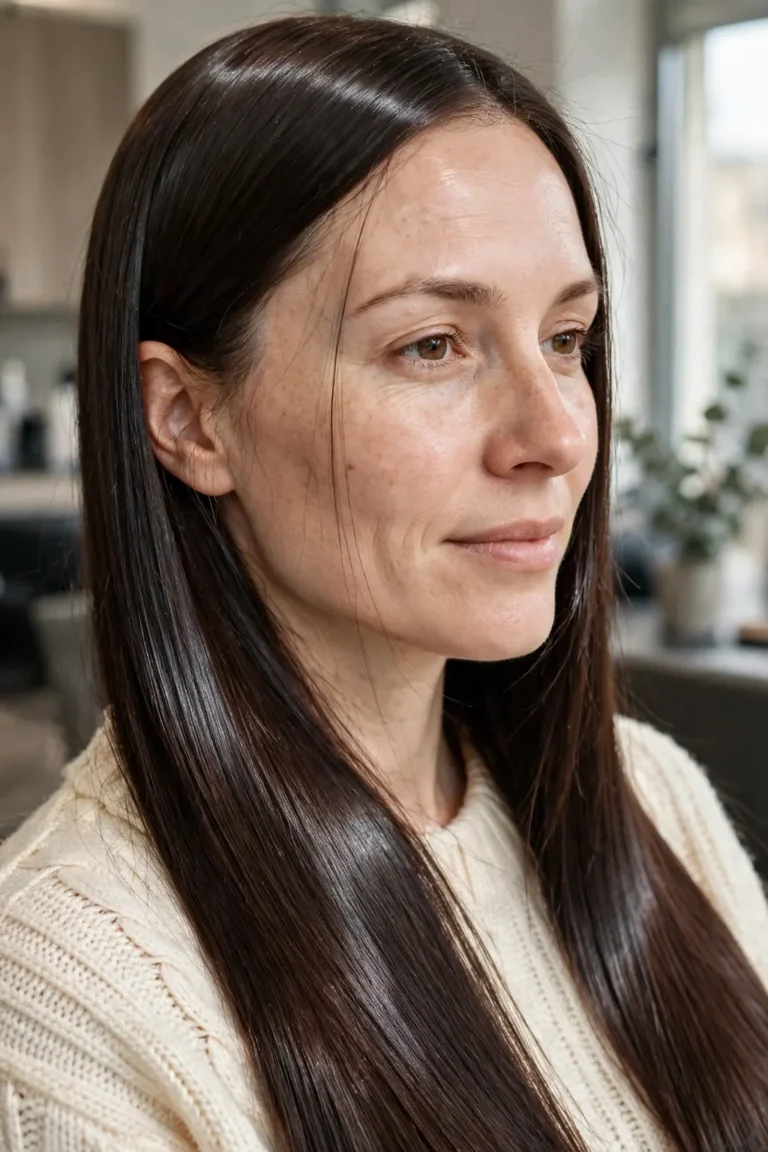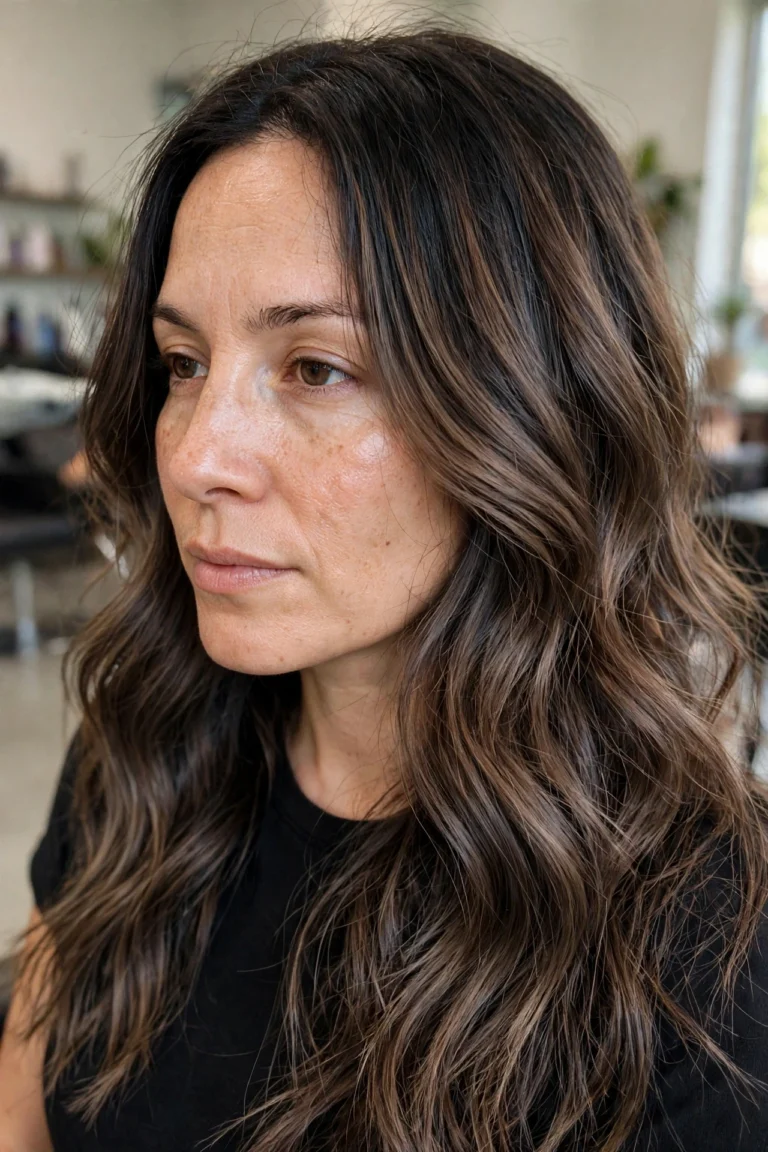
Soft Copper Blonde After Platinum: The Lower-Bleach Route for Tired, Snapping Hair
Platinum is a beautiful colour to wear and a hard colour to keep. After enough rounds of bleach, the hair tells you it is tired: it snaps when it is wet, it feels like cotton wool when it dries, and the colour that used to glow now looks grey at the roots and yellow at the ends. The answer is not more bleach, and it is not going back to dark in one jump either. Soft copper blonde is the middle road — a warm, strawberry-copper blonde that sits a few levels darker than platinum, so it needs far less lightening to maintain, while still reading as blonde. This article shows why platinum hair takes copper so well, why the fill step is not optional, and how to make the first month of the switch without a breakage setback.
Quick answer: Ask for a soft copper blonde — a warm strawberry-copper at about a level 8, over a copper-gold fill, never direct copper dye on bare platinum, or it grabs pink and fades patchy within two weeks. Add a bond treatment in the same appointment and smudge the root for a soft grow-out, then refresh the tone every 6–8 weeks.

Why Platinum Hair Is Ready for Copper (Porosity Works For You Here)
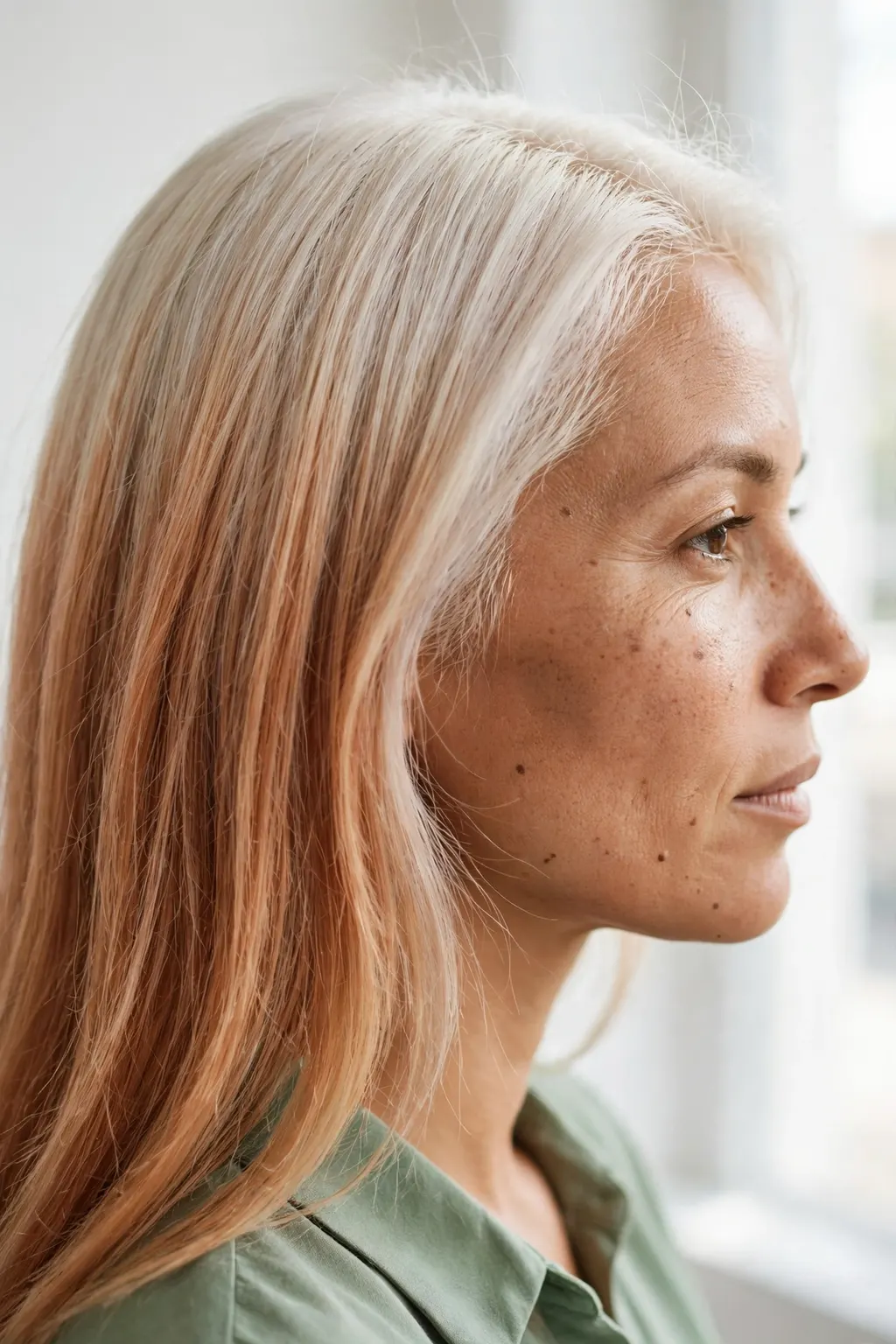
Platinum hair is porous hair, and for once the porosity is on your side. Bleach lifts the cuticle and empties the hair of pigment, which is why platinum fades fast and feels rough — but it is also why copper takes so readily. A porous strand drinks colour in evenly and quickly, so a soft copper blonde deposits in one appointment, with no pre-lightening and no second round of bleach. The colour you put on is the colour you get, and the warmth that platinum wearers usually fight — the yellow, the gold — becomes the base of the new shade instead of its enemy.
The other reason the switch works is the level change. Platinum sits at a level 10 or 11; soft copper blonde sits around a level 8. Going two to three levels darker means the new colour has depth to hide behind: the roots grow out as a soft shadow rather than a hard line, the ends stop looking transparent, and the hair photographs with dimension again instead of one flat sheet of pale. It is the rare colour change that is both gentler on the hair and easier to live with than the shade it replaces.
Who it suits best
It suits anyone whose platinum has become a maintenance burden — the bleach appointments every four weeks, the purple shampoo, the breakage at the brush. It suits fine hair especially well, because the added depth makes fine hair look thicker than platinum ever did, and it suits anyone whose skin has a warm or neutral undertone, because copper blonde warms the face where platinum can wash it out. Very fine hair with wide gaps at the front should still be careful — a light fringe over a copper blonde shows scalp the same way it did over platinum — and the fuller options in our 30 hairstyles ideas for fine hair guide are worth a look before the cut is decided.
How to ask for it (or do it at home)
At the salon, say “I want to move from platinum to a soft copper blonde — a warm strawberry-copper, about a level 8, not orange and not pink. I need a fill first, and a bond treatment in the same appointment. Can we smudge the root so the grow-out is soft?” At home, this is not a first-time box dye: the fill shade, the timing and the porosity of the ends are judgement calls, and a box cannot make them. If the budget only stretches to one salon visit, spend it on the fill and the first copper — the maintenance after that is genuinely doable at home.
Styling and upkeep
Copper blonde styles best with the least heat. A blow-dry with a round brush shows the warmth, and a loose wave with a curling iron on a medium setting shows the dimension — but a flat iron used too hot strips the copper tone from the ends within a few uses. Between washes, dry shampoo at the roots and a shine spray on the lengths keep the colour looking fresh without adding a wash day, and a silk pillowcase at night cuts the friction that snaps tired ends.
The Fill-First Rule: Why Copper Over Platinum Turns Pink Without It
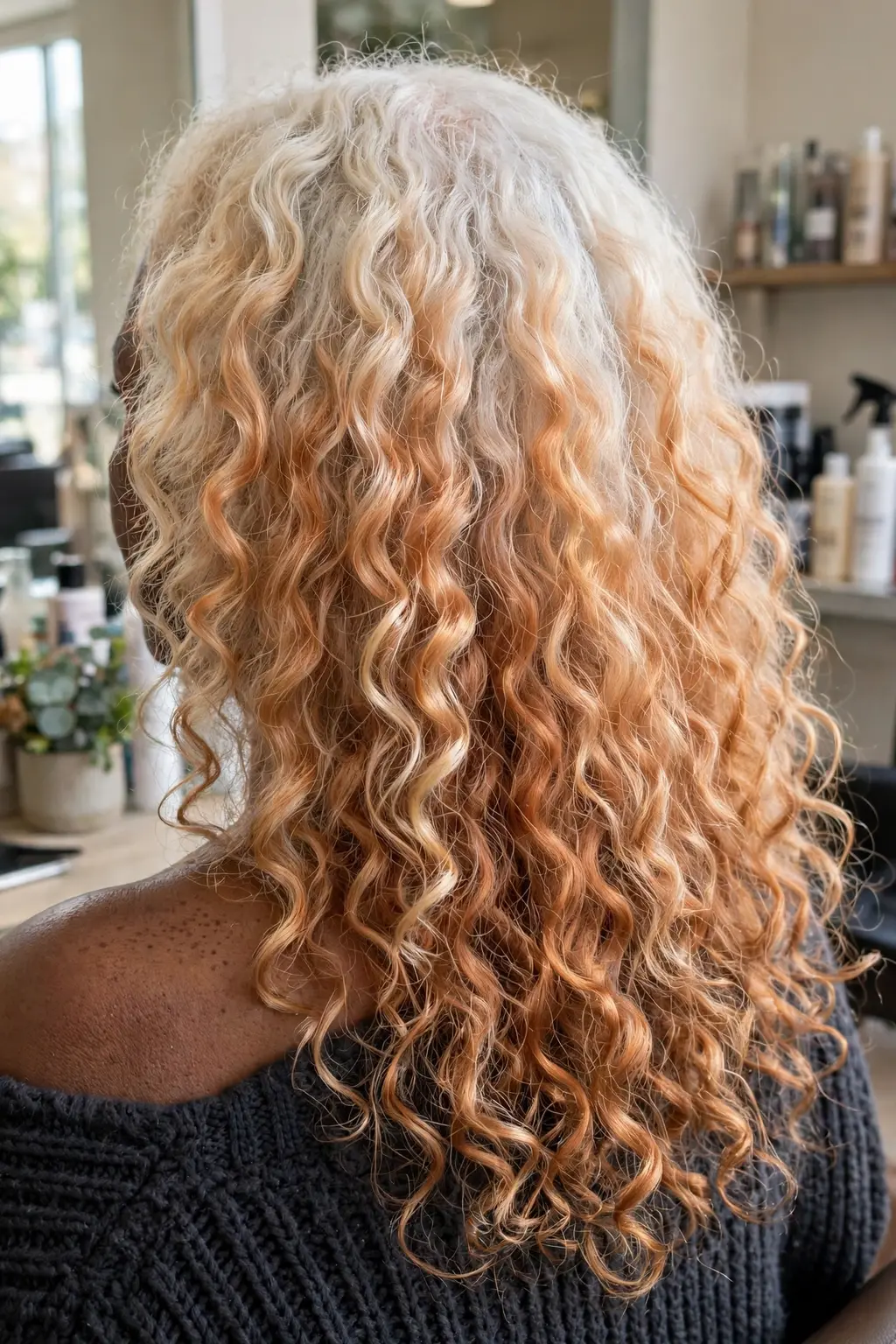
The fill is the step that decides whether this transition works. Platinum hair has had its warm pigment stripped out, and copper is a warm colour — so putting copper dye directly onto bare platinum sounds like it should work. It does not. Without the underlying gold and copper pigment that natural hair carries, the dye has nothing to anchor to: it grabs hardest where the hair is most porous (the ends), goes pink where the hair is most lifted, and washes out patchily within two weeks. The fill puts the missing warm pigment back first — usually a copper-gold shade, applied and processed before the target colour — so the copper blonde on top has something to hold onto.
The fill adds about thirty minutes to the appointment and it is the reason the colour lasts eight weeks instead of two. The colourist should explain it before starting and warn you that the hair will look coppery after the fill alone — that is correct, and it is temporary. The soft copper blonde goes on top, and the finished result is the strawberry-copper you asked for, not the raw copper underneath it. If a salon offers to skip the fill to save time, that is the appointment to walk away from.
The technique, step by step
The fill goes on first, roots to ends, and processes for about twenty minutes — longer on the ends, where the hair is most porous. The target copper blonde is then applied over the fill without rinsing it out, so the two layers work together rather than as separate coats. The whole head is processed, rinsed cool, and finished with a bond treatment and a gloss, which seals the cuticle and locks the tone in. The rinse water will run coppery for the first wash or two; that is surface colour, not the fill failing.
Common mistakes to avoid
Skipping the fill is the first mistake, and the pink result is the proof. The second is going too coppery in one step — a level 7 copper on level 11 hair looks orange, not soft, and the fix is another appointment, not a toner. The third is toning with purple shampoo afterwards out of habit: purple neutralises yellow, and on a copper blonde it neutralises the warmth you just paid for, turning the colour muddy within a week. Put the purple shampoo away the day the copper goes on.
Products and tools that help
A copper-depositing conditioner once a week keeps the tone true as it fades, and a sulfate-free, colour-safe shampoo is non-negotiable — sulfates strip copper faster than any other tone. A bond-building treatment at home, once a week for the first month, repairs the damage the bleach already did while the new colour settles. For styling, a heat protectant every time, and a flat iron kept at 160–180°C: above that, the copper leaves the ends first.
Soft Copper Blonde Formulas by Starting Level

The formula depends on where the hair starts, and platinum is not one starting point. Hair that is evenly lifted to a level 10 takes a level 8 copper blonde over a copper-gold fill and lands soft and even. Hair that is a patchy level 9–10 — lighter at the ends, yellower at the roots — needs the fill adjusted section by section, with a little more gold at the roots and a little more copper at the ends, so the finished colour is one shade instead of three. Hair that is still holding a level 7 band from an old colour needs that band filled more heavily, or the copper will sit darker there and stripe.
The shade itself is a balance: too much gold and it reads strawberry blonde, too much copper and it reads orange. A good soft copper blonde is roughly two parts gold to one part copper at a level 8, with a gloss on top to soften the edge. The colourist should show you the swatch in daylight, not under salon fluorescents, because the undertone that looks right under salon lights is the one that surprises you at home.
Best for: hair types and face shapes
The level-8 formula suits fine and medium hair best, because the depth gives fine hair body and the warmth gives medium hair glow. Thick hair can wear it too, but needs the copper kept soft — a strong copper on very thick hair reads orange from a distance. It suits warm and neutral skin tones most naturally; cool skin tones can wear it if the copper is kept strawberry-soft rather than rusty, with the gold doing most of the work. Round faces benefit from the root smudge in the next section, which adds height at the crown.
The exact salon wording
“I want a soft copper blonde, about a level 8 — two parts gold, one part copper, strawberry not orange. Fill first with a copper-gold, then the target shade over it, and a bond treatment in the same appointment. Can you show me the swatch in daylight before we start, and tell me how the formula changes for my roots versus my ends?” If the colourist cannot explain how the formula changes across the head, the head is not ready for this transition.
Maintenance schedule
A copper blonde needs a tone refresh every 6–8 weeks — a gloss or a copper-depositing mask at the salon, not a full recolour. The roots, growing in at your natural level, need attention at 8–10 weeks, and only then is a small amount of lightener involved, just on the regrowth. Between appointments, the copper conditioner once a week and cool washes hold the tone. Over a year, that is roughly half the bleach of a platinum routine.
What to ask your stylist: “I want to leave platinum for a soft copper blonde — level 8, strawberry-copper, not orange and not pink. Will you fill first with a copper-gold, and can you add a bond treatment in the same appointment? I want a root smudge so the grow-out is soft, and I want to know the refresh cycle — when do I come back for a gloss, and when do the roots need lifting?”
Root Smudge: Blending the Line While You Transition

A root smudge is a soft, darker shade painted at the roots and feathered down a few centimetres, and it is what makes this transition livable. Platinum grow-out is a hard line — pale hair against dark roots, visible from across the room. A smudge in a level 7 warm copper-brown blurs that line into a gradient, so the roots grow out as a shadow rather than a stripe. It also buys time: with a smudge, the roots can grow two centimetres before anyone notices, instead of one.
The smudge is painted, not foiled, and the feathering is the whole skill. The colourist applies the deeper shade at the root and blends it downward with a brush, so there is no line where the smudge ends and the copper blonde begins. Done well, you cannot see where one shade ends and the next begins — you just see depth at the crown. Done badly, it is a dark root with a visible edge, and the grow-out looks worse than no smudge at all. Ask to see photos of the colourist’s own smudges in daylight before you book.
What it looks like in real life
In real life, a smudged copper blonde looks like hair that was always this colour — deeper at the crown, lighter through the lengths, with movement even when it is still. In sunlight the ends glow strawberry-copper; indoors the root shadow keeps the colour from looking flat. It suits long hair especially well, where the gradient has room to build, and it is the version to choose if you wear your hair up often, because the smudge hides the root line at the parting.
Variations worth trying
A deeper smudge at a level 6 for very dark natural roots, kept warm so it never goes ashy. A softer smudge at a level 8 for light natural hair, where the gradient is barely there and the grow-out is nearly invisible. And a smudge with a few face-framing ribbons of the lightest copper left out around the face, so the front stays bright while the crown stays soft — the brightest version of this transition, and the one that photographs best.
When to skip it
Skip the smudge if your natural roots are already close to the copper blonde — a level 7 or 8 natural base needs no blending, and a smudge would only darken what is already right. Skip it too if you plan to go back to platinum within two months: the smudge adds depth that has to be lifted out again, and the bleach to remove it costs more damage than the smudge saved. This transition is for people leaving platinum, not visiting copper on the way back.
Bond Care During the Switch: The First Month
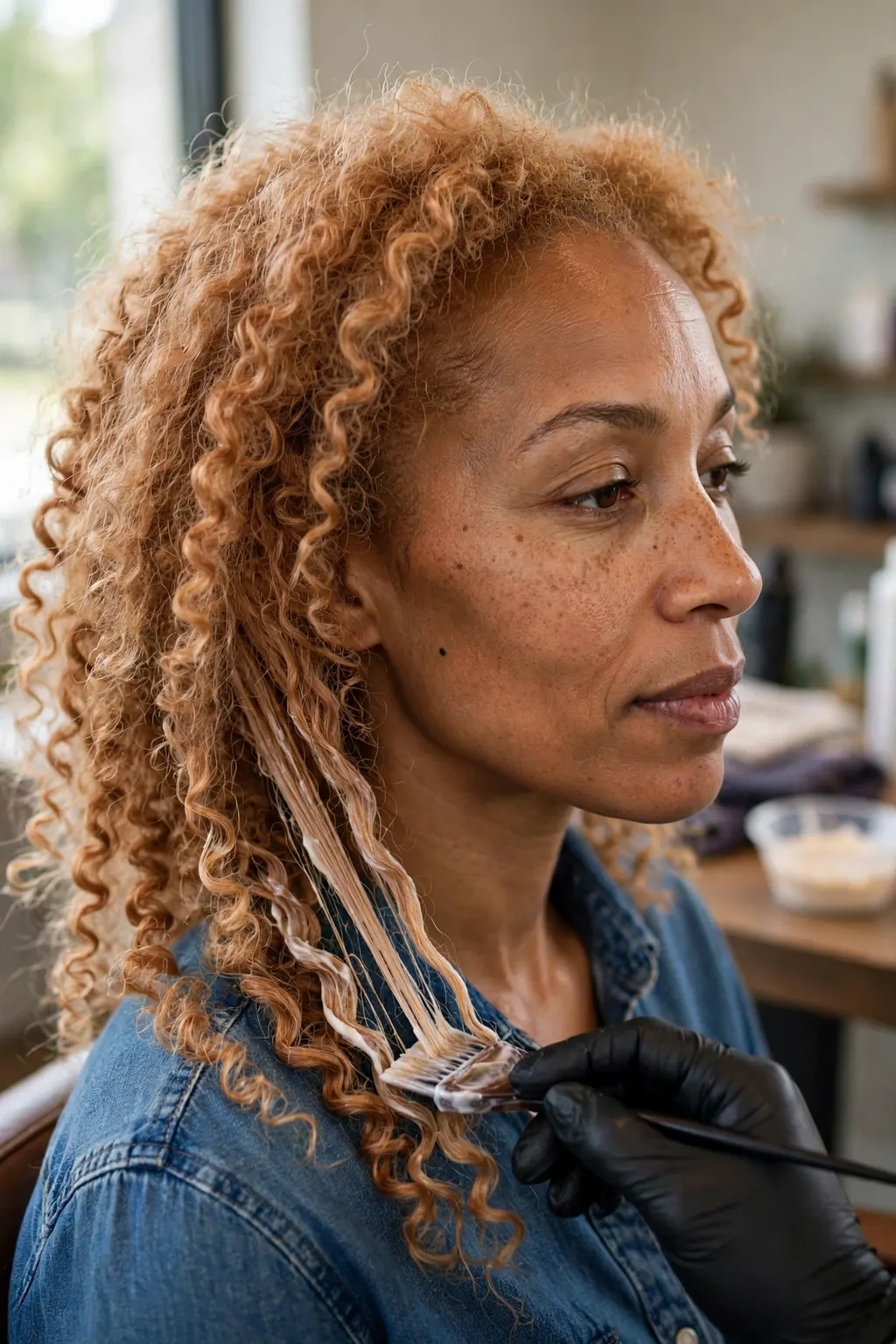
The first month after the switch is when the hair decides whether the transition was a rescue or just a new colour on the same damage. Bleach breaks the bonds inside the hair shaft, and no colour — copper included — repairs them. What repairs them is bond care: a treatment that rebuilds the broken links, applied in the salon on the day of the colour and repeated at home once a week for the first month. The hair that gets it stops snapping at the brush within a fortnight; the hair that does not keeps snapping, and the copper gets blamed for damage the bleach already did.
The routine for the first month is simple and it works: wash twice a week at most, in lukewarm water, with a sulfate-free shampoo on the roots only; a bond treatment once a week, left on for ten minutes; and no heat styling above 180°C at all for the first two weeks. For the full cold-weather moisture routine that protects the lengths between washes, see our winter hair care routine for dry hair. The hair will feel different before it looks different — softer when wet, less stretchy when pulled — and the colour will hold better on repaired hair, because a sealed cuticle keeps the copper in instead of letting it wash down the drain.
Who it suits best
Bond care suits every platinum-to-copper transition, but it suits the worst damage most: hair that snaps when wet, hair that stretches and does not spring back, hair that feels like cotton wool when it dries. It suits long hair well, where the ends are oldest and most damaged, and it suits anyone who heat-styles daily, because the treatment is the only thing standing between the iron and the next break. If your hair is only lightly bleached and still springs back when pulled, a single in-salon treatment and a monthly at-home mask is enough.
How to ask for it (or do it at home)
At the salon, say “Can we add a bond treatment to the colour appointment — in the colour, and as a standalone step after the rinse? And which at-home treatment matches it, so I am not mixing systems?” At home, the routine is: once a week, after shampoo, apply the treatment to the mid-lengths and ends, leave it for ten minutes, rinse cool, and condition as normal. Do not overlap it with a protein mask in the same week — too much protein makes damaged hair stiff and more likely to snap, not less.
Styling and upkeep
For the first month, style with the least heat possible. Air-dry when you can, and when you cannot, blow-dry on medium heat with a round brush rather than a flat iron. A loose braid at night, a silk pillowcase, and a wide-tooth comb on wet hair instead of a brush are the three habits that stop the most breakage. If a section keeps snapping despite the treatment, it needs a trim, not more product — dead ends do not repair, and cutting them is what lets the rest of the hair recover.
Styling Warm Blonde Without Brassiness

Warm blonde and brassy blonde are separated by a fine line, and styling is where the line is crossed. Brassiness is not a colour problem — it is a light problem: copper that has faded unevenly, ends that have gone yellow while the roots stayed warm, and heat damage that has stripped the tone from the lengths. The styling that keeps a copper blonde warm rather than brassy is the styling that protects the tone: medium heat, heat protectant every time, and finishes that add shine rather than stripping it.
The best test is daylight. Style the hair, step outside, and look: a warm copper blonde glows strawberry-gold in the sun; a brassy one goes yellow-orange at the ends. If the ends are the problem, the fix is not more styling — it is a copper-depositing conditioner on the ends for five minutes, which evens the tone before the next heat styling. A shine spray on the lengths, never on the roots, restores the gloss without adding weight, and a cool shot on the blow-dryer at the end seals the cuticle so the tone stays where it belongs.
The technique, step by step
Blow-dry first, always: a round brush and medium heat, roots first, then the lengths, with the dryer nozzle pointing down the hair shaft so the cuticle lies flat. If you want a wave, use a curling iron on a medium setting, one pass, and let each curl cool in your hand before you touch it — hot curls pulled apart while warm lose their shape and their shine. Finish with a pea-sized amount of serum on the ends only, and a cool shot from the dryer to set the whole style.
Common mistakes to avoid
Ironing the same section twice, which strips the copper from the ends first and leaves them yellow. Using purple shampoo out of platinum habit, which muddies the warmth within a week. And styling wet hair with a flat iron — the sizzle is the sound of the cuticle boiling, and on already-bleached hair it is the fastest route back to snapping. If the hair is still damp, it is not ready for heat of any kind.
Products and tools that help
A heat protectant is the one product this shade cannot do without — spray it on damp hair before every blow-dry, not just before the iron. A copper-depositing conditioner once a week, a sulfate-free shampoo, and a shine spray for the lengths. For tools, a round brush and a dryer with a cool shot do more for this colour than any iron, and a wide-tooth comb is the only thing that should touch the hair while it is wet.
The Fade Path: How Soft Copper Blonde Ages
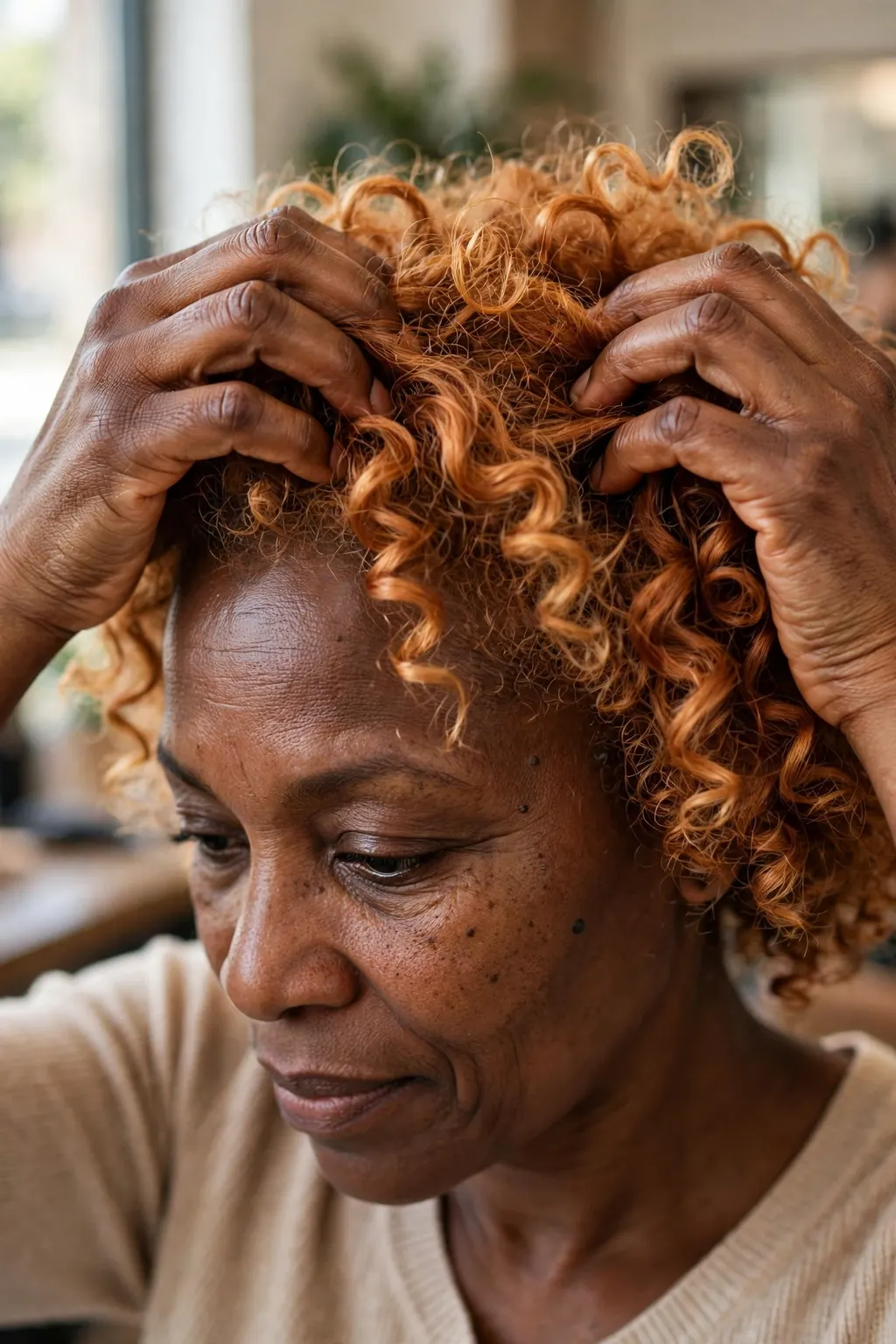
Soft copper blonde fades the way all warm colours fade: the copper leaves first, the gold follows, and what is left after six weeks is a soft strawberry blonde that is still pretty, just paler than the day it was done. That is the good news — unlike platinum, which fades yellow and patchy, copper blonde fades gracefully, and the fade itself is wearable for weeks. The bad news is only that the fade is uneven if the hair was uneven: porous ends lose copper faster than healthy roots, so the ends go pale while the crown stays warm.
The way to manage the fade is a rhythm, not a rescue. A copper-depositing conditioner once a week replaces what the washes take out, and a gloss at the salon every 6–8 weeks restores the depth in twenty minutes. The gloss is the cheapest appointment in the whole copper routine — no lift, no fill, just tone and shine — and it is what keeps the colour looking freshly done between recolours. Wearers who gloss on schedule spend less on colour over a year than wearers who wait until the fade looks bad and need a full correction.
Best for: hair types and face shapes
The fade path suits every hair type, because it is a schedule rather than a technique — the only variable is the timing, set by how fast your hair fades rather than your texture. Fast faders, usually fine hair washed often, need the gloss at six weeks; slow faders, usually thick hair washed twice a week, can stretch to eight. It suits long hair especially well, because the ends are the first to fade and the gloss is the cheapest way to bring them back, and it suits anyone who swims or spends time in the sun, where a UV spray on the lengths slows the fade further.
The exact salon wording
“I want to set up a gloss cycle for this copper — a gloss every 6–8 weeks, and a root touch-up at 8–10 weeks when the regrowth shows. Can we book the next gloss today, so the cycle doesn’t drift? And can you note the gloss shade on my record, so the tone stays the same every visit?” Booking the next gloss before you leave is the step most wearers skip, and it is the step that keeps the cycle working.
Maintenance schedule
Mark the cycle on a calendar: full colour and fill on day one, copper conditioner weekly, gloss at week 6–8, root touch-up at week 8–10, gloss again at week 14–16. Between appointments, cool washes and the weekly copper conditioner hold the tone. Over a year, that is four glosses and four to six colour appointments — roughly half the bleach of a platinum routine, and a better-looking result for the same money.
When to Stop: Signs Your Hair Needs a Break From Colour

There is a point in every bleached head’s life when the right move is not another colour — it is a break. The signs are plain: hair that snaps when it is wet and combed, hair that stretches like chewing gum and does not spring back, ends that feel gummy when wet and like straw when dry, and a scalp that stings during colour when it never used to. Any one of those on its own is a warning; two together mean the colour appointments stop until the hair recovers.
A break does not mean doing nothing. It means three months of bond treatments, weekly masks, no heat above a medium blow-dry, and trims every six weeks to remove the ends that will not recover. The copper blonde, if it is already on, can stay — it needs no bleach to maintain, only a gloss — but no new lightener touches the hair until it passes the stretch test: a wet strand that stretches a little and springs back is ready; a strand that stretches and stays stretched is not.
What it looks like in real life
In real life, a hair break looks like a shorter haircut, not a crisis. The damaged ends come off a centimetre at a time, the healthy hair underneath starts to show, and by the third month the hair that is left is stronger than the hair that was cut away. The copper, meanwhile, keeps the grow-out soft, so the break never looks like giving up — it looks like a deliberate, shorter, healthier style, and it is.
Variations worth trying
A break with a gloss-only routine, so the colour stays fresh while the bleach stays away. A break with a root smudge that is allowed to grow out entirely, so the natural colour returns on its own schedule. And a break that ends with a strand test, not a full appointment — one hidden section, lifted and coloured, to prove the hair is ready before the whole head commits.
When to skip it
Skip the break — and go ahead with the colour — if the hair passes the stretch test, the scalp is calm, and the breakage is only a few ends rather than whole sections. A little damage is normal for bleached hair, and the copper transition itself is part of the recovery, because it replaces bleach appointments with gloss appointments. The break is for hair that is failing, not hair that is merely tired.
Frequently Asked Questions
Can I go copper blonde over platinum hair?
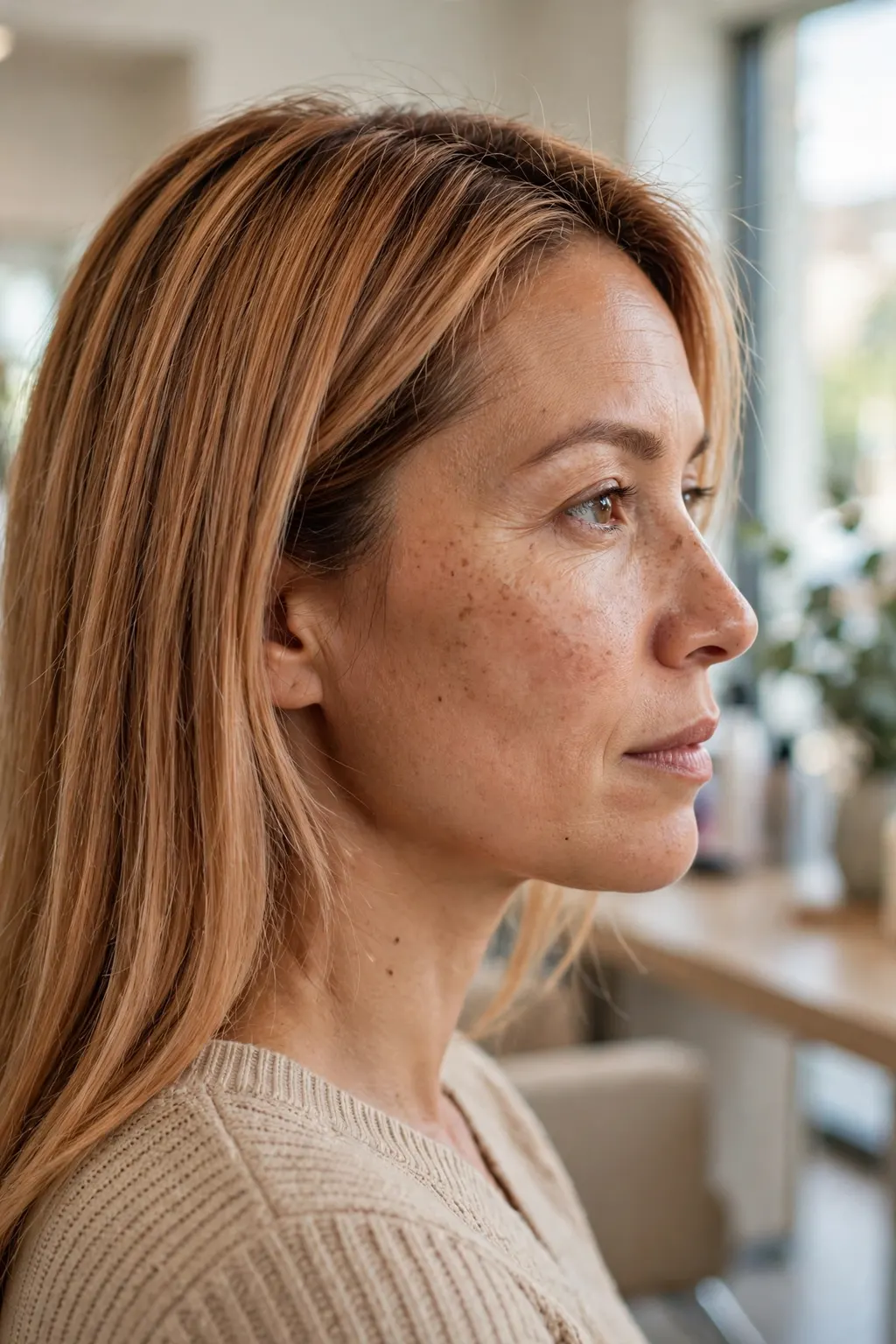
Yes — platinum is one of the best bases for copper blonde, because the porous, pigment-free hair takes the colour evenly in one appointment with no extra bleaching. The one condition is the fill: a copper-gold fill must go on first, or the copper will grab pink on the most lifted sections and fade patchy within two weeks. With the fill, the result is an even strawberry-copper at about a level 8.
Will copper blonde damage bleached hair less?
Yes, in two ways. Going from platinum (level 10–11) to a level 8 copper blonde needs no bleach at all, and maintaining it needs bleach only on the root regrowth every 8–10 weeks — roughly half the bleach of a platinum routine. Add a bond treatment in the colour appointment and weekly at home for the first month, and the hair usually stops snapping within a fortnight, because the damage is being repaired while the bleach is on pause.
How do you transition from platinum to copper blonde?
Fill first with a copper-gold shade, then apply the soft copper blonde (about a level 8, two parts gold to one part copper) over the fill, add a bond treatment in the same appointment, and smudge the root in a level 7 warm copper-brown for a soft grow-out. Rinse cool, finish with a gloss, and put the purple shampoo away — it neutralises the warmth you just paid for. Refresh the tone with a gloss every 6–8 weeks.
Conclusion: Soft Copper Blonde After Platinum — Your Next Step

Soft copper blonde is not a compromise colour — it is the colour platinum was trying to become. It keeps the lightness that made platinum appealing, trades the grey-yellow fade for a warm strawberry glow, and cuts the bleach in half, which is what tired, snapping hair actually needs. The route there is not complicated, but it has one non-negotiable step: fill first, then copper, then bond care, then a root smudge. Skip the fill and the colour goes pink; skip the bond care and the breakage continues under a prettier shade.
Your next step is the salon conversation, not a purchase. Take the wording from this article, ask for the swatch in daylight, and ask whether your hair needs a fill before the copper goes on — and whether the ends are strong enough for colour at all, or whether they need a trim first. If the shade glows strawberry-copper in the sun and still reads blonde indoors, you have it — and the next eight weeks will be the easiest colour you have worn since the bleach started.