Curly Wolf Cut for Men: How to Ask for It With 2a, 2b and 3a Hair (Without the Mullet Surprise)
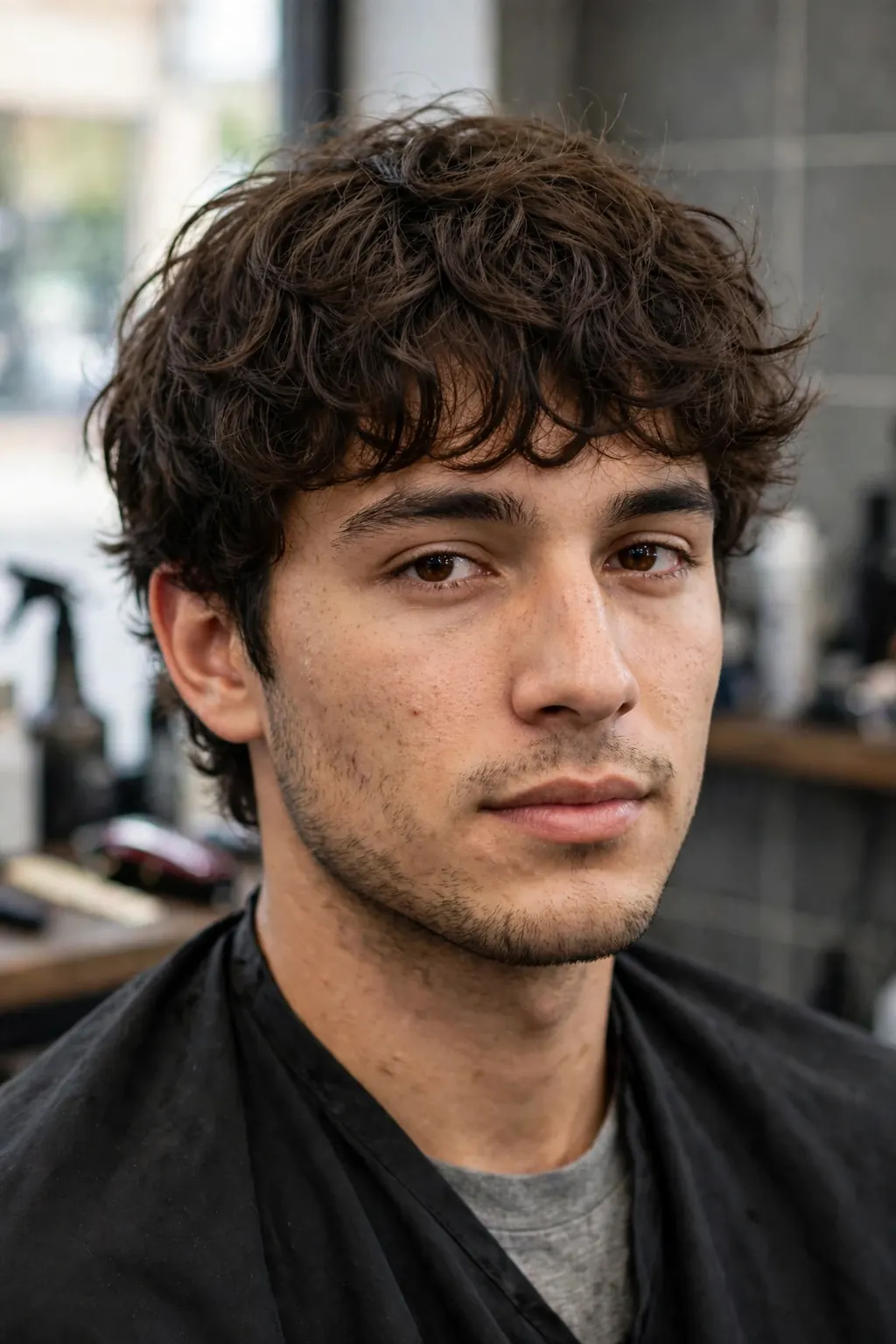
The wolf cut is the haircut men ask for most and describe worst — and the curly wolf cut man has the hardest brief of all, because his version has to read as a wolf cut and not a mullet. It is a shag with a longer back — short, choppy layers through the crown, texture through the fringe, length kept at the nape — and on wavy and curly hair it is the rare cut that looks better the less you do to it. The problem is the sentence most men walk in with: “a wolf cut, sort of curly, not too short.” That sentence has produced thousands of accidental mullets, because a wolf cut and a mullet share a silhouette and differ only in connection: a wolf cut blends the back into the crown, a mullet disconnects it. If your barber cannot hear the difference in your words, he will cut the one he knows, and the one he knows is usually the mullet. This guide fixes the words first and the cut second — the anatomy of the cut, what it does on 2a, 2b and 3a hair specifically, the exact barber script with reference photos, how to style it in the morning, and how it grows out over six weeks.
Quick answer: Ask for a wolf cut by wave type: 2a needs layers and texture spray, 2b is the sweet spot where the cut does the work, and 3a needs bulk removed with point cutting. The non-mullet rule is connection — the back stays blended into the crown, the fringe ends at the brow, nothing left disconnected. Clean up every six weeks.
Anatomy of the Curly Wolf Cut Man: Layers, Length and the Non-Mullet Line
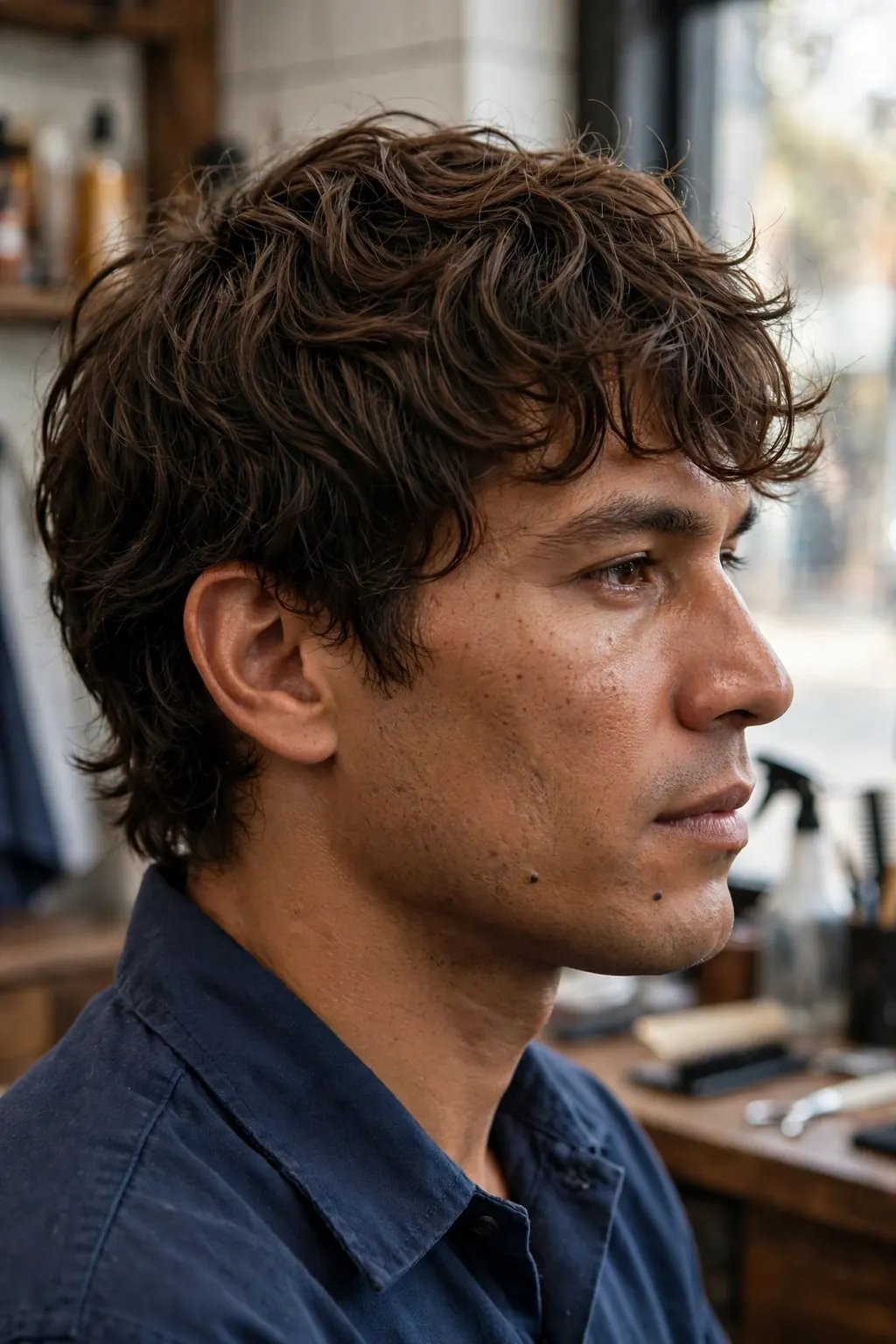
A wolf cut is three decisions made visible: how short the crown layers are, how long the back is allowed to stay, and where the fringe ends. The crown is cut short and choppy — layers stacked so the top has height and movement instead of sitting flat — and the texture is cut into the hair rather than thinned out of it, so the ends look lived-in instead of blunt. The sides stay connected to the crown, not faded to skin and not left long; the back keeps its length but is layered into the crown so there is no shelf, no step, no line where the short hair stops and the long hair starts. That line is the whole difference between a wolf cut and a mullet: a mullet is two haircuts on one head, a wolf cut is one haircut with a gradient. The fringe is the third decision, and it is the one that dates the cut fastest — a wolf fringe sits at the brow, textured and piecey, long enough to move and short enough to see out of.
The length to ask for depends on where you are starting from. If your hair is already past your ears, the barber can build the wolf shape in one appointment: crown layers, a textured fringe, and the back layered rather than chopped. If your hair is short — a fade or a crop — the wolf cut is a grow-out project, not a single appointment: the top and back need three to four months before there is enough length to layer, and the honest move is to grow the top first while keeping the sides tidy. What the cut does on wavy and curly hair that it does not do on straight hair is work with the wave pattern instead of against it: the layers sit where the wave bends, so the texture looks intentional, and the weight that makes curly hair triangle-shaped is removed from the sides while the length that makes it a wolf cut is kept at the back.
📌 Save this before your barber visit — a wolf cut is one haircut with a gradient, not two haircuts on one head. Short choppy crown, connected sides, layered back, fringe at the brow. The line where short stops and long starts is the mullet line — if you can see it, it is not a wolf cut.
Best for: hair types and face shapes
The wolf cut is best for 2b and 3a hair, good for 2a with styling help, and a bad idea for very tight curls that shrink past the jaw — 3b and tighter curls lose the silhouette to shrinkage, and the cut reads as a shaggy afro rather than a wolf cut. It suits medium to thick hair best, because the layers need density to look textured rather than thin; fine hair can wear it, but only with the crown kept shorter and the layers lighter, or the top goes wispy. For face shapes it is generous: oval faces take any version, round faces benefit from height on top and length at the back, square faces suit a softer fringe that breaks up the jawline, and long faces need the sides kept fuller rather than tucked, or the face looks longer still.
The exact salon wording
Say this, in this order, and show the photos on your phone: “I want a wolf cut, not a mullet — short choppy layers through the crown, the back kept long but layered into the crown, no disconnected length at the nape, and a textured fringe to the brow.” Then add the wave-type sentence: “My hair is [2a / 2b / 3a] — I want the layers to follow the wave, not fight it.” The two questions that separate a good wolf appointment from a bad one are “Will you point-cut the ends rather than thinning them out?” and “Can you show me where the crown layers end and the back begins?” If the barber reaches for the clippers for the sides, stop him — a wolf cut has no skin fade, and a faded side with a long back is a mullet with better marketing. The fringe is the detail most men forget to specify, and it is the one that matters most for the mullet test: a fringe that ends at the brow keeps the front short and the back long in balance, and if your fringe has a cowlick, say so — the cloud bangs guide (https://aboutsuperstars.com/cloud-bangs-cowlick/) is the closest live fringe guide for hair that will not sit still, and the same logic applies here.
Maintenance schedule
A wolf cut is a six-week haircut, not a three-month one. Weeks 1–2: the cut is at its best, and the only job is learning the styling routine — which product, how much, and whether your hair wants diffusing or hands-off drying. Week 3: the fringe needs its first tidy, because the fringe grows fastest and is the first thing to fall into your eyes. Week 4–6: the crown layers start to lose their shape, the back starts to look heavy, and this is the window for the clean-up — a shape-up, not a re-cut: the barber re-establishes the crown layers, tidies the nape, and takes weight out of the bulk without touching the length. Stretching past eight weeks is possible, but the cut stops reading as a wolf cut and starts reading as grown-out hair, and the correction costs more than the clean-up would have.
2a Hair: Building a Curly Wolf Cut Man Shape on Barely-There Waves
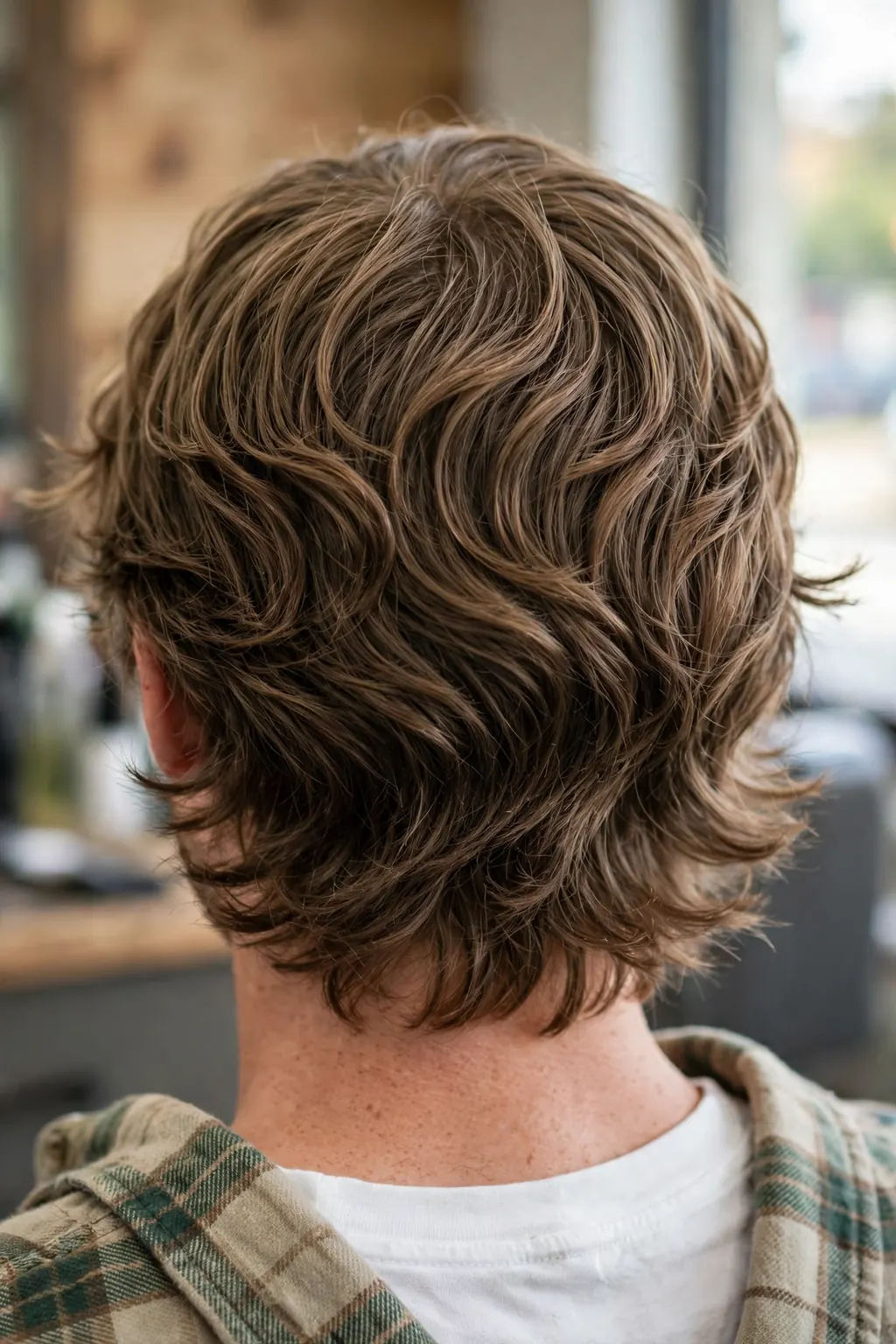
2a hair is the hardest wave type to wolf-cut, and the reason is simple: the wave is barely there. 2a is a slight S-bend, mostly straight at the root with a loose wave through the lengths, and on its own it will not make a wolf shape — the cut has to do the work that the curl pattern does for 2b and 3a. That means shorter crown layers than the other wave types, more texture cut into the ends, and a styling product doing the job the hair will not do by itself. The good news is that 2a is also the most forgiving wave type: it does not frizz the way 3a does, it does not triangle the way thick curly hair does, and a bad wolf cut on 2a grows out into a perfectly acceptable shaggy cut while you decide whether to try again.
The shape on 2a comes from the cut plus the product, in that order. The layers are cut shorter and choppier than on 2b — the crown needs the height because the wave will not give it — and the ends are point-cut so they flick outward instead of sitting flat. The back is kept, but it is kept lighter: on 2a, a heavy back looks lank rather than wolfish, so the barber should take weight out of the back while keeping the length. And the fringe is the make-or-break detail on 2a, because a straight-ish fringe on 2a can fall flat across the forehead and read as a bowl cut; a textured fringe, cut piecey and worn slightly to one side, is what keeps the front looking like a wolf cut instead of a school photo.
📌 Save this if your hair is 2a — the wave will not make the wolf shape for you, so the cut has to: shorter choppy crown layers, point-cut ends that flick, a lighter back, and a piecey fringe worn to one side. The product is not optional on 2a; it is half the haircut.
What it looks like in real life
In real life, a wolf cut on 2a does not look like the reference photos, and that is worth knowing before the appointment. Indoors it reads as a textured shag with a longer back — the wave shows mostly in the lengths, the crown has height from the layers rather than from curl, and the whole thing looks deliberately undone rather than deliberately curly. Outdoors, in wind or humidity, the wave comes forward and the wolf shape appears properly: the layers separate, the ends flick, and the back moves. In photographs it is the most variable of the three wave types, because the wave photographs differently depending on the light and the product — which is why the reference photos you bring should be 2a hair specifically, not 3a hair that you hope yours will become.
Variations worth trying
If the full wolf cut feels like too much commitment on 2a, the variations let you test the shape without living in it. The lightest version is a wolf-inspired shag: the crown layers and the textured fringe, but the back kept short enough that the whole thing reads as a shag — if you like the front, grow the back out over the next two months. The next step up is the full wolf cut with a sea-salt spray routine, which is the version on most of the inspiration boards and the one that needs the styling habit without exception. The boldest variation is the one with a heavier fringe and more length at the back, which photographs best and needs the most product — the version to try once you know the cut suits you, not the version to start with.
When to skip it
Skip the wolf cut — for now — if your 2a hair is very fine and very straight at the root, because the cut needs wave to hold the layers open, and on pin-straight fine hair the layers collapse and the cut reads as a shaggy bowl. Grow the wave first, or accept that the cut will need a perm-level commitment to styling every morning. Skip it if you will not use product: a wolf cut on 2a without sea-salt spray or texture powder is just a layered cut, and you will be back in the barber’s chair in three weeks asking why it does not look like the photo. And skip the longest back version if your workplace dress code is conservative about hair length — the medium back passes in most offices, but the longest version reads as a statement, and a statement is a choice you should make deliberately, not discover on Monday morning.
2b Hair: The Sweet Spot — Texture Does the Work

2b is the wave type the wolf cut was made for. 2b is a defined S-wave — the wave starts at the root, holds through the lengths, and has enough bend to make layers look textured without any product at all. On 2b, the cut does the work: the layers sit where the wave bends, the crown has natural height, the ends flick outward on their own, and the back moves when you do. This is the wave type where the barber’s job is mostly to get out of the hair’s way — cut the layers to follow the wave pattern, take weight out of the sides so the cut does not triangle, and leave the rest alone. It is also the wave type where the reference photos are most honest: what you see in a 2b wolf cut photo is roughly what you will get, because the wave is doing the same work in the photo as it will do on your head.
The technique on 2b is restraint. The crown layers are cut medium — not as short as 2a needs, not as careful as 3a needs — and the texture is cut into the ends with point cutting, not thinned out with thinning shears, because thinning 2b hair creates frizz at the ends where the wave breaks. The sides are layered, not faded, and the weight is removed from the bulk of the sides rather than from the length, so the cut keeps its shape as it grows. And the fringe is cut dry, or at least checked dry: 2b hair shrinks as it dries, and a fringe cut wet to the brow will sit above the brow when it dries, which is the fastest way to make a wolf cut look like a bowl cut.
📌 Save this if your hair is 2b — you have the sweet spot. The cut follows the wave, the layers do the work, and the product is a finishing touch rather than a structural requirement. The one rule is to cut the fringe dry, because 2b shrinks as it dries and a wet-cut fringe ends up too short.
Who it suits best
2b suits almost everyone, which is why it is the sweet spot. It suits fine to medium hair best, because the wave gives fine hair the appearance of thickness it does not naturally have, and it suits thick hair too, as long as the weight is taken out of the sides — thick 2b hair without weight removal triangles at the jaw, and the triangle is the enemy of the wolf silhouette. For face shapes, 2b is generous: oval faces can take any version, round faces benefit from the height on top and the length at the back, square faces suit a softer fringe, and long faces need the sides kept fuller. The one combination to be careful with is 2b hair with a strong cowlick at the fringe — the cowlick will win, and the fringe should be cut to work with it rather than against it.
How to ask for it (or do it at home)
Say this, and bring the photo on your phone: “I want a wolf cut for 2b wavy hair — medium layers through the crown that follow the wave, the back kept long but layered in, no fade on the sides, and a textured fringe to the brow, cut dry.” Then add the two questions: “Will you point-cut the ends rather than thinning them?” and “Can we check the fringe dry before you finish?” If the barber wants to thin the hair out with thinning shears, say no — thinning 2b hair frizzes the ends, and the frizz is the thing you will see every morning. The at-home version of the ask is the same sentence, said to yourself in the mirror the morning after: if the cut looks right with nothing in it but water, the barber got it right, and if it only looks right with a full product routine, the layers are not following the wave.
Styling and upkeep
Styling 2b is the lightest routine of the three wave types. Wash, towel-dry gently — never rough-dry, because rough-drying breaks the wave pattern — and either diffuse on low heat for ten minutes or leave it alone entirely. A pea-sized amount of curl cream, scrunched into damp hair, is enough; a sea-salt spray is the alternative if you want more texture and less definition. The upkeep is the six-week clean-up, and the same layering logic for wavy and curly hair that has to air-dry properly (https://aboutsuperstars.com/long-layered-bob-curly-hair/) applies here — layers that follow the wave dry into shape, layers that fight it dry into a triangle, and the clean-up is where that difference is maintained.
3a Hair: Controlling Bulk While Keeping the Bounce
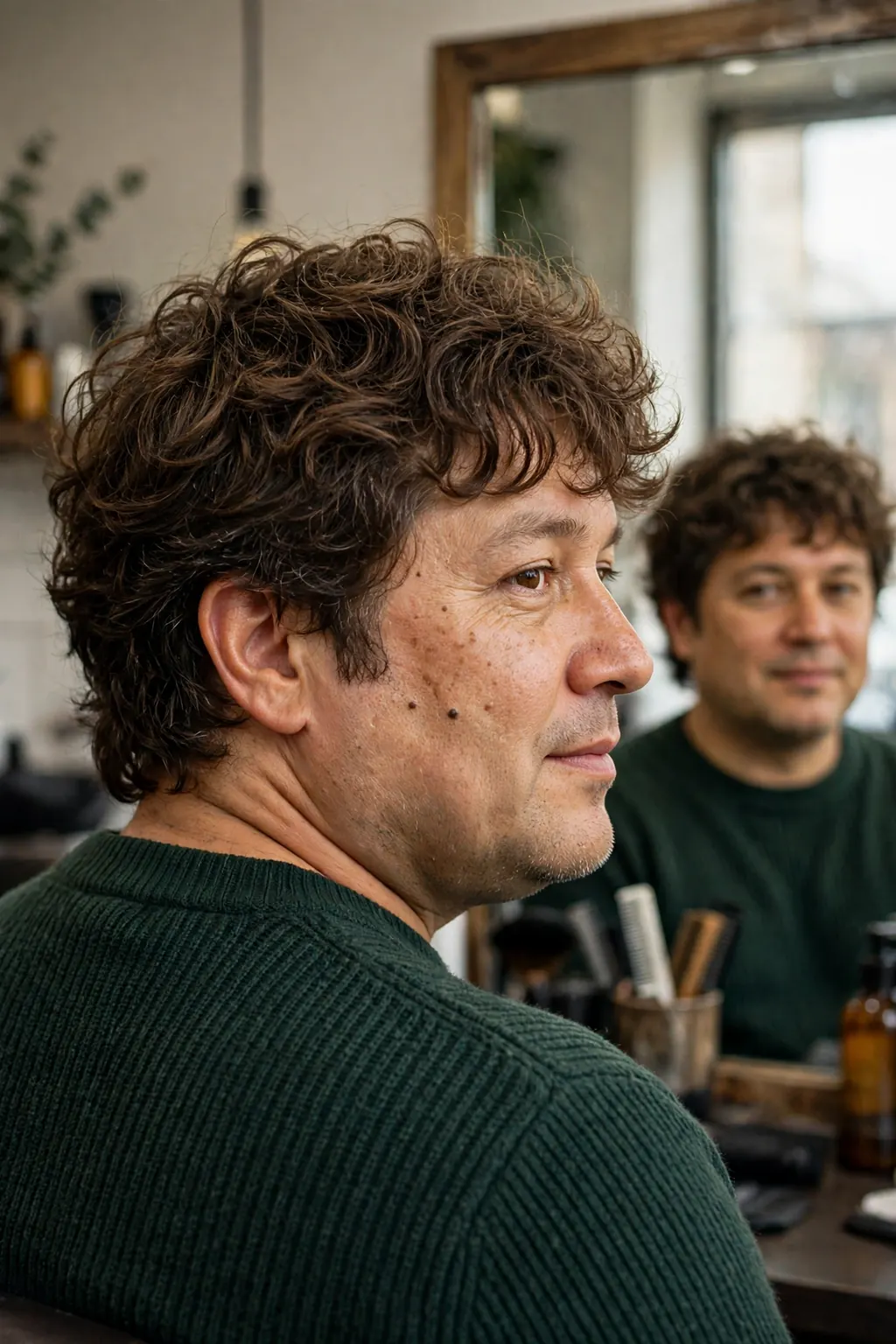
3a is large, loose curls — the curl is a proper S-spiral, not a wave — and the wolf cut’s job on 3a is the opposite of its job on 2a: not to create shape, but to control it. 3a hair has volume to spare, and without weight removal it triangles: wide at the jaw, flat at the crown, and the wolf silhouette disappears into a pyramid. The cut on 3a is therefore a weight-removal exercise first and a shaping exercise second — the bulk comes out of the sides and the interior, the length is kept at the back, and the curls are left long enough to bounce rather than cut short enough to frizz. Cut 3a too short and the curls spring up into a halo; cut it with the weight left in and it triangles; the wolf cut lives in the middle, and finding the middle is the barber’s real skill on this wave type.
The technique is point cutting and slide cutting, never thinning shears and never a razor on the interior — thinning 3a hair creates frizz at every cut point, and the frizz is what makes the cut look messy rather than textured. The crown layers are cut longer than on 2a or 2b, because 3a curls shrink as they dry and a layer cut to the right length wet will sit two inches shorter dry. The fringe is the highest-risk part of the cut on 3a: a curly fringe shrinks the most, so it is cut longer than it looks like it should be, and checked dry before the barber moves on. And the back is layered, not blunt: a blunt back on 3a hair sits as a solid shelf, while a layered back lets the curls stack and move.
📌 Save this if your hair is 3a — the cut controls bulk, it does not create shape; you already have the shape. Weight out of the sides, layers cut long to allow for shrinkage, fringe cut long and checked dry. Thinning shears are the enemy here — they make frizz, not texture.
The technique, step by step
For 3a, the sequence matters more than the shade of any product. First the barber assesses the curl pattern dry, because 3a hair looks different wet and dry and the cut must be planned on the dry shape. Then the crown layers go in, cut long — the barber cuts to the dry length, not the wet length, which means the hair looks too long in the chair and right the next morning. Then the weight comes out of the sides and the interior, with point cutting through the bulk, so the sides sit close without a fade and the curls keep their bounce. The fringe is cut last, longer than the target, and checked dry before the appointment ends. The cut finishes with a diffuser, not a blow-dry brush: a brush pulls the curl out and makes the cut look like a shag, while a diffuser keeps the curl pattern that the cut was built around.
Common mistakes to avoid
The most common mistake on 3a is cutting the layers too short. Short layers on 3a spring up, the crown goes wide, and the cut reads as a halo rather than a wolf cut — and the fix is not more cutting but growing, which takes two months. The second mistake is thinning the hair out: thinning shears on 3a create frizz at every cut point, and the frizz is permanent until the hair grows out, so a barber who reaches for the thinning shears on curly hair is a barber to stop. The third mistake is cutting the fringe wet to the brow — it will dry an inch shorter, sit above the brow, and the front of the cut will look like a different haircut from the back. And the mistake that costs the most money is the same as on every wave type: washing with a harsh shampoo and rough-drying with a towel, which breaks the curl pattern the cut was built to show.
Products and tools that help
3a lives or dies by moisture, so the products are the maintenance plan, not an afterthought. A sulfate-free shampoo is the baseline — sulfates strip curly hair faster than any other hair type, and dry curls frizz. A leave-in conditioner, applied to soaking-wet hair, is the single most useful product for 3a wolf cuts: it defines the curl, controls the frizz, and keeps the layers separated instead of clumped. A curl cream, scrunched in after the leave-in, adds hold without crunch, and a diffuser on low heat is the tool that sets the shape — ten minutes, low heat, hands off while it dries. A wide-tooth comb for wet hair, because wet curly hair is fragile and a fine comb snaps it. And one product most men skip: a silk or satin pillowcase, because cotton roughs up curly hair overnight and the morning frizz is the cut’s worst enemy.
The Barber Script: Words and Reference Photos
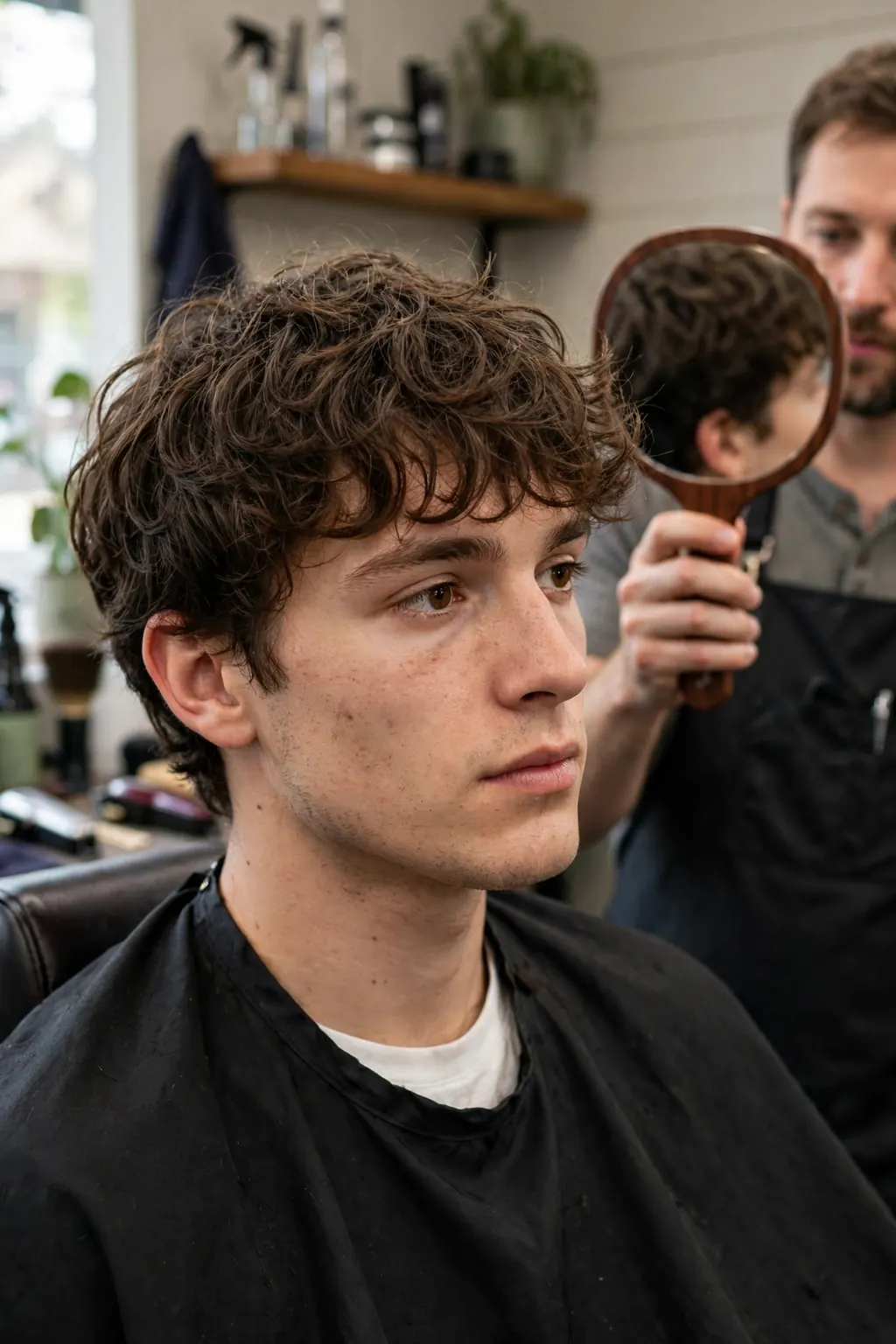
The barber script is the whole article in one minute, and it is the part to screenshot. Most bad wolf cuts are not bad cutting — they are bad briefing. The barber heard “wolf cut” and cut the wolf cut he knows, which is the one from the photo on his shop wall, which is probably a mullet. The script below is written to be read out loud, in order, with the photos shown at the right moment. It works because it says what the cut is not, as well as what it is — and “not a mullet” is the most important sentence in the appointment, because it is the sentence that stops the barber cutting the cut he already knows.
The photos matter as much as the words, and the rule for choosing them is strict: bring three photos, all of the same wave type as your hair, all of men, all of wolf cuts — not one photo of a woman’s wolf cut, not one photo of 3a hair when yours is 2a, not one photo of a mullet that you hope the barber will somehow read as a wolf cut. The first photo is the overall shape, from the front. The second is the side profile, showing the connection between the crown and the back. The third is the back, showing the length and the layering. If you cannot find three photos of your wave type, that is useful information too — it means the cut is rare on your wave type, and the barber will be inventing more of it than usual, so the script matters even more.
📌 Save this script before your appointment — read it out loud, in order, with the photos shown at the right moment. “Wolf cut, not a mullet. Short choppy crown, connected sides, layered back, fringe to the brow.” The “not a mullet” sentence is the one that stops the barber cutting the cut he already knows.
Best for: hair types and face shapes
The script works for every wave type, but the sentence that changes is the wave-type sentence: 2a says “light layers and texture, the cut does the shaping”; 2b says “medium layers that follow the wave”; 3a says “long layers, weight out of the sides, fringe cut long and checked dry”. For face shapes, the script’s face-shape sentence is the same in every version: “Keep the height on top for a round face, keep the sides fuller for a long face, soften the fringe for a square jaw.” If your barber nods at the wave-type sentence and asks which wave type you are, you are in the right chair; if he waves it away, he is cutting a generic wolf cut, and a generic wolf cut is a mullet with better lighting.
The exact salon wording
Say this, word for word, and show the three photos as you say it: “I want a curly wolf cut for my [2a / 2b / 3a] hair. Short choppy layers through the crown, the back kept long but layered into the crown — not disconnected, not a mullet. The sides stay connected, no fade. A textured fringe to the brow, cut dry. Point-cut the ends, no thinning shears.” Then ask the two questions: “Can you show me where the crown layers end and the back begins?” and “Will you check the fringe dry before you finish?” If the barber answers both clearly, sit down. If he says “yeah, yeah, wolf cut, I know it” without answering, say the mullet sentence again — “not a mullet, the back stays connected” — and watch whether he hears it the second time. A barber who hears it is a barber who will cut it.
Maintenance schedule
The script includes the maintenance question, and it should be asked before you leave the chair, not discovered three weeks later: “How many weeks before this needs a clean-up, and what do I use at home between visits?” The answer should be six weeks for the clean-up and three weeks for the fringe tidy, and the product answer should name one product, not five. A barber who answers that clearly is a barber who expects you back; one who waves it away is selling you a cut with no plan for keeping it. Book the clean-up before you leave — the six-week slot is the appointment that keeps the wolf cut reading as a wolf cut, and it is cheaper and faster than a full re-cut.
Styling: Diffuse, Scrunch, or Hands-Off

A wolf cut has three styling modes, and the right one depends on your wave type and your morning. Diffusing is the controlled mode: low heat, a diffuser attachment, ten minutes, and the wave pattern sets into the shape the cut was built around — this is the mode for 3a, and for any morning when the cut needs to look deliberate. Scrunching is the middle mode: product scrunched into damp hair, then air-dried, which gives 2b its best texture and 2a its only texture. Hands-off is the honest mode: wash, towel-dry gently, leave it alone entirely — and on 2b this is often the best-looking mode of all, because the wave does the work and the product would only get in the way. The mistake is using the wrong mode for your wave type: diffusing 2a hair makes it fluffy rather than wavy, and hands-off 3a hair frizzes before it dries.
The product routine is small on purpose. For 2a: sea-salt spray on damp hair, scrunched in, then air-dried — the salt gives the wave grip it does not have naturally. For 2b: a pea-sized amount of curl cream, scrunched in, then either diffused or left alone. For 3a: leave-in conditioner on soaking-wet hair, curl cream scrunched in after, diffused on low heat. The amount matters more than the brand: too much product weighs the layers down and kills the wolf shape, and the test is whether the hair still moves when you shake your head. If it does not move, you used too much. And the drying rule is the same for every wave type: never rough-dry with a towel, because rough-drying breaks the wave pattern the cut was built to show, and a broken wave pattern is a wolf cut that looks like bedhead.
📌 Save this styling guide for the first morning — 2a: sea-salt spray and scrunch. 2b: curl cream, then diffuse or leave it alone. 3a: leave-in on soaking-wet hair, curl cream, diffuse low. Never rough-dry with a towel, and if the hair does not move when you shake your head, you used too much product.
What it looks like in real life
In real life, a styled wolf cut does not look like the salon photo, and that is a good thing. Indoors, under normal light, it reads as a textured cut with a longer back — the wave shows in the lengths, the crown has height, and the whole thing looks deliberately undone. Outdoors, in wind, the wolf shape appears properly: the layers separate, the ends flick, and the back moves. The first week is the learning week, and the hair will look different every morning until the routine settles — which is normal, not a sign the cut is wrong. Photograph the cut on day three, not day one: day one is the salon’s styling, day three is yours, and day three is the version you will actually live with.
Variations worth trying
If the full styling routine feels like too much commitment, the variations let you test it without living in it. The lightest version is hands-off: wash, towel-dry gently, leave it alone — which works on 2b and fails on 2a and 3a, and the failure is useful information about your wave type. The next step up is the scrunch routine, which is the version on most of the inspiration boards and the one that needs the product habit without exception. The boldest variation is the diffused finish with a matte clay worked through the ends, which photographs best and needs the most time — the version to try once you know the cut suits you, not the version to start with on a workday morning.
When to skip it
Skip the diffused finish — for now — if your mornings are five minutes long, because a diffused wolf cut done in a hurry looks worse than a hands-off one done properly, and the honest routine is the one you will actually do. Skip the sea-salt spray if your hair is already dry, because salt dries it further and the frizz that follows is not texture, it is damage. And skip the matte clay if your hair is fine: clay weighs fine hair down, the layers collapse, and the cut reads as flat rather than textured. The styling rule that never changes is the simplest one: the routine you will do every morning beats the routine that looks best in a tutorial, and a wolf cut styled hands-off every day looks better than a wolf cut diffused perfectly once a week.
Grow-Out Stages and the 6-Week Clean-Up
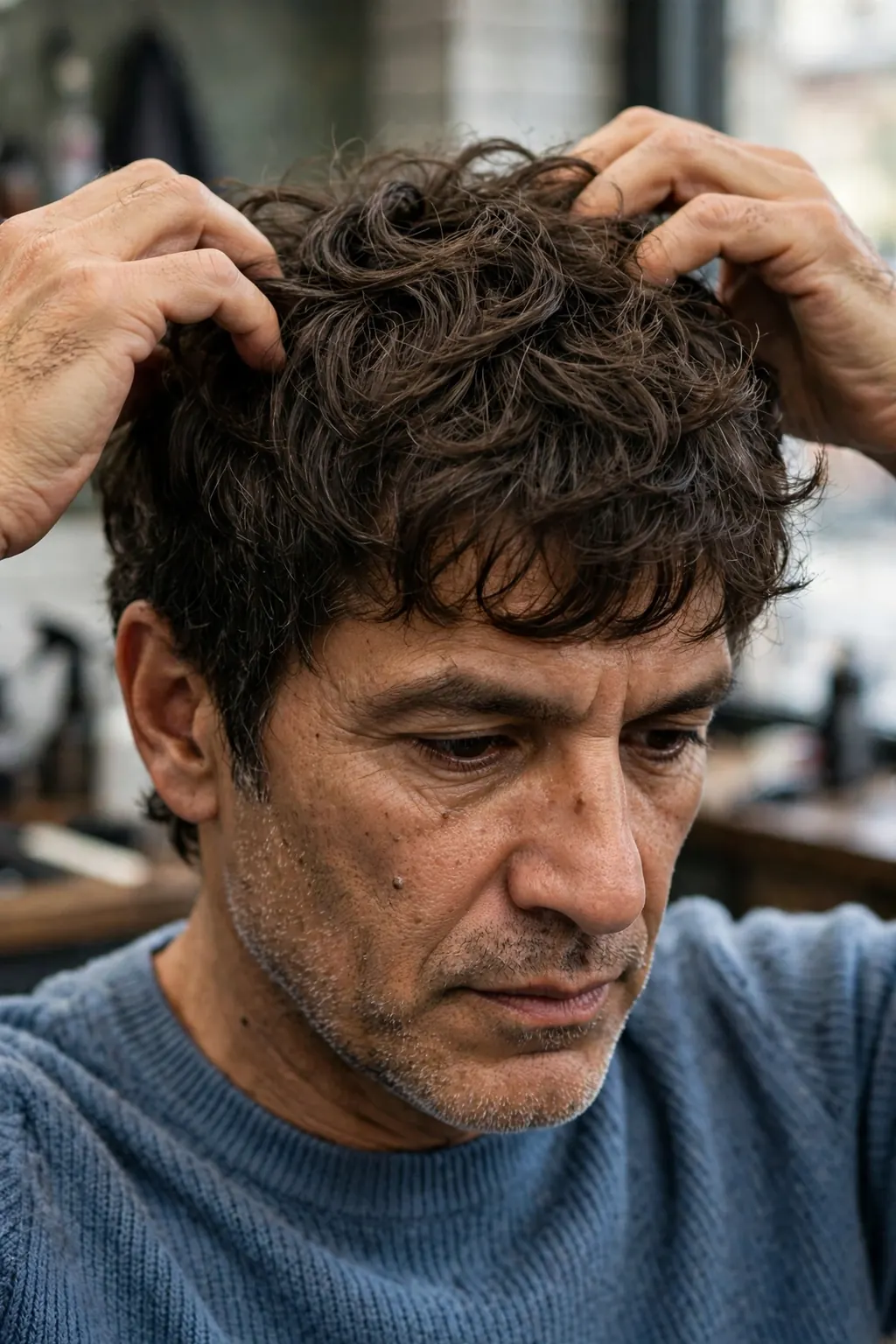
A wolf cut grows out in stages, and knowing the stages is what keeps you from panicking at week four and cutting it all off. Weeks 1–2 are the honeymoon: the cut is at its best, the layers are sharp, and the only job is learning the styling routine. Weeks 3–4 are the fringe stage: the fringe grows fastest, falls into your eyes, and the temptation is to cut it yourself — do not, because a home-cut fringe on wavy hair shrinks unevenly and the fix costs more than the tidy would have. Weeks 5–6 are the bulk stage: the crown layers lose their shape, the sides start to look heavy, and the back starts to look like a mullet rather than a wolf cut, because the connection between the crown and the back is the first thing the grow-out erases. Week 6 is the clean-up, and the clean-up is a shape-up, not a re-cut: the barber re-establishes the crown layers, tidies the nape, takes weight out of the bulk, and leaves the length alone.
The clean-up appointment is the cheapest appointment in the wolf cut’s life, and skipping it is the most expensive mistake. A clean-up every six weeks keeps the cut reading as a wolf cut indefinitely, and the length can keep growing through the clean-ups — the back gets longer while the shape stays, which is how a wolf cut becomes a long wolf cut rather than a grown-out one. Skipping the clean-up for twelve weeks means the re-cut: the connection is gone, the layers are gone, the fringe is in your eyes, and the barber has to rebuild the whole shape from scratch. The difference between a six-week clean-up and a twelve-week re-cut is the difference between a fifteen-minute tidy and a full appointment, and the calendar reminder is worth setting the day you leave the barber’s chair.
📌 Save this grow-out guide for week four — the fringe grows fastest, the bulk stage comes at week five, and the connection between crown and back is the first thing the grow-out erases. Book the six-week clean-up before you leave the chair; skipping it turns a tidy into a full re-cut.
Who it suits best
The six-week clean-up suits everyone with a wolf cut, but it matters most for 3a hair, because the bulk stage arrives fastest on curly hair and the triangle is the first thing to come back. It matters least for 2a hair, where the grow-out is gentler and the cut degrades into a shag rather than a mullet. For face shapes, the clean-up matters most for round faces, because the height on top is the first thing the grow-out flattens, and a flat crown on a round face is the combination that makes the face look rounder. The fringe tidy at week three matters for every face shape, because a fringe in your eyes is the first thing other people notice, and it is the cheapest thing to fix.
How to ask for it (or do it at home)
Say this at the clean-up, and it is a different sentence from the original script: “Just a clean-up — re-establish the crown layers, tidy the nape, take the weight out of the bulk, and leave the length alone.” Then add the fringe sentence: “And tidy the fringe, but keep it at the brow.” The at-home version of the clean-up is nothing: do not trim the fringe yourself, do not thin the bulk yourself, do not touch the nape with clippers. Wavy and curly hair shrinks as it dries, and a home trim on wet hair will dry an inch shorter and unevenly, and the fix is a barber’s appointment anyway. The only at-home job between clean-ups is the styling routine, and the styling routine is the thing that makes a growing-out wolf cut look deliberate rather than neglected.
Styling and upkeep
Styling a growing-out wolf cut is styling for the stage it is in, not the stage it was. Weeks 1–2: style it as cut, with the full routine. Weeks 3–4: the fringe needs pinning back or sweeping to one side while it grows, and a little extra product at the front keeps it out of your eyes without a cut. Weeks 5–6: the bulk needs more product, not less, because the weight is what makes the sides look heavy, and a sea-salt spray or a curl cream worked through the bulk keeps the layers separated. Upkeep for the grow-out is the upkeep for the cut: the six-week clean-up, the three-week fringe tidy, and the product routine every morning. The grow-out is not a failure of the cut; it is the cut doing what hair does, and the clean-up is the appointment that keeps it a wolf cut.
Face Shapes That Suit It (and the Tweaks for Round Faces)
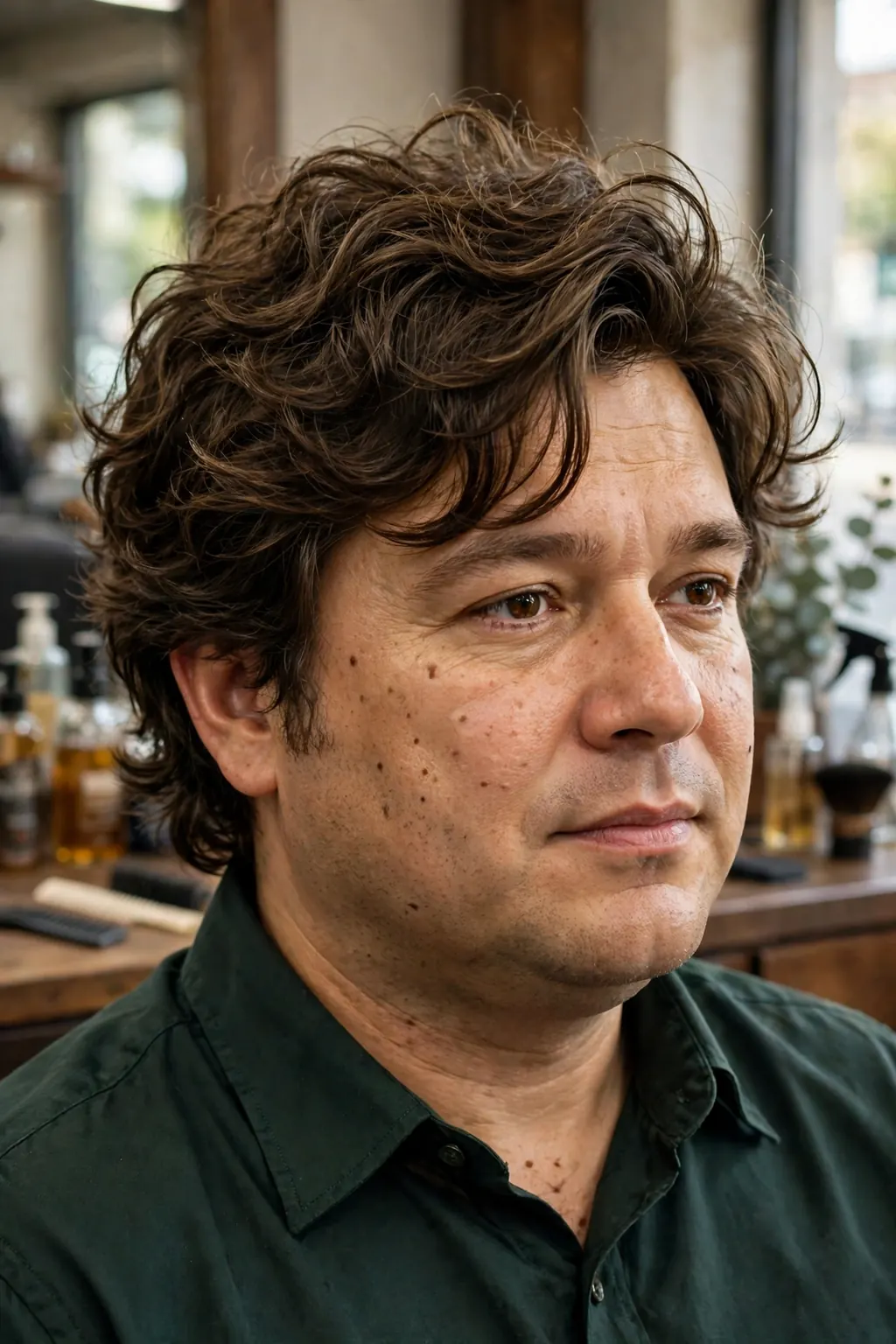
The wolf cut is generous with face shapes, but it is not neutral — the same cut reads differently on different faces, and the tweaks are the difference between a cut that flatters and a cut that fights. Oval faces can take any version: the proportions are already balanced, so the crown height, the fringe length and the back length are all free choices. Round faces need height on top and length at the back, because both lengthen the face visually — the crown layers are kept shorter and choppier for height, the fringe is worn to one side rather than straight across, and the back is kept, because the length below the jaw is what makes the face look longer. Square faces need softness: a softer fringe that breaks up the jawline, layers that curve around the jaw rather than sitting straight past it, and no hard line anywhere near the jaw. Long faces need the opposite of round faces: the sides kept fuller rather than tucked, the crown height kept moderate rather than maximised, and the fringe worn straight across to shorten the face visually.
The round-face tweaks deserve the detail, because round faces are where the wolf cut most often goes wrong. The mistake is a straight-across fringe with no height on top: the fringe shortens the face, the flat crown adds width, and the cut makes the face look rounder than it is. The fix is three small decisions: height on top from shorter crown layers, a side-swept fringe instead of a straight one, and length at the back kept below the jaw. None of these is a big change to the cut — they are placement decisions inside the same cut — and they are the decisions to name in the barber script, because the barber cannot guess your face shape from the word “wolf cut” alone. The test is the mirror the morning after: if the face looks longer and the cut looks deliberate, the tweaks worked, and if the face looks rounder, the crown needs more height and the fringe needs sweeping to one side.
📌 Save this face-shape guide before your appointment — oval: anything. Round: height on top, side-swept fringe, length at the back. Square: soft fringe, layers curving around the jaw. Long: fuller sides, moderate crown height, straight-across fringe. Name your face shape in the script; the barber cannot guess it.
The technique, step by step
For round faces, the technique is height first: the crown layers are cut shortest, the texture is cut into the top rather than the sides, and the fringe is cut piecey and worn to one side. For square faces, the technique is softness first: the fringe is cut with a soft, piecey edge, the layers around the jaw are cut to curve inward, and no blunt line is left near the jawline. For long faces, the technique is width first: the sides are kept fuller, the crown height is kept moderate, and the fringe is cut straight across at the brow. For oval faces, the technique is whatever the wearer likes best, because the face will carry any version — which is why the oval-face conversation is about lifestyle, not geometry: how much styling time, how much length at the back, how much fringe.
Common mistakes to avoid
The most common face-shape mistake is the straight-across fringe on a round face, which shortens the face and adds width at exactly the wrong place. The second is maximum crown height on a long face, which lengthens the face further and makes the cut look top-heavy. The third is a hard, blunt fringe on a square jaw, which draws a straight line across a face that already has straight lines, and the result looks severe rather than textured. And the mistake that costs the most is not a cutting mistake at all: it is not mentioning your face shape in the script, because the barber cuts the wolf cut he knows, and the wolf cut he knows was cut on someone else’s face.
Products and tools that help
Face-shape tweaks are held in place by product, not by cutting alone. For round faces, a texture powder or a sea-salt spray at the crown holds the height that lengthens the face — applied at the roots, not the ends, because the height is the point. For square faces, a curl cream through the fringe keeps it soft and piecey rather than blunt, and the softness is what breaks up the jawline. For long faces, a matte clay worked through the sides keeps them fuller rather than tucked, and the fullness is what adds width. The tool is the same in every version: a diffuser on low heat, hands off while it dries, because touching the hair while it dries breaks the wave pattern and flattens the height, the softness and the fullness alike.
Frequently Asked Questions
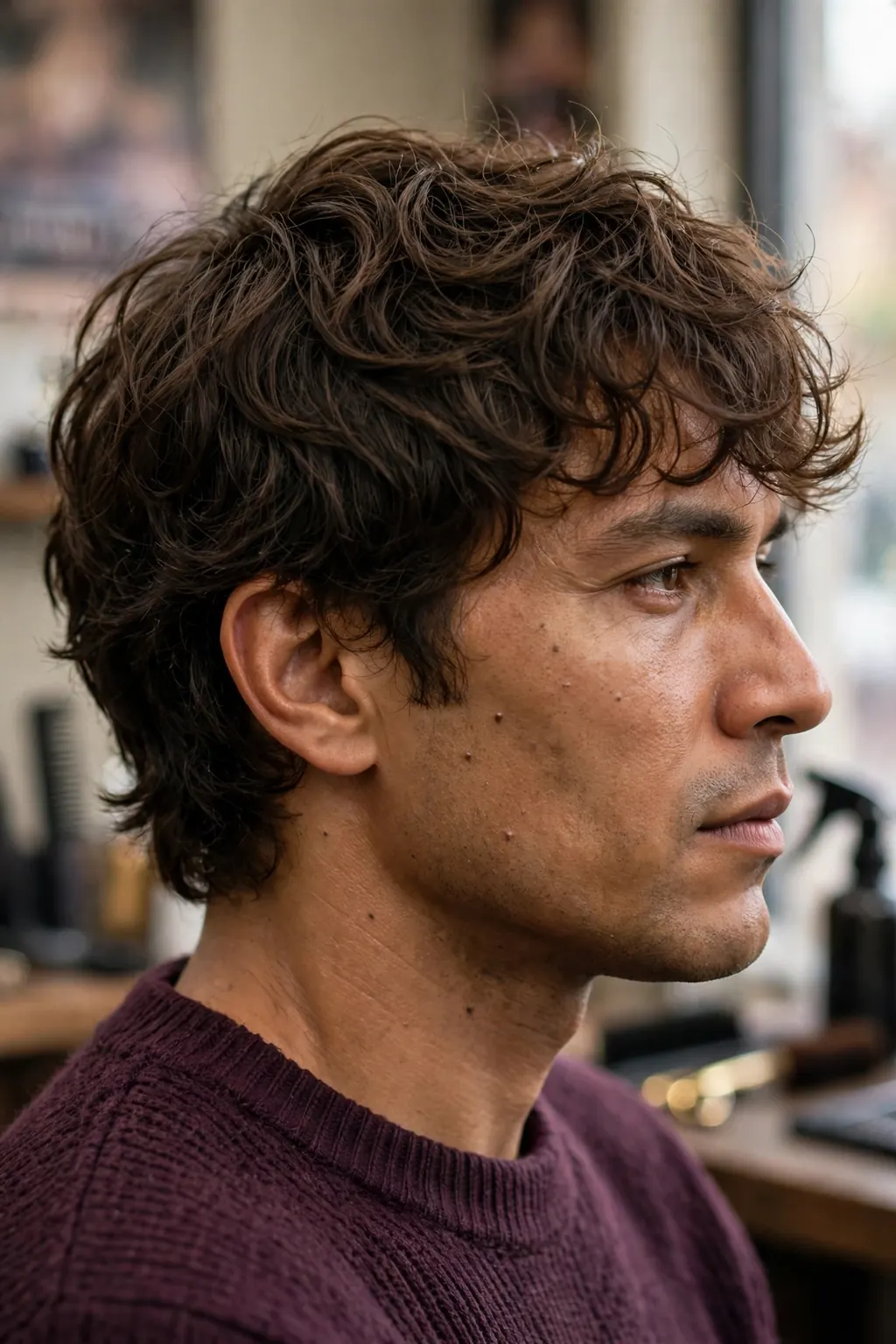
How do I ask my barber for a curly wolf cut?
Say this, in order, with three photos of the same wave type as your hair: “I want a curly wolf cut for my [2a / 2b / 3a] hair. Short choppy layers through the crown, the back kept long but layered into the crown — not disconnected, not a mullet. The sides stay connected, no fade. A textured fringe to the brow, cut dry. Point-cut the ends, no thinning shears.” Then ask the two questions: “Can you show me where the crown layers end and the back begins?” and “Will you check the fringe dry before you finish?” Bring three photos — front, side profile, back — all of your wave type, all of men, all of wolf cuts.
Does a wolf cut work on 2a wavy hair?
Yes, but the cut has to do the work the wave will not do by itself. 2a needs shorter, choppier crown layers, point-cut ends that flick outward, a lighter back, and a piecey fringe worn to one side — plus a product routine, because sea-salt spray or texture powder is half the haircut on 2a. Without the product, a wolf cut on 2a reads as a layered cut. The reference photos you bring should be 2a hair specifically, not 3a hair that you hope yours will become, and the full wolf cut with the longest back is the version to try once you know the cut suits you, not the version to start with.
How long does a men’s wolf cut take to grow out?
The cut itself is a six-week haircut: the fringe needs a tidy at three weeks, and the clean-up — re-established crown layers, tidied nape, weight out of the bulk, length left alone — comes at six weeks. Growing it out entirely takes three to four months from a short cut, because the top and back need that long before there is enough length to layer. If you stop maintaining it, the connection between crown and back is the first thing the grow-out erases, and by twelve weeks the cut reads as grown-out hair rather than a wolf cut — the fix is a re-cut, not a tidy, so the six-week clean-up is the appointment that keeps the shape.
Conclusion: Curly Wolf Cut for Men — Your Next Step
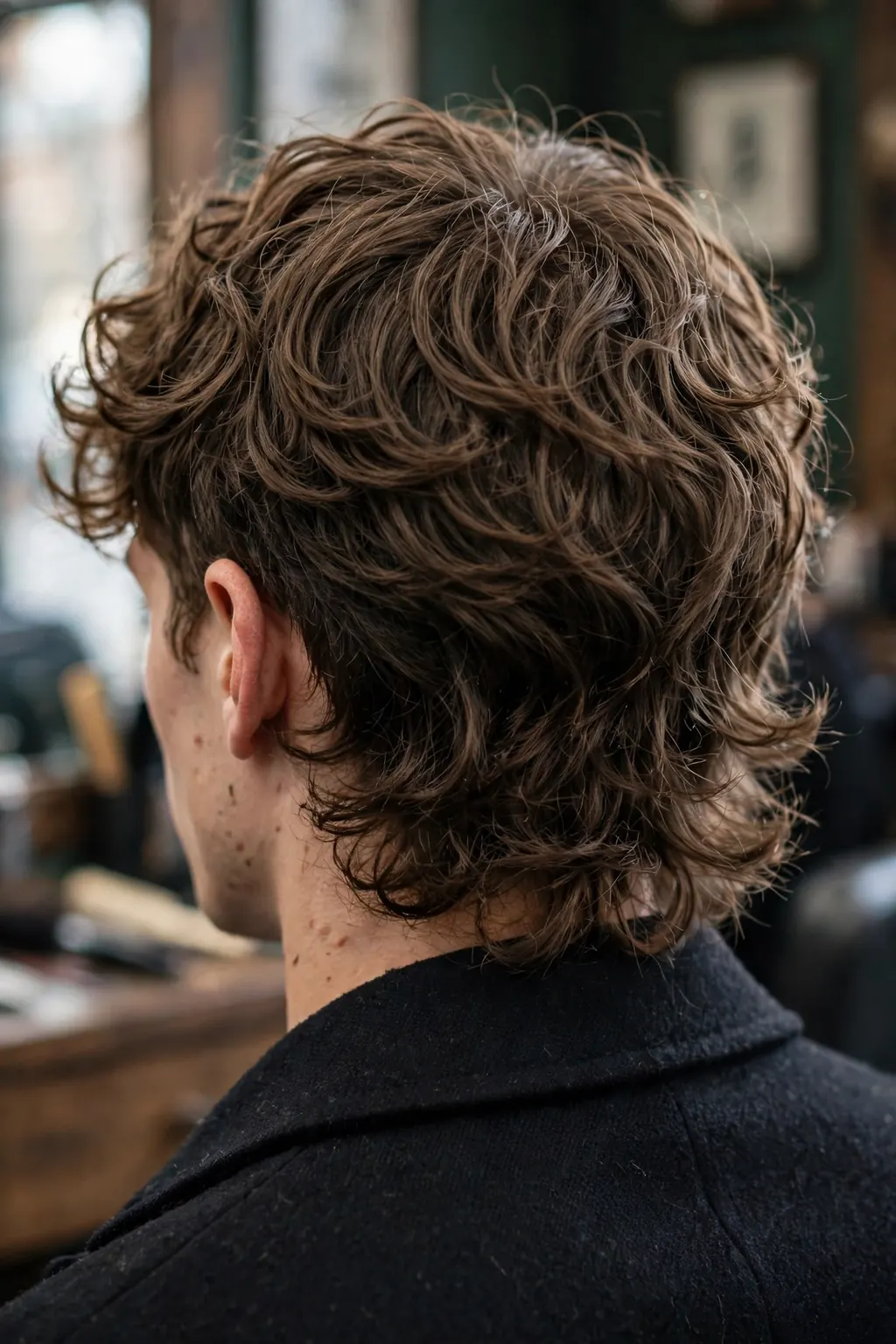
The wolf cut is not a difficult haircut. It is a specific one, and the specificity is the whole job: short choppy layers through the crown, the back kept long but layered into the crown, connected sides with no fade, a textured fringe to the brow, and the whole thing cut for your wave type rather than for a generic idea of curly hair. 2a needs the cut to create the shape, 2b is the sweet spot where the wave does the work, and 3a needs the cut to control the bulk while keeping the bounce. The mullet surprise is not bad luck — it is a briefing failure, and the barber script in this guide is the fix: the words, the three photos, the two questions, and the “not a mullet” sentence said twice if it needs saying twice. The styling routine is small on purpose — sea-salt spray for 2a, curl cream for 2b, leave-in and a diffuser for 3a — and the routine you will do every morning beats the routine that looks best in a tutorial. And the six-week clean-up is the appointment that keeps the cut a wolf cut, because the connection between crown and back is the first thing the grow-out erases.
Your next step is the barber’s chair, not another video. Book the appointment, bring the three photos on your phone, and read the script out loud — the wave type, the crown, the connected back, the fringe at the brow, and the maintenance question before you leave. If the barber can answer the two questions, you are in the right chair. If the answer is a different cut from the one you walked in asking for, listen to it: the barber is looking at your hair, and your hair is the thing the cut has to live with. The wolf cut is having its moment — ‘curly wolf cut man’ is up 514% and ‘wavy curly wolf cut’ is up 131% in the Pinterest Beauty Trend Report (6 Oct 2026) — and the moment belongs to the men who ask for it by wave type, because they are the ones who walk out with the cut in the photo instead of the mullet surprise. Find the rest of the haircut guides on the AboutSuperstars home page (https://aboutsuperstars.com/), and pick your wave type, pick your fringe, and let the cut do the talking.
📌 Save this guide before your appointment — short choppy crown, connected sides, layered back, fringe at the brow, cut for your wave type, clean-up every six weeks. That is the whole guide, in one barber visit.