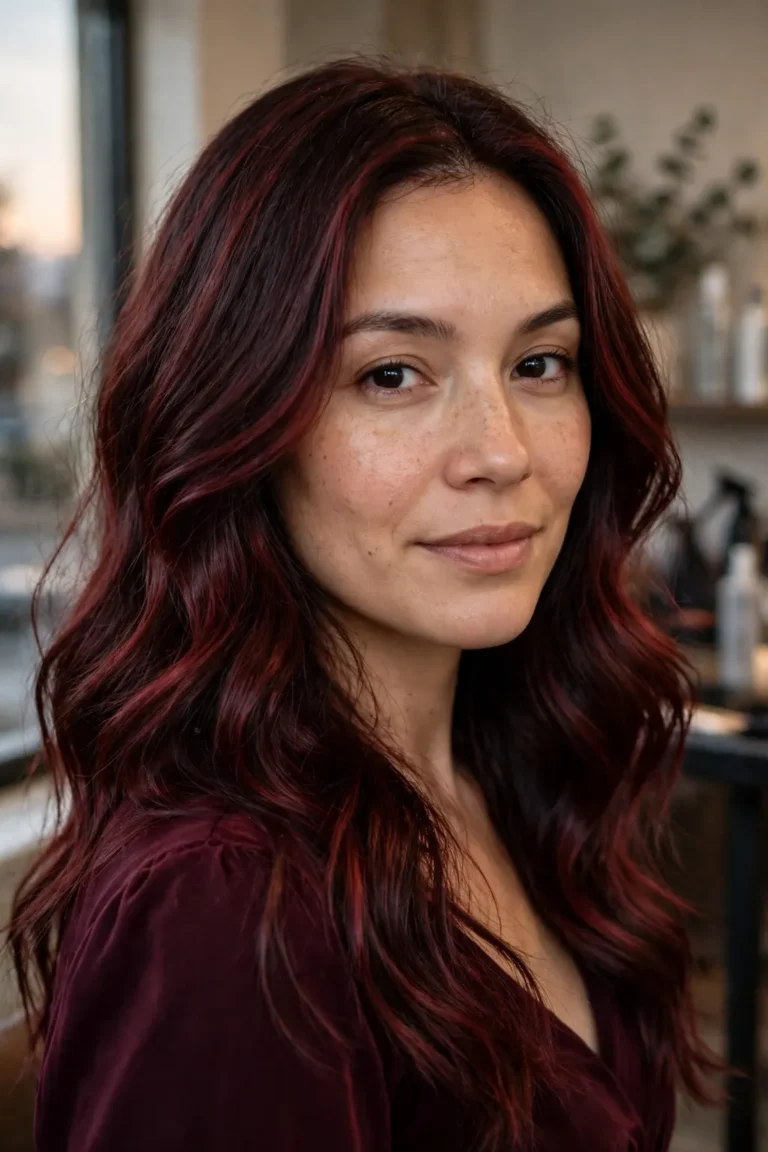
Peekaboo Pink You Can Hide at Work: 10 Dark-Pink Streaks, Under-Layers and Money Pieces
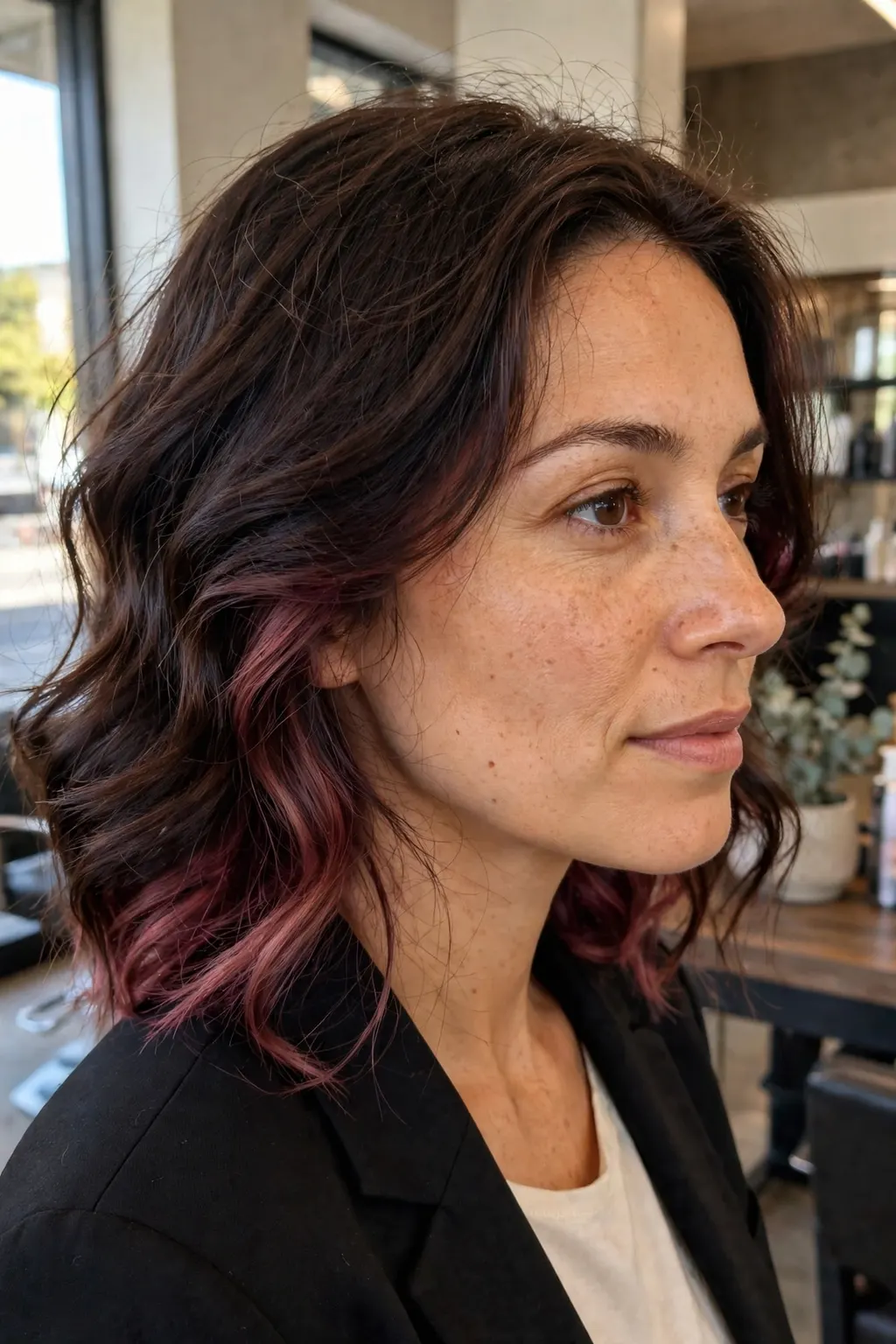
You want the pink, and you want the job — and dark pink peekaboo hair is the colour that gives you both. Most “fun colour” advice assumes you can walk into the office with a full head of rose gold and nobody minds — but for a lot of women, the dress code is real, the client meeting is real, and the colour still has to be deniable on Monday morning. Peekaboo colour is the answer that actually works: the pink lives underneath, behind, or inside the hair, and the top layer — your normal, dark, office-safe hair — covers it completely until you move, tie it up, or tuck it back. Down, you are brunette. Up, you are pink. That is the whole trick, and it is a placement trick, not a colour trick: the same dark-pink shade looks like a wild statement on the top layer and like a secret on the under-layer, and the difference is entirely where the colourist puts it.
This guide gives you ten placements, not ten shades. Each one answers a different version of the same question — where does the pink go so that it hides when you need it hidden and shows when you want it seen. There are under-layer panels that vanish when the hair is down, streaks behind the ears that appear only when you tuck, a money piece that is bold from the front and invisible from the side, and the ponytail-versus-bun rules that decide what shows where. Then the practical half: the low-bleach route for the hidden section only, how the colour fades into dusty rose (which is a feature, not a failure), an honest read of your dress code, how to refresh the pink without re-bleaching, and the exact salon script for asking for “hidden” colour clearly enough that you do not come home with a full head of pink.
Quick answer: Dark pink peekaboo hair hides because the colour sits in the under-layer, behind the ears, or underneath the front sections — the dark top layer covers it when hair is down. The best starter placement is a nape under-layer panel: invisible down, visible in a ponytail or bun, and cheap to maintain. On dark hair the hidden section usually needs one gentle lift before the pink goes on (a gloss or demi pink can skip bleach on the darkest bases, but it will be subtler). It fades to dusty rose over 4–6 weeks, refreshes with a colour-depositing conditioner instead of bleach, and the whole look survives a strict dress code as long as the top layer is long enough to cover it — which is the one thing to check before you book.
The Hide-and-Reveal Principle of Dark Pink Peekaboo Hair
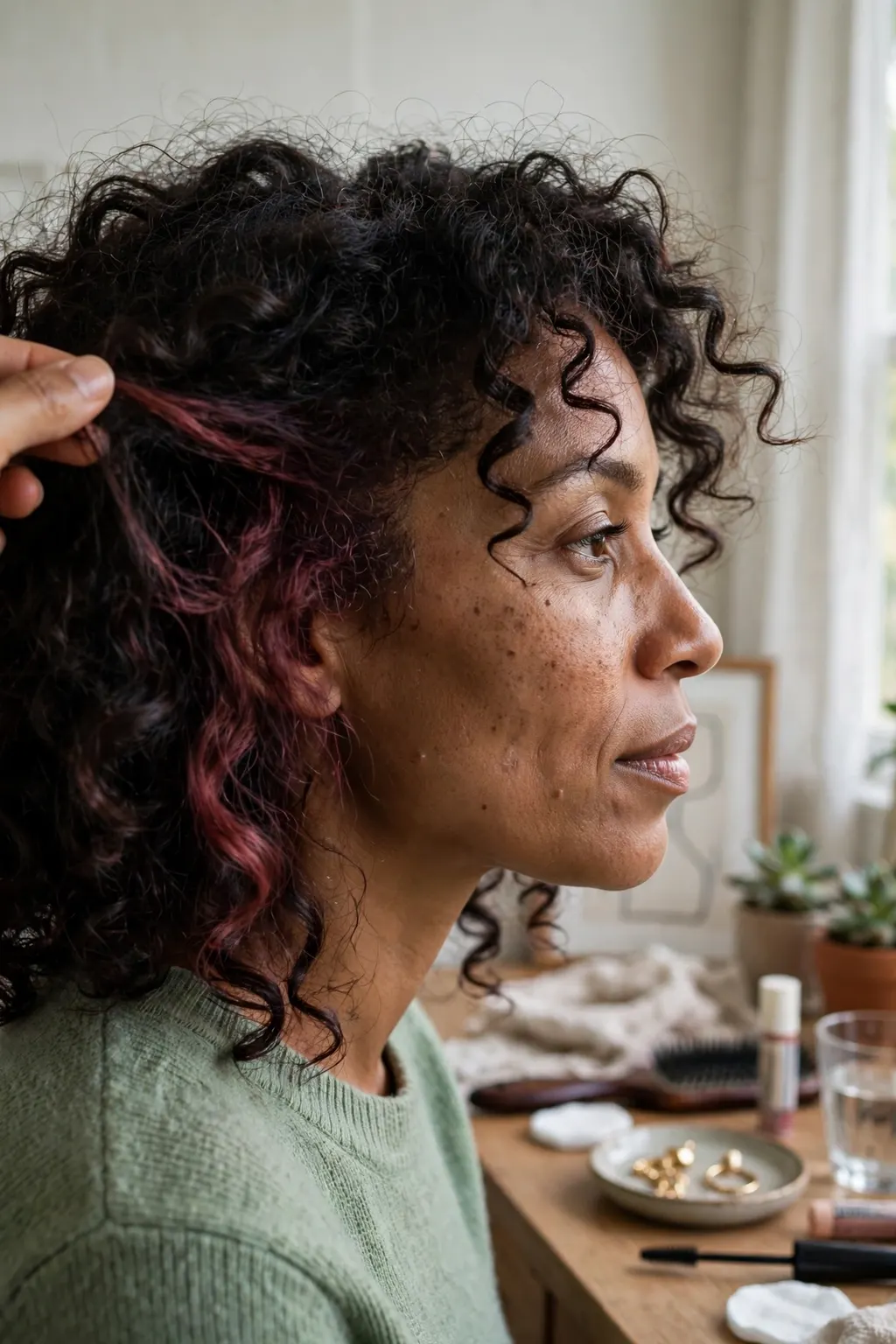
Peekaboo colour is not a shade, it is a map. The colourist divides your hair into two zones: the cover zone (the top layer, the front hairline, everything anyone sees when your hair is down and still) and the reveal zone (the under-layer at the nape, the hair behind the ears, the underside of the front sections). The pink goes only in the reveal zone. When the hair is down, the cover zone falls over it like a curtain, and from the front you look like a brunette — not a brunette with a hint of pink, a plain brunette. When you move — a ponytail, a bun, a tuck behind the ear, a gust of wind, a head tilt — the curtain lifts and the pink flashes. That is why the same colour reads completely differently depending on placement: a dark-pink panel on the top layer is a statement; the same panel an inch underneath is a secret, and the secret is the point.
The rule that makes or breaks the whole idea is simple: the cover layer has to be long enough and full enough to actually cover. If your top layer is short, thin, or heavily layered, the pink will peek through at rest, and the “hide it at work” promise falls apart — not because the placement was wrong, but because there was not enough hair on top to do the hiding. Before you book anything, do the two-minute test at home: gather the under-layer hair at the nape into a low ponytail, let the top layer fall, and look in the mirror from the front, the side and the back. If you can see the gathered section from any of those angles with the hair down, the placement needs to move lower or narrower, or your top layer needs more length first. A good colourist does this test with you in the chair before mixing any colour — if yours starts painting first and checking second, that is your sign to slow the appointment down.
What it looks like in real life
In real life, hidden pink is much quieter than the photos suggest — and that is exactly why it works. On a normal workday, nobody sees it: you look like a brunette, your hair moves like a brunette’s, and the pink only appears in the moments you choose, when you tie your hair up for the gym, tuck it behind your ear on a call, or put it in a bun for the evening. The first time someone notices, it is usually mid-sentence — a colleague sees the flash when you reach for something on a high shelf — and the reaction is almost always delight, because a hidden colour reads as a deliberate choice, not an accident. At a party, the same hair becomes the outfit: a high ponytail turns the hidden panel into a pink waterfall, and a topknot frames it like a halo. The two versions of you are the same haircut, the same colour, five seconds apart — the only difference is whether the curtain is open or closed.
Variations worth trying
If you want the subtlest possible version, ask for a single narrow panel at the nape, about two fingers wide, in the darkest pink that still reads as pink — it will be invisible down and a thin ribbon of colour up. If you want more drama without more visibility, ask for two panels, one at each side of the nape, so a ponytail shows a pink frame instead of a single stripe. If your hair is very thick, ask for the panel to be placed higher — thick hair hides more, so the reveal zone can sit further up without showing at rest. And if you are nervous about the whole idea, start with a semi-permanent dark pink that washes out in a few weeks: it is the low-commitment way to test whether you like the reveal, and whether your office actually notices, before you commit to a permanent placement.
When to skip it
Skip peekaboo pink — for now — if your top layer is shorter than chin length, because there is not enough cover to hide anything and the pink will show at rest no matter where it is placed. Skip it if your hair is very fine and thin on top, for the same reason: the cover layer needs density, not just length. Skip it if your workplace dress code explicitly bans visible hair colour even when it is partially hidden, and you are not willing to keep your hair down every single working hour — a bun on a hot day or a ponytail for a fire drill is enough to reveal it. And skip the full under-layer if you are about to have a big cut: get the cut first, let the top layer settle to its real length, and then place the pink under the hair you actually have, not the hair you are about to lose.
📌 Save this before your salon visit — peekaboo is a placement, not a shade. The cover layer must be long and full enough to hide the pink at rest; test it with a low ponytail at home before you book.
Dark Pink Peekaboo Hair: Under-Layer Panels That Vanish When Hair Is Down
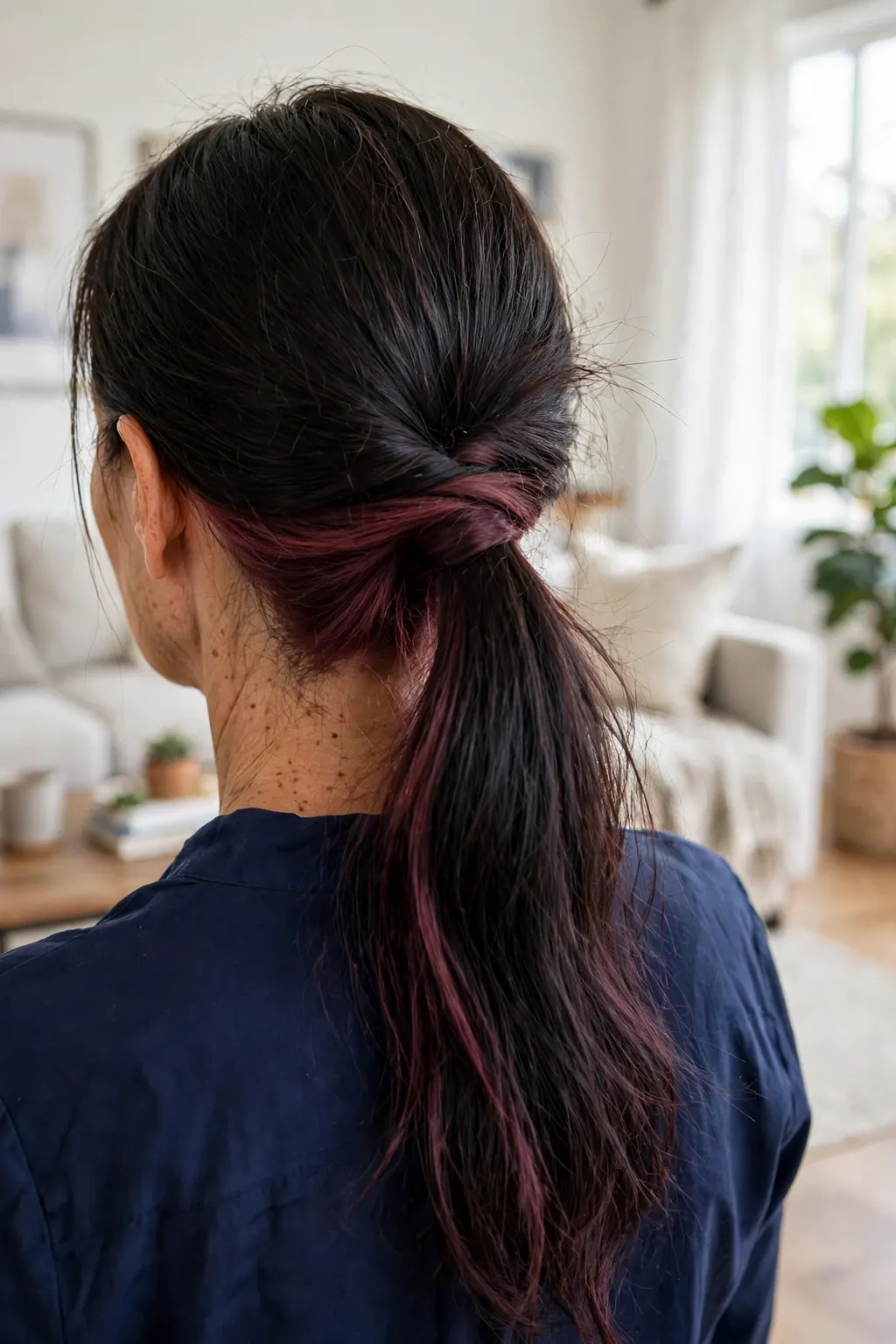
The under-layer panel is the classic peekaboo placement and the one most women should start with: a horizontal band of colour painted onto the lowest layer of hair at the nape, from ear to ear or narrower, while the entire top layer stays your natural dark shade. With the hair down, the panel is fully covered — it sits underneath, against the neck, and the weight of the top layer holds it flat and out of sight. With the hair up, it becomes the whole look: a low ponytail shows a solid pink band under the dark ponytail, a bun shows a pink crescent under the knot, and a half-up style shows a pink stripe exactly where the eye expects a shadow. It is the highest-impact, lowest-visibility placement in this guide, and it is also the cheapest to maintain, because the section is small and the regrowth is hidden by the same curtain that hides the colour.
The width of the panel is the decision that matters most. A narrow panel — two to three fingers wide — is the most deniable: it vanishes completely when the hair is down, even in wind, and it reads as a single ribbon when the hair goes up. A wide panel — the full nape from ear to ear — is more dramatic up, but it is also more likely to flash at rest when you turn your head quickly or bend forward, because the top layer has more pink to cover and the edges are closer to the surface. Most first-timers should choose the narrow panel and go wider next time if they want more: widening is easy at the next appointment, and narrowing means growing the colour out. The colourist should also feather the top edge of the panel rather than painting a hard line — a soft edge means the boundary between pink and dark is invisible even if a millimetre of it shows, while a hard line reads as a mistake the moment it peeks out.
Who it suits best
The under-layer panel suits almost everyone with hair past the shoulders, and it suits thick hair best of all — thick hair has the most cover, so the panel can be wider and placed higher without ever showing at rest. It suits straight and wavy hair particularly well, because the top layer falls in a clean curtain; on curly hair it still works, but the panel should sit lower and the curls should be checked dry, because curls spring up and shorten the cover layer by an inch or two. It suits the woman who wears her hair down at work and up everywhere else — the panel is invisible for the eight working hours and fully on show for the evening. And it suits anyone who is colouring for the first time: the section is small, the commitment is small, and if you hate it, it grows out hidden under the top layer, which is the most forgiving exit in all of hair colour.
How to ask for it (or do it at home)
Say: “I want a dark-pink peekaboo panel on the under-layer at the nape only — the top layer stays my natural colour. About two fingers wide to start, with a soft, feathered top edge, not a hard line. It has to be completely invisible with my hair down, from the front, the side and the back.” At home, the same placement is doable with a semi-permanent dark pink and a friend, a mirror and a tail comb: section off the top layer and clip it up, paint the exposed nape section, and keep the colour off the top layer by working in thin slices and wiping the comb between sections. Do not attempt it alone the first time — the nape is behind you, you cannot see what you are painting, and pink on the top layer is the one mistake that breaks the whole idea. The salon is the safer first attempt; the at-home refresh, once the placement exists, is the easy part.
Styling and upkeep
Style an under-layer panel the way you would style any dark hair, and let the updos do the revealing: a low ponytail shows the full band, a low bun shows the crescent, a half-up twist shows the stripe, and a high ponytail shows the most pink of all, because the panel rises with the ponytail and the dark hair falls around it. For the days you want it hidden, wear the hair down and avoid tight styles that pull the top layer back — a slicked-back look is the enemy of a hidden panel, because it lifts the curtain. The 20 Stunning Shoulder-Length Hairstyles guide covers the shoulder-length cuts that pair best with this placement: a blunt shoulder-length cut gives the cleanest curtain, while long layers give the most movement when the pink flashes. Upkeep is the lightest in this guide — the panel is small, the roots are hidden, and a colour-depositing conditioner every second or third wash keeps the pink dark for weeks without a salon visit.
Dark-Pink Streaks Behind the Ears
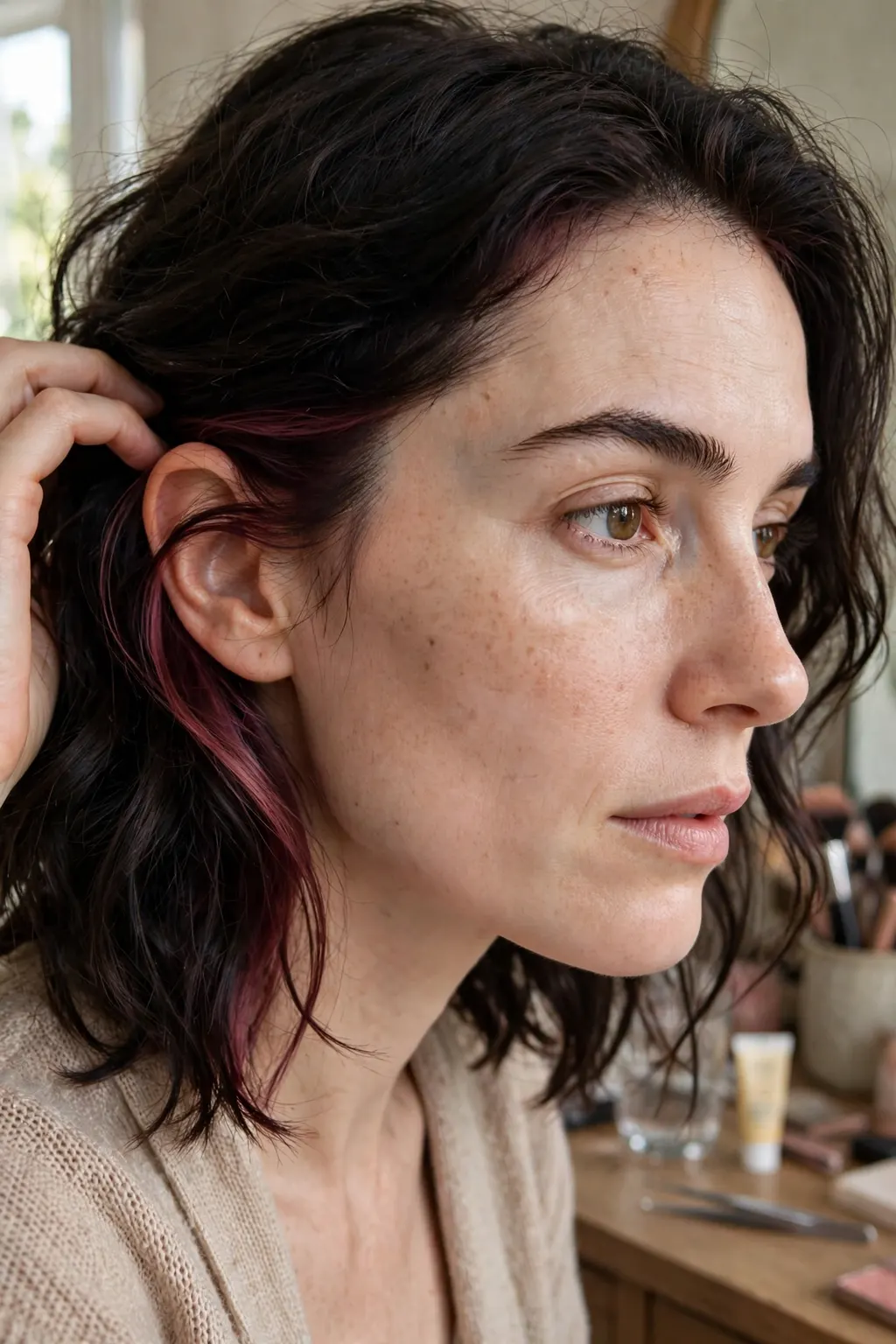
Streaks behind the ears are the smallest placement in this guide and the most precisely controllable: two thin ribbons of dark pink, one behind each ear, in the hair that sits between the ear and the nape. With the hair down, they are covered by the side sections; with the hair tucked behind the ears — the gesture everyone makes a dozen times a day without thinking — they appear, a flash of pink framing the face for exactly as long as the tuck lasts, and then they vanish again when the hair falls forward. It is the placement for the woman who wants the reveal to be a gesture rather than a hairstyle: you do not need to tie your hair up, you do not need to change anything, you just tuck, and the pink is there. And because the sections are so small, they are also the cheapest and fastest placement to do, and the easiest to grow out unnoticed.
The width and the shade are the two decisions, and both should lean subtle. A streak about one finger wide, in a deep dark pink — closer to burgundy-rose than to bubblegum — reads as an intentional accent; a wider streak in a brighter pink reads as a dye job that is trying to hide, which defeats the purpose. The streaks should also sit slightly back from the hairline, not right at the edge: a streak at the very front edge of the hair shows when the hair moves, while a streak set half an inch behind the ear stays covered until the tuck. The colourist should paint them on the underside of the section, not the top — the underside is what shows when the hair is tucked back, and the top side is what shows when it falls forward, so the pink belongs on the side that faces out only when you want it to.
The technique, step by step
Step one is the sectioning: the colourist takes a thin slice of hair from behind each ear, about a finger wide, and clips the rest away — the section should be small enough that the surrounding dark hair covers it completely when it falls. Step two is the lift, if the hair is very dark: a gentle lift on that slice only, to a warm mid-brown, so the pink has something to hold onto without going brassy. Step three is the pink itself, painted onto the underside of the slice and feathered at the top so there is no hard line where the pink meets the dark. Step four is the wait: the colour processes while the rest of the hair is untouched, which is why this placement is so quick — only two small sections are being coloured, and the rest of the appointment is waiting time. Step five is the rinse and the check: the hair is tucked behind the ears, then let fall forward, then tucked again, and the colourist checks from the front, the side and the back that the streaks vanish when the hair is down and appear when it is tucked. If they show at rest, the section was too wide or too far forward, and the fix is to narrow it at the next appointment, not to add more colour.
Common mistakes to avoid
The most common mistake is painting the streaks too wide — a two-finger streak looks twice as pink as a one-finger streak, and it shows at rest when the hair moves, which is the one thing this placement must never do. The second is placing them too far forward, right at the hairline, where they catch the light and the eye even when the hair is down. The third is choosing a pink that is too bright for the job: a neon or bubblegum pink on a thin streak reads as a highlight that escaped, while a deep dark pink reads as a deliberate accent. The fourth is forgetting that hair behind the ears gets the most friction — glasses arms, earring backs, mask straps, hat bands — and that friction fades the colour faster than the rest of the head, so these streaks need refreshing a little more often than a nape panel. And the fifth is doing only one side: a single streak looks like a mistake, even when it is deliberate, while a matched pair looks like a design choice.
Products and tools that help
You need almost nothing for this placement, and the list is deliberately short. A dark-pink semi-permanent colour or colour-depositing conditioner is the first item — it refreshes the streaks at home in ten minutes, without bleach, and it is the only product you will use regularly. A tail comb is the second, for sectioning the streaks cleanly and keeping the colour off the surrounding hair. A pair of small sectioning clips is the third, for holding the top layer out of the way while you work. A colour-safe shampoo is the fourth, because the streaks are small and every wash counts — a harsh shampoo strips a finger-wide section of colour in a week, while a gentle one keeps it for a month. And a silk pillowcase is the quiet fifth: the hair behind the ears rubs against the pillow all night, and silk reduces the friction that fades these two small sections faster than the rest.
📌 Save this before you try a streak — one finger wide, deep dark pink, half an inch behind the ear, painted on the underside. A single streak looks like a mistake; a matched pair looks like a design choice.
The Brunette Money Piece: Bold From the Front Only
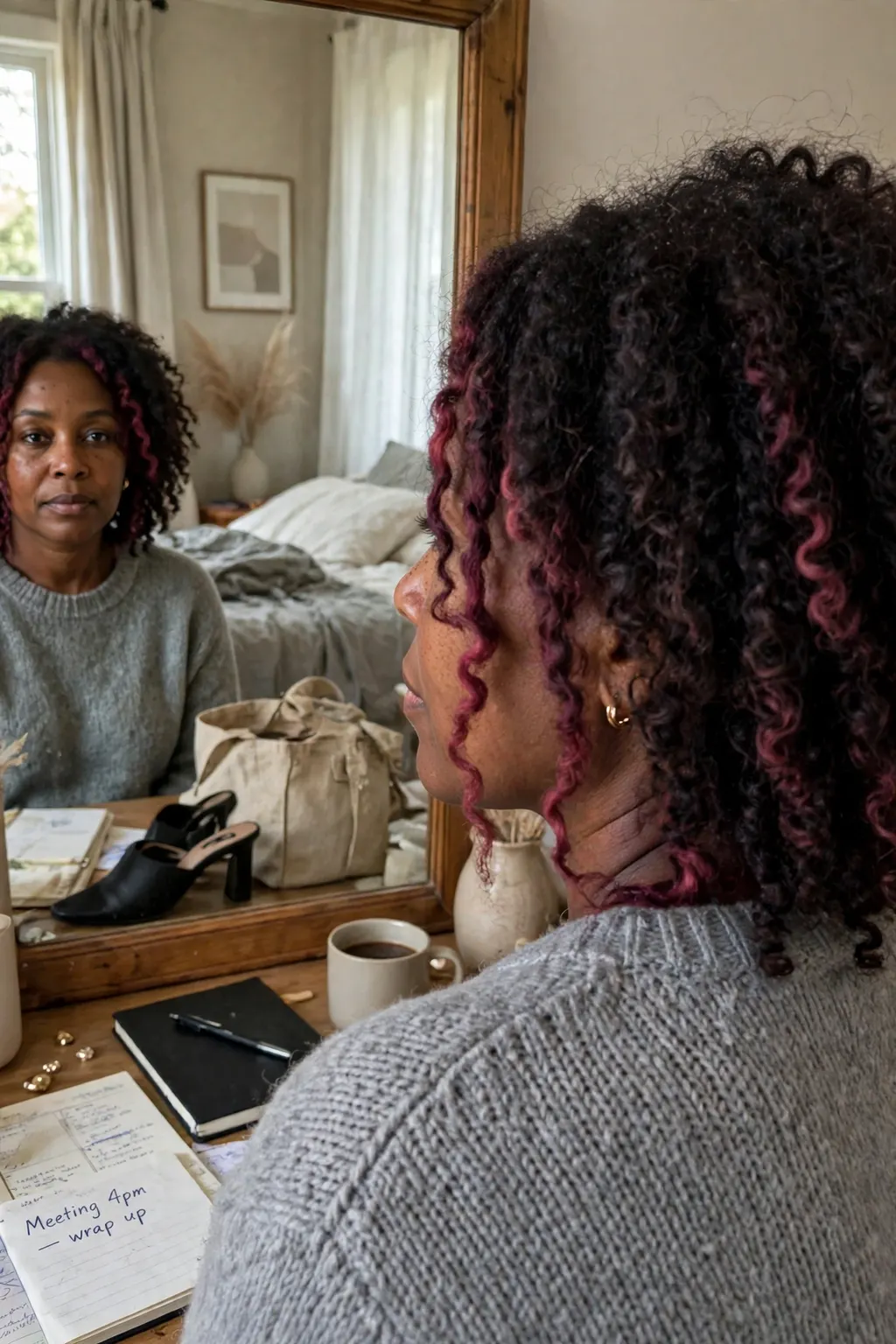
The money piece is the front frame: the two sections of hair that fall on either side of the face, from the parting down to about chin length. A dark-pink money piece colours only the underside of those two sections, so from the front — the angle that matters most, the angle of the mirror, the meeting, the photograph — the pink frames the face boldly, a deep rose ribbon on each side. From the side and the back, the hair is plain dark, because the top of the front sections covers the colour the moment the hair falls behind the shoulders. It is the boldest placement in this guide from the front and the most invisible from every other angle, which is exactly why it suits the woman whose work life happens face-to-face: the pink is there when she is looking at you, and gone when she turns away.
The trick with a money piece is the underside rule, and it is worth understanding properly. Hair has two sides: the side that faces the world when the hair hangs naturally, and the side that faces the face. On the front sections, the side that faces the face is the underside — and that is the side that shows when the hair is tucked, pushed back, or falling forward around the cheek. Paint the pink on the underside and it frames the face; paint it on the outside and it frames the hair, which is visible from everywhere and hides from nowhere. The colourist should also keep the money piece narrow at the top and wider at the ends — a fine line of pink at the parting that broadens into a ribbon by chin length — because a wide band of pink right at the roots reads as regrowth the moment it grows out, while a fine line at the roots reads as an intentional frame for weeks longer.
Best for: hair types and face shapes
The money piece suits every face shape, because the frame can be tuned to the face: a longer, finer ribbon lengthens a round face, a wider ribbon softens a long face, and a piece that starts at the cheekbone rather than the parting suits a square jaw by drawing the eye down rather than across. It suits straight and wavy hair best, because the frame falls in a clean line; on curly hair it still works, but the piece should be painted on stretched hair and checked dry, because curls shorten the frame and the pink can end up higher than planned. It suits the woman who wears her hair down and parted in the middle or to the side — the money piece lives in the parting, so it needs a parting to live in. And it suits anyone whose dress code is “professional from the front”: the pink is unmistakable in a video call and invisible in the corridor, which is a combination no other placement in this guide offers.
The exact salon wording
Say: “I want a dark-pink money piece on the UNDERSIDE of the two front sections only — not the outside. Fine at the roots, widening to a ribbon by chin length, in a deep dark pink, not a bright pink. From the front it should frame my face; from the side and the back it should disappear when my hair falls behind my shoulders.” The word “underside” is the whole brief, and it is worth repeating twice, because a money piece painted on the outside of the front sections is the single most common peekaboo mistake — it is also the hardest to fix, because the front sections are the most visible hair on your head. Bring a photo of the exact effect you want, and ask the colourist to show you, with the hair tucked and untucked, where the pink will sit before they mix the colour. If they cannot show you, they are guessing, and the front of your head is not the place for a guess.
Maintenance schedule
The money piece is the highest-maintenance placement in this guide, because it frames the face and the face is where regrowth shows first. Plan on a refresh every 4–5 weeks: a gloss or a colour-depositing conditioner keeps the pink dark between appointments, but the roots at the parting will show a dark line as the hair grows, and only a salon touch-up or a careful at-home root refresh fixes that. Between appointments, wash with cold water and colour-safe shampoo, and keep heat styling off the front sections where you can — the money piece gets the most heat, the most sun and the most touching, and all three fade pink faster than the rest of the head. The trade-off is honest: this placement gives you the boldest front-facing effect and asks the most upkeep in return. If the maintenance schedule sounds like too much, the under-layer panel gives you almost the same reveal for a third of the work.
Peekaboo in a Ponytail vs in a Bun: What Shows Where
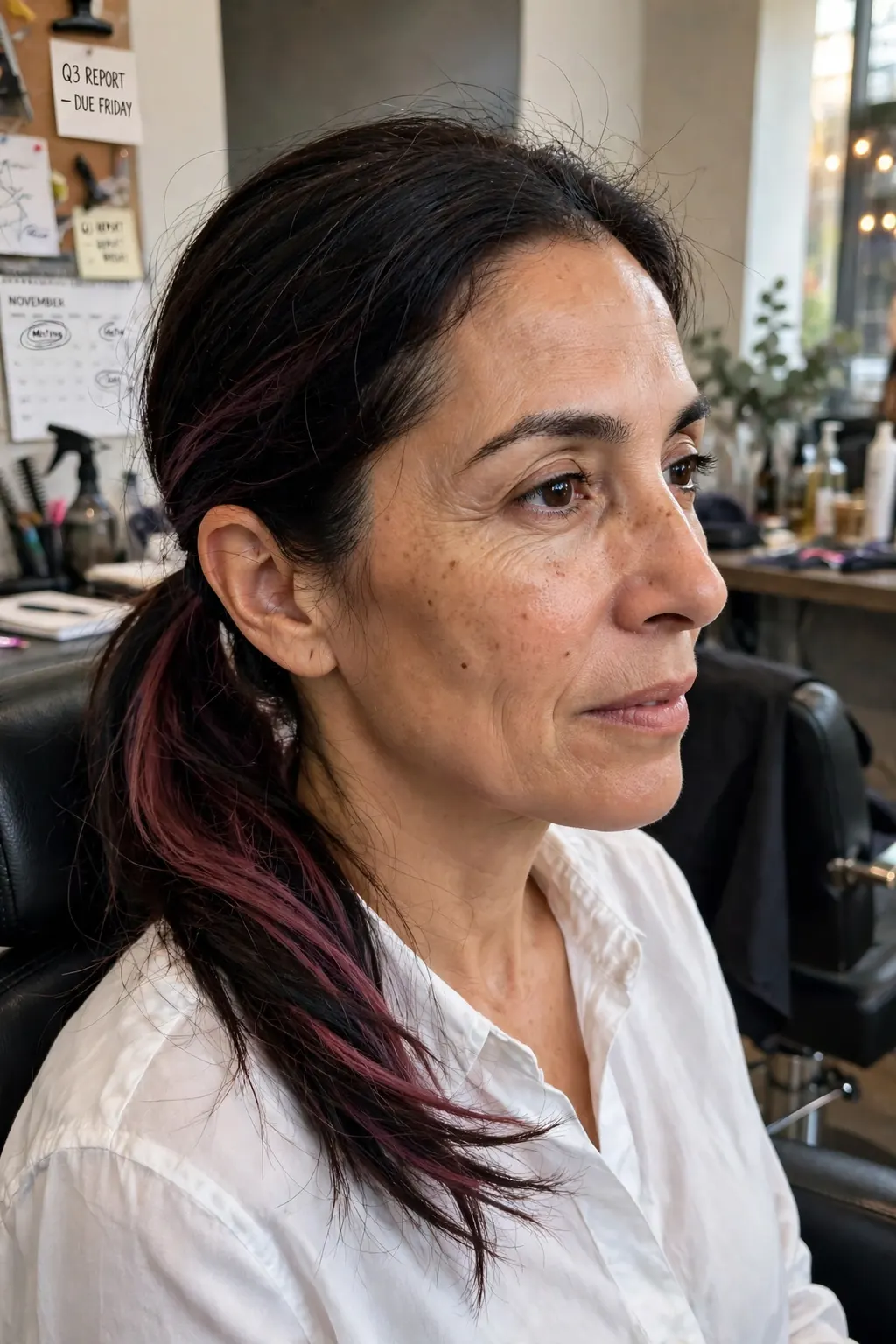
The same hidden colour shows differently depending on how the hair is gathered, and knowing the difference is what turns a peekaboo placement from a lucky accident into a deliberate style. A ponytail pulls the hair back and up, which lifts the under-layer panel into view: the pink band rises with the tail, the dark hair wraps around it, and the result is a pink stripe running through the ponytail, visible from behind and from the side. A bun does the opposite: it gathers the hair into a knot, and the under-layer panel wraps around the base of the knot, so the pink appears as a crescent under the bun — visible from behind, subtle from the side, and invisible from the front. A high ponytail shows the most pink of any style in this guide; a low bun shows the least; and a half-up style shows a thin stripe exactly at the point where the hair is gathered, which is the most controlled reveal of all.
The practical rule is to choose the placement for the style you actually wear. If you live in a high ponytail at the gym and a low bun at work, a nape panel is perfect: it is hidden in the bun and on show in the ponytail, which is exactly the split you want. If you live in a low ponytail, the panel should sit lower and wider, because a low ponytail does not lift the under-layer as far — a narrow, high panel can vanish entirely in a low ponytail, and you will wonder where the pink went. If you never tie your hair up at all, the ponytail and bun rules do not matter and the behind-the-ear streaks or the money piece are the placements for you, because they reveal on a tuck rather than a tie. And if you wear your hair up every day for work, be honest with yourself before you book: a hidden colour that is revealed by your daily hairstyle is not hidden at work, and the money piece — which is hidden from the side and back — may be a better choice than a panel that your bun shows every day.
What it looks like in real life
In real life, the ponytail reveal is the moment people photograph: the dark ponytail with the pink band running through it, the colour catching the light when the head turns, the flash of pink that makes a plain gym ponytail look styled. The bun reveal is quieter and, to most women, more useful: the pink crescent under a low bun reads as a deliberate detail in a meeting, a hint of colour that says you thought about your hair, without ever becoming the subject of the meeting. The half-up reveal is the most elegant of the three — a thin pink stripe at the gathering point, visible when the hair moves, invisible when it is still — and it is the one to choose for a wedding or a party, because it photographs beautifully from behind. The same pink, three different reveals, and the only thing that changes is where the hair is gathered.
Variations worth trying
If you want the ponytail reveal to be dramatic, ask for the panel to be placed higher and wider, so the ponytail lifts a broad band of pink into view. If you want the bun reveal to be the star, ask for the panel to sit low and wide, so the crescent under the bun is thick and visible from across the room. If you want both, ask for two panels — a narrow high one for the ponytail and a wide low one for the bun — though that is a second-appointment decision, not a first, because two panels are harder to keep hidden at rest. And if you want the most control of all, try the half-up twist: gather the top half, twist it once, and pin it — the twist lifts exactly the hair above the panel and leaves the panel on show as a single stripe, which you can hide again in five seconds by letting the twist down.
When to skip it
Skip the ponytail-led placement if you never wear a ponytail: a panel placed for a high ponytail is wasted on hair that is always down, and the behind-the-ear streaks will serve you better. Skip the bun-led placement if your bun sits high on the crown, because a high bun lifts the panel further up the head than a low bun does, and a panel placed for a low bun can show at rest when the hair is gathered high. Skip any updo-dependent placement if your work requires your hair tied up all day — the colour will be visible for the whole working day, and the “hide it at work” promise will not hold. And skip the high ponytail as a daily style if the panel is wide: a wide panel in a high ponytail is a full pink ponytail, which is a look, and a wonderful one, but it is not a hidden one.
📌 Save this before you choose a placement — a high ponytail shows the most pink, a low bun shows the least, a half-up shows a single stripe. Pick the placement for the style you actually wear every day.
Low-Bleach Routes for the Hidden Section Only
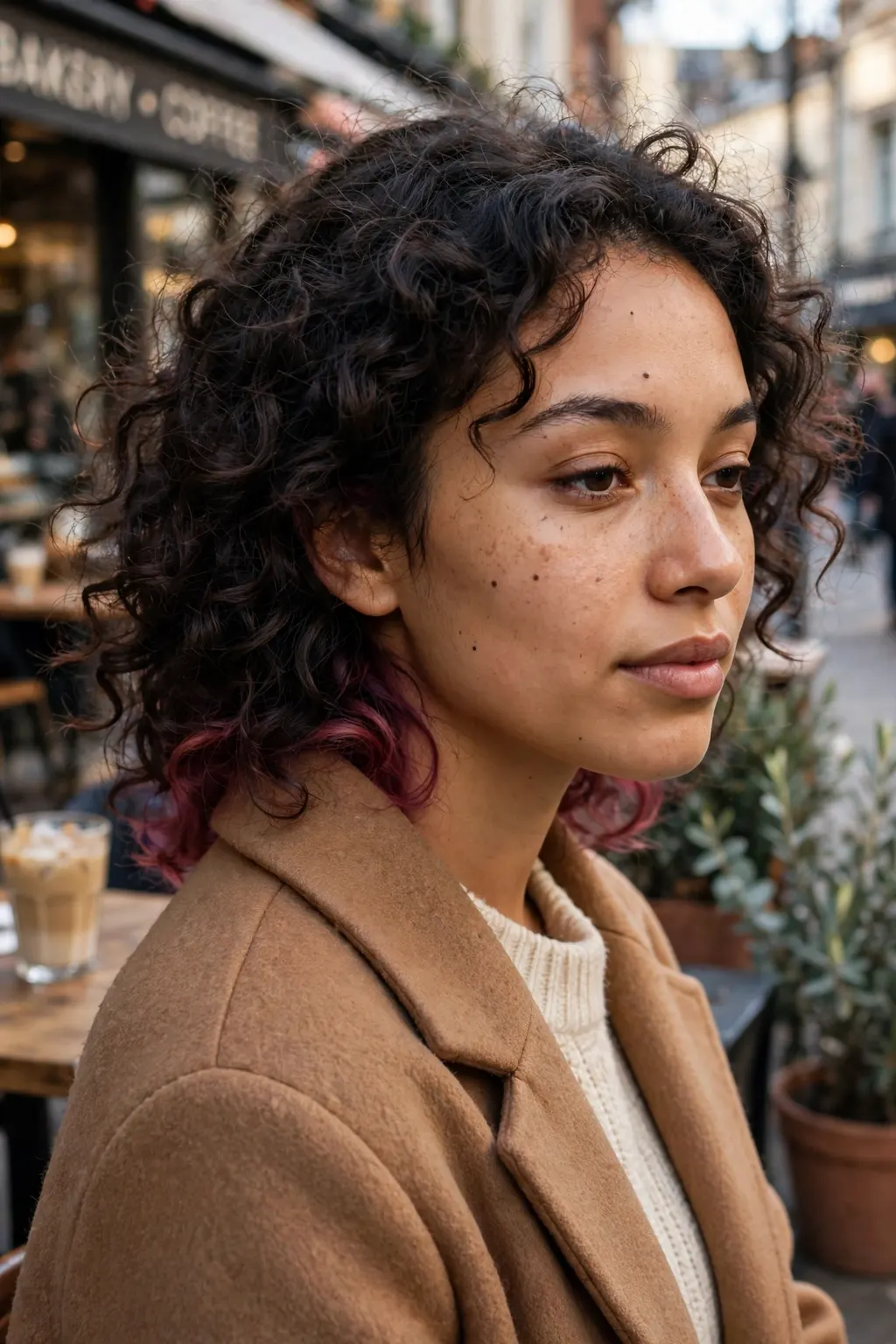
Dark hair and pink colour have one awkward fact between them: pink is a light, translucent colour, and dark hair is a dark base, so the pink needs the base lifted before it will show as pink rather than as a faint warm tint. The good news is that a peekaboo placement needs the lift on a tiny section only — the under-layer panel, the two streaks, the underside of the front sections — which means the damage, the cost and the grow-out are all confined to a section nobody sees when the hair is down. The even better news is that dark pink is the most forgiving pink of all: it is dark enough to show on a base lifted only to a warm mid-brown, where a pastel pink would need a near-platinum base, so the lift can be gentle, low-volume and quick.
There are three routes, in order of gentleness. The gentlest is no bleach at all: a dark-pink gloss or demi-permanent colour painted straight onto dark hair. It will not give a bright pink — it gives a deep, wine-toned sheen that reads as pink in sunlight and as dark brunette indoors, which is exactly the subtlety a hidden placement wants, and it washes out gradually with no regrowth line. The middle route is a single gentle lift with a low-volume developer on the hidden section only, to a warm caramel-brown, followed by the dark pink: this gives a true, visible dark pink that still looks rich rather than neon, and the section is small enough that the lift takes twenty minutes. The strongest route is a full lift to a light blonde on the hidden section, which gives the brightest pink — but it also gives the most damage, the most visible regrowth, and the most maintenance, and for a hidden placement it is almost never worth it. For most women, the middle route is the right one: one gentle lift, one true pink, and a section small enough that the lift is a footnote, not a project. If you would rather skip the lift entirely and colour the whole head dark, the Cherry-Cola Brunette Without Bleach guide covers a deep cherry shade that works on dark hair with no bleach at all.
Who it suits best
The no-bleach gloss route suits the woman who has never coloured her hair and does not want to start with damage: it is the lowest-risk way to try pink, it washes out, and it leaves the hair exactly as it was. It also suits very dark, almost-black hair, where even a gentle lift can go warm and brassy — a gloss sidesteps the lift entirely and gives a pink sheen instead of a pink stripe. The single gentle lift suits the woman who wants a real, visible pink and is willing to accept a small amount of damage on a hidden section: the lift is confined, the section is small, and the top layer — the hair everyone sees — is never touched. The full lift suits almost nobody for a hidden placement, and it is worth saying so plainly: if you want the brightest possible pink, put it somewhere visible, where the brightness is the point, and keep the hidden section gentle. And all three routes suit the woman whose hair is already coloured dark: a gloss or a gentle lift on a hidden section is far simpler than lifting a whole head of dark dye, which is the expensive job this placement exists to avoid.
How to ask for it (or do it at home)
Say: “I want the lift on the hidden section ONLY — nothing on the top layer. One gentle lift to a warm mid-brown, low volume, then a deep dark pink on top. No full lift, no platinum, and I want to see the lifted section before the pink goes on, so I can check the tone.” At home, the no-bleach gloss route is the only one to attempt: apply a dark-pink gloss or colour-depositing conditioner to the hidden section, leave it for the stated time, rinse with cold water, and check the result in daylight before deciding whether you want more. Do not attempt the lift at home on your first try — a lift on the nape is behind you, you cannot see the timing, and an over-lifted hidden section goes brassy, which is visible the moment the pink fades. The lift is a salon job; the gloss refresh, once the placement exists, is the easy at-home part, and it is the part that keeps the pink dark for months.
Styling and upkeep
A low-bleach hidden section needs almost no special styling: the top layer is untouched, so it behaves exactly as it always has, and the hidden section only appears when you choose to reveal it. Upkeep is about the lift, not the pink: a lifted section is more porous than the rest of the hair, so it drinks up colour-depositing conditioner faster and fades faster too, which means a weekly pink conditioner on the hidden section only — not the whole head — is the maintenance that matters. Keep heat off the hidden section where you can, because heat opens the cuticle and lets the pink escape, and keep the section out of chlorinated water or rinse it immediately after swimming, because chlorine strips pink faster than any shampoo. And remember the regrowth rule: a lifted hidden section grows out hidden, under the top layer, so the regrowth line that would be obvious on a full head of colour is invisible here — which is the quiet, practical reason the low-bleach route works so well for a placement nobody is supposed to see.
Fading Gracefully: Dusty Rose Is the Exit Shade
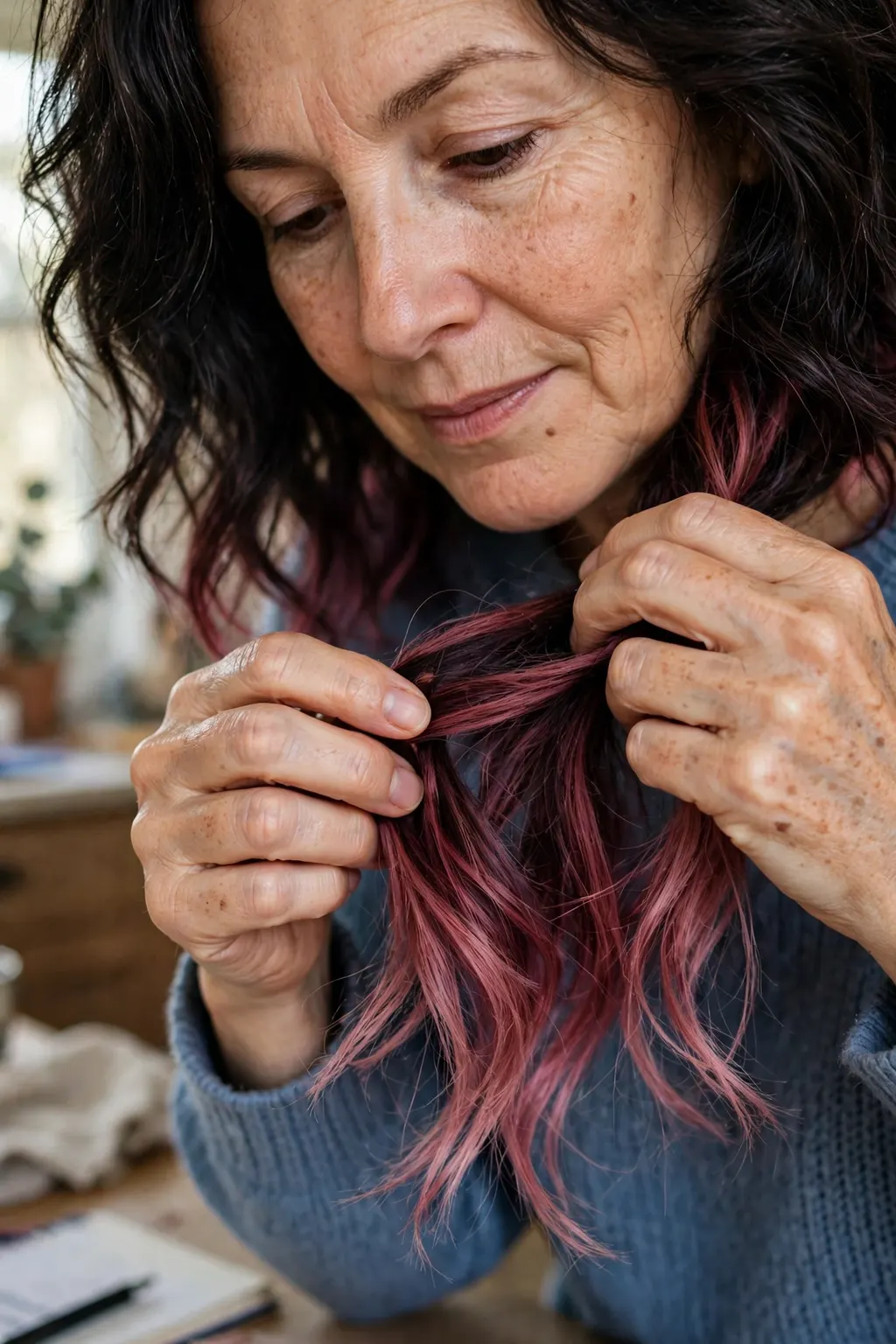
Every pink fades. That is not a flaw in the colour, it is the nature of the colour: pink molecules are large, they sit near the surface of the hair shaft, and every wash lets a few of them go. The question is never whether the pink will fade — it will, over four to six weeks — but what it fades into, and dark pink has the best answer of any pink shade: it fades into dusty rose. Dusty rose is a soft, muted, grey-pink that looks deliberate, expensive and intentional, and it is the shade most women say they would have chosen if they had known it existed. Where a bright pink fades into a patchy, brassy orange-pink that looks like a mistake, a dark pink fades evenly into a colour that could pass for a salon choice on its own — which means the fade is not something to dread, it is the second act of the colour, and it lasts almost as long as the first.
The fade follows a predictable timeline, and knowing it removes the anxiety. Weeks one and two: the pink is at its deepest and darkest, almost burgundy in indoor light, clearly pink in sunlight. Weeks three and four: the pink softens by about a third, the burgundy edge drops away, and the colour reads as a clear dark rose. Weeks five and six: the pink is dusty rose, soft and muted, and it is at its most wearable — this is the shade to photograph, because it flatters every skin tone and it never looks loud. Weeks seven and eight: the rose is a whisper, visible only in sunlight, and it is time to decide whether to refresh, let it go, or change the placement. The whole arc is eight weeks of wearable colour from a single appointment, and the middle of the arc — the dusty rose weeks — is the part most women end up loving most.
The technique, step by step
Step one is the wash routine: cold water, always, because hot water opens the cuticle and lets the pink out — the single biggest factor in how fast the colour fades is the temperature of the water, not the shampoo. Step two is the shampoo: a colour-safe, sulphate-free shampoo, used less often than usual — two washes a week rather than four, with dry shampoo on the roots in between if you need it. Step three is the refresh: a dark-pink colour-depositing conditioner on the hidden section only, every second or third wash, left on for five to ten minutes, which tops the pink back up without touching the top layer. Step four is the protection: heat protectant before any hot styling on the revealed sections, a hat or a scarf in strong sun, and a rinse with clean water immediately after swimming. Step five is the decision point at week six: refresh the pink to full depth, let it fade to dusty rose and enjoy the second act, or book the next appointment — and the right answer depends on whether you are still loving the reveal or ready for a change.
Common mistakes to avoid
The most common mistake is washing with hot water, because it feels good and it strips the colour in half the time — cold water is the single cheapest way to double the life of the pink. The second is using a clarifying or anti-dandruff shampoo on the hidden section, which strips colour aggressively; if you need a medicated shampoo, apply it to the scalp only and keep it off the pink. The third is over-refreshing with a colour-depositing conditioner every wash, which builds the pink up unevenly and can turn the section patchy — every second or third wash is enough, and the dusty rose weeks are meant to be enjoyed, not corrected. The fourth is sunbathing with the pink on show and no protection: UV fades pink faster than any wash, and a hat is worth more than any product. And the fifth is panicking at the first fade: a dark pink that has softened by a third is not a failed colour, it is a colour in its second week, and the dusty rose it is heading towards is the shade you will probably like best.
Products and tools that help
You need four products, and the list is deliberately short. A colour-safe, sulphate-free shampoo is the first, because it is the product you use most often and the one that does the most damage if it is wrong. A dark-pink colour-depositing conditioner is the second, for the refresh every second or third wash — buy the same depth as your original pink, not a brighter one, or the refresh will overshoot. A heat protectant spray is the third, for the front sections and any revealed styling, because the pink that shows is the pink that gets the heat. And a silk pillowcase is the fourth, because the nape panel rubs against the pillow all night, and silk reduces the friction that fades the hidden section faster than the rest. Everything else is optional: a cold-water final rinse costs nothing and helps more than any product, and a hat in strong sun is worth more than a shelf of colour-care treatments.
Workplace Rules Check: Reading Your Dress Code Honestly

Before you book the appointment, read your dress code — actually read it, not the version you remember from induction. Most dress codes do not ban hair colour outright; they ban “unnatural” colour, “extreme” styles, or anything “distracting”, and all three of those words are doing a lot of quiet work. A hidden dark pink is, in practice, none of those things when the hair is down: it is invisible, it is not extreme, and it distracts nobody, because nobody can see it. But the code is not the only rule that matters — the unwritten rule matters too, which is what your manager, your clients and your team actually notice and actually mind. The honest check is not “does the policy ban this” but “would anyone in my working day see it, and if they did, would they care” — and for a hidden placement, the answer is usually no to the first question, which makes the second one irrelevant.
The check has three parts, and it takes five minutes. First, the policy: search your handbook for “hair”, “appearance” and “colour”, and read what it actually says — if it bans visible unnatural colour, a hidden colour complies, because it is not visible; if it bans hair colour entirely, including hidden colour, then the placement is a risk and you should know that before you book. Second, the people: think about the three people you spend the most working time with, and ask whether any of them has ever commented on anyone’s hair — if the answer is no, the risk is low; if the answer is yes, the risk is real and the placement should be the most deniable one, the narrow nape panel. Third, the day itself: think about your actual working day — do you wear your hair up, do you wear a headset, a hard hat, a hijab, a uniform cap — and whether any of those reveal the hidden section as a matter of routine. A headset that sits over the ears can lift the side sections and show a behind-the-ear streak; a hard hat can push the top layer back and show a nape panel; a hijab covers everything, which makes the hidden placement entirely safe and entirely yours. The dress code is a document, but the working day is the real test, and the working day is the one to plan for.
Best for: hair types and face shapes
The dress-code check suits everyone, but it matters most for the woman whose job is the reason she wants hidden colour in the first place — the teacher, the nurse, the lawyer, the client-facing consultant, the woman whose workplace is conservative and whose weekends are not. It suits the woman who works in a uniform or with her hair tied back, because the uniform decides what shows, not the placement. It suits the woman starting a new job, because a hidden colour is the safest way to have the colour and the first impression at the same time — the panel is invisible at the interview and on show at the welcome drinks. Face shape does not change the check, but hair length does: the longer the top layer, the safer the placement, and the check should include a hard look at whether your top layer is long enough to cover the panel in every working situation, including the ones you do not expect — the fire drill, the outdoor lunch, the windy walk to the car park.
The exact salon wording
Say: “I work in [office / school / hospital / client-facing role] and the colour has to be completely hidden with my hair down, all day, including when I bend forward and when I turn my head. My dress code says [quote it if you can]. I need the most deniable placement you do — narrow nape panel, soft edge — and I need you to check it from the front, the side and the back with my hair down before I leave.” The details in that sentence — the workplace, the dress code, the bend-forward test — are the whole brief, and they tell the colourist that the hiding is the product, not an afterthought. If the colourist suggests a brighter pink or a wider panel “because it will look better”, that is the moment to hold the line: better in the salon mirror is not better in the office, and the placement you need is the one that disappears, not the one that photographs best.
Maintenance schedule
The dress-code maintenance is not a product schedule, it is a weekly check: once a week, on wash day, stand in front of the mirror with your hair down and check from the front, the side and the back that the pink is still fully hidden — because hair grows, the top layer shifts, and a panel that was perfectly hidden in November can start to peek in January as the lengths change. Re-check after every cut, because a cut changes the cover layer, and a shorter top layer can expose a panel that was hidden the day before. Re-check after any change in your working day — a new headset, a new uniform, a new requirement to wear your hair up — because the working day is what decides whether the colour stays hidden. And keep one rule for the whole time you have the colour: if you are ever unsure whether it is showing, it is showing, and the fix is to wear the hair down that day and narrow the panel at the next appointment. A hidden colour that you have to worry about is not a hidden colour.
Refreshing the Pink Without Re-Bleaching
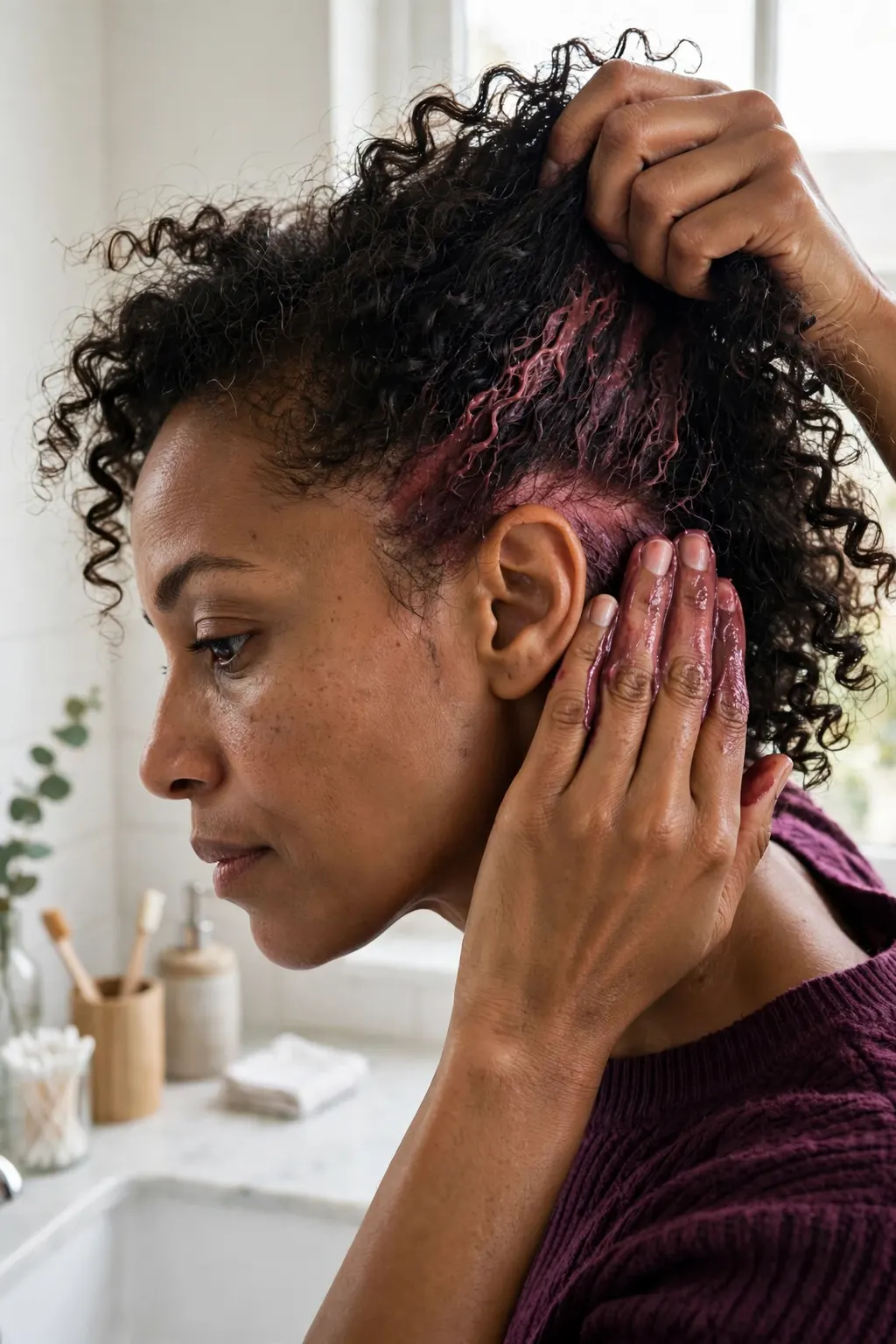
The pink will fade, and the refresh is the part of the process most women get wrong — because the obvious answer, “go back to the salon and do it again”, is the expensive answer, and the right answer is a bottle you already own. A colour-depositing conditioner — a conditioner with dark-pink pigment in it — tops the colour back up in five to ten minutes at home, with no bleach, no developer and no damage, and it is the only refresh a hidden placement needs for its first two or three cycles. It works because the hidden section is already lifted: the cuticle is open enough for the pigment to sit in, and the conditioner puts back roughly what the last few washes took out. It does not work on unlifted dark hair, which is why the gloss-only route needs a different refresh — a darker pink gloss, applied the same way, which gives a sheen rather than a stripe — but for the standard lifted placement, the conditioner is the whole maintenance plan.
The method is simple, and the details are what make it work. Wash the hair as normal, then apply the colour-depositing conditioner to the hidden section only — the panel, the streaks, the underside of the money piece — and keep it off the top layer, because pink conditioner on dark hair does nothing, but pink conditioner on a lightened top layer would stain it. Leave it for five minutes for a gentle top-up or ten for a full refresh, then rinse with cold water until the water runs clear. Check the result in daylight, not bathroom light: bathroom light flatters pink, daylight tells the truth, and the difference between five minutes and ten is visible in daylight and invisible in the mirror. Do it every second or third wash, not every wash, because over-refreshing builds the colour up unevenly and can turn the section patchy — the dusty rose weeks are meant to be enjoyed, and the refresh is for when the rose has faded to a whisper, not for when it has softened by a third.
What it looks like in real life
In real life, the refresh is a ten-minute job on a wash day, and it looks unremarkable — which is the point. You wash, you condition the hidden section, you rinse cold, and the pink is back to its second-week depth, as if the last three weeks of fading had not happened. The first time you do it, the result feels almost like cheating: a bottle of conditioner, ten minutes, and the colour you paid for is back. The second time, it feels routine. The third time, you will know exactly how many minutes your hair needs — five for a top-up, ten for a full refresh, fifteen if you left it too long and the pink has gone pale — and the refresh becomes part of the wash day, not an event. And the economics are the quiet win: a bottle of colour-depositing conditioner costs a fraction of a salon appointment, it lasts for a dozen refreshes, and it stretches the time between appointments from four weeks to eight or ten, which is the difference between a colour you can afford to keep and a colour you grow out because the upkeep wore you down.
Variations worth trying
If the pink has faded unevenly — darker at the roots, paler at the ends — apply the conditioner to the ends first, leave it for five minutes, then apply it to the roots for the last five: the ends are more porous and need the extra time, while the roots need less. If you want a deeper pink than the original, use a conditioner one shade darker than your original pink, for ten minutes, and check the result in daylight before deciding whether to repeat it. If you want to slow the fade rather than refresh it, switch to a colour-depositing shampoo as well as the conditioner — the shampoo deposits a little pigment on every wash, which keeps the pink steady instead of letting it fall and then topping it back up. And if the pink has faded to almost nothing and the conditioner does nothing, the section needs a salon gloss, not more conditioner: the pigment has nothing left to hold onto, and a gloss re-seals the cuticle and gives the conditioner something to work with again.
When to skip it
Skip the at-home refresh if the hidden section has never been lifted — a colour-depositing conditioner on unlifted dark hair does almost nothing, and you will conclude the product is useless when the placement was the problem. Skip it if the scalp is irritated or broken anywhere near the section, because a pigmented conditioner on broken skin can sting and stain, and the scalp should heal first. Skip it the week before a salon appointment, because a freshly refreshed section makes it harder for the colourist to see what has actually faded and what the true base is. And skip the idea of refreshing every wash: over-refreshing builds pigment unevenly, it can stain the top layer if any of it migrates, and it turns a ten-minute maintenance job into a chore — every second or third wash, five to ten minutes, cold rinse, and the pink looks after itself.
📌 Save this before your colour fades — a dark-pink colour-depositing conditioner, hidden section only, five to ten minutes, every second or third wash, cold rinse. No bleach, no salon, no drama.
Salon Script: Asking for ‘Hidden’ Colour Clearly
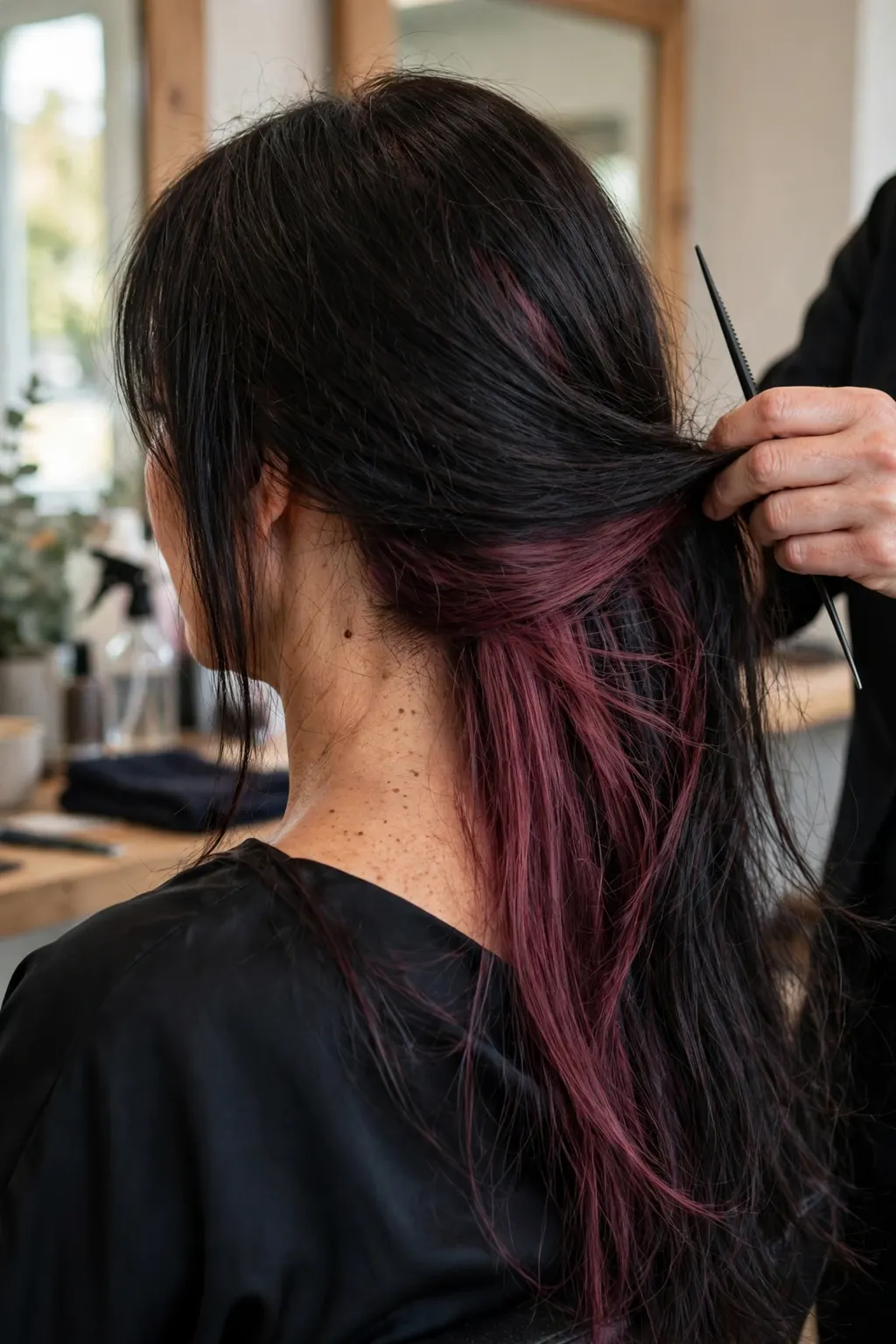
Most bad peekaboo results are not bad colour — they are bad briefs. The client says “a bit of pink, hidden”, the colourist hears “pink”, and the client comes home with a full head of pink that is hidden nowhere. The fix is a script: a short, specific set of sentences that says where the colour goes, how wide it is, what shade it is, and how it must behave when the hair is down — and says it clearly enough that there is nothing left to guess. The script below is the one to take to the appointment, word for word if you like, and the colourist who welcomes it is the colourist you want: a good colourist loves a clear brief, because a clear brief is a client who will be happy, and the colourist who waves it away is telling you something about how the appointment will go.
The script, in full: “I want dark-pink peekaboo colour on the hidden sections only. The placement is [a narrow nape panel / two streaks behind the ears / the underside of the front money piece — pick one]. The top layer stays my natural colour, completely untouched. The pink should be deep and dark, not bright — a burgundy-rose, not a bubblegum pink. The hidden section gets one gentle lift to a warm mid-brown first, nothing stronger, and I want to see the lifted section before the pink goes on. The colour must be completely invisible with my hair down, from the front, the side and the back, including when I bend forward — please check all four before I leave. My workplace dress code is [quote it], and I wear my hair [down / in a low bun / in a ponytail] at work.” That is the whole brief, and it takes thirty seconds to say. It answers every question the colourist needs — placement, width, shade, lift, the hiding test, the workplace — and it leaves nothing to interpretation, which is exactly the point.
What to ask your stylist: “I want a hidden dark-pink placement — [nape panel / behind-the-ear streaks / money piece underside]. Can you show me, with a comb and a mirror, exactly where the pink will sit and where the cover layer falls, before you mix any colour? I need it completely invisible with my hair down, from the front, the side and the back, and I want one gentle lift on the hidden section only — no bleach on the top layer. How wide will you make the section, and how will you feather the top edge so it never shows a hard line?” Bring a photo of the placement you want, not just the shade — the placement is the product, and a photo of the placement is worth more than a photo of the colour. And ask for the maintenance plan before you pay: how often to refresh, what conditioner to use, and when to come back — a colourist who can answer those three questions is a colourist who has done this placement before.
Who it suits best
The salon script suits everyone, but it matters most for the first-timer — the woman who has never had colour and does not yet know what to ask for, and who is the most likely to leave with something she did not want because she did not know how to say what she did want. It suits the woman who has had a bad peekaboo result before, because the script is the correction: the last appointment failed on the brief, and this one will not. It suits the woman whose workplace is strict, because the script puts the hiding test in writing, in the chair, before the colour is mixed — and a colourist who has agreed to the test in advance is a colourist who will actually do it. And it suits anyone who is nervous: the script is a prop, and holding it in your hand and reading it out is easier than trying to remember what you meant to say while someone is sectioning your hair.
How to ask for it (or do it at home)
At the salon, read the script, show the photo, and ask the colourist to repeat the placement back to you in their own words — if they say “a pink panel under the top layer, narrow, deep pink, checked from all four angles”, you are aligned; if they say “pink highlights”, you are not, and that is the moment to slow down and re-state the brief. At home, the script is for the refresh, not the first application: the first application belongs in the salon, because the placement is behind you and you cannot see it, and the refresh belongs at home, because the placement already exists and you are only topping it up. The one at-home exception is the gloss-only route on the hidden section, which a friend can do with a tail comb and a mirror — but even then, use the script: say the placement out loud, section it, and check it from all four angles before you rinse. A hidden colour done well is a brief done well, and the brief is the cheapest part of the whole appointment.
Styling and upkeep
The script’s upkeep is the habit of checking: once a week, on wash day, check the placement from the front, the side and the back with the hair down, and check it again after every cut, because the cover layer is what does the hiding and the cover layer changes. Keep the photo of the placement you wanted on your phone, and compare the result to it at the next appointment — if the panel has crept wider, or the streaks have drifted forward, the photo is the evidence that brings the placement back to the brief. And keep the script itself: the next time you want the colour refreshed, or the time after that when you want to try a different placement, the script is the starting point, and the colourist who did it well the first time will be glad to see it again. A good brief, kept and reused, is how a one-off colour becomes a look you can keep for years.
Frequently Asked Questions

How do you hide peekaboo hair for work?
Keep the pink in the reveal zone only — the under-layer at the nape, behind the ears, or the underside of the front sections — and let the dark top layer cover it. With the hair down, a well-placed peekaboo is completely invisible from the front, the side and the back. The two rules are: the cover layer must be long and full enough to hide the section (test it with a low ponytail at home before you book), and the placement must be narrow and low enough that it does not flash when you turn your head or bend forward. Wear the hair down at work, avoid slicked-back styles that lift the curtain, and check the hiding from all four angles once a week and after every cut.
Does peekaboo pink need bleach on dark hair?
Usually, yes — one gentle lift on the hidden section only. Dark pink needs the base lifted to a warm mid-brown before it reads as pink rather than a faint warm tint, but the lift is confined to a tiny section nobody sees, so the damage, cost and grow-out are all small. The exception is a dark-pink gloss or demi-permanent colour painted straight onto dark hair with no lift: it gives a deep wine-toned sheen that reads as pink in sunlight and dark brunette indoors, which is the subtlest version of all. Pastel pink would need a near-platinum base, which is why dark pink is the right shade for a hidden placement — it is the pink that needs the least lift.
How long does a pink money piece last?
The money piece lasts 4–6 weeks at full depth, then fades to dusty rose for another two weeks — about eight weeks of wearable colour from one appointment. It is the highest-maintenance placement in this guide, because it frames the face and regrowth shows at the parting first, so plan a refresh every 4–5 weeks: a colour-depositing conditioner keeps the pink dark between appointments, but only a salon touch-up fixes the root line. Cold water, colour-safe shampoo and heat protectant on the front sections stretch it furthest; hot water and clarifying shampoo cut its life in half.
Conclusion: Peekaboo Pink You Can Hide at Work — Your Next Step
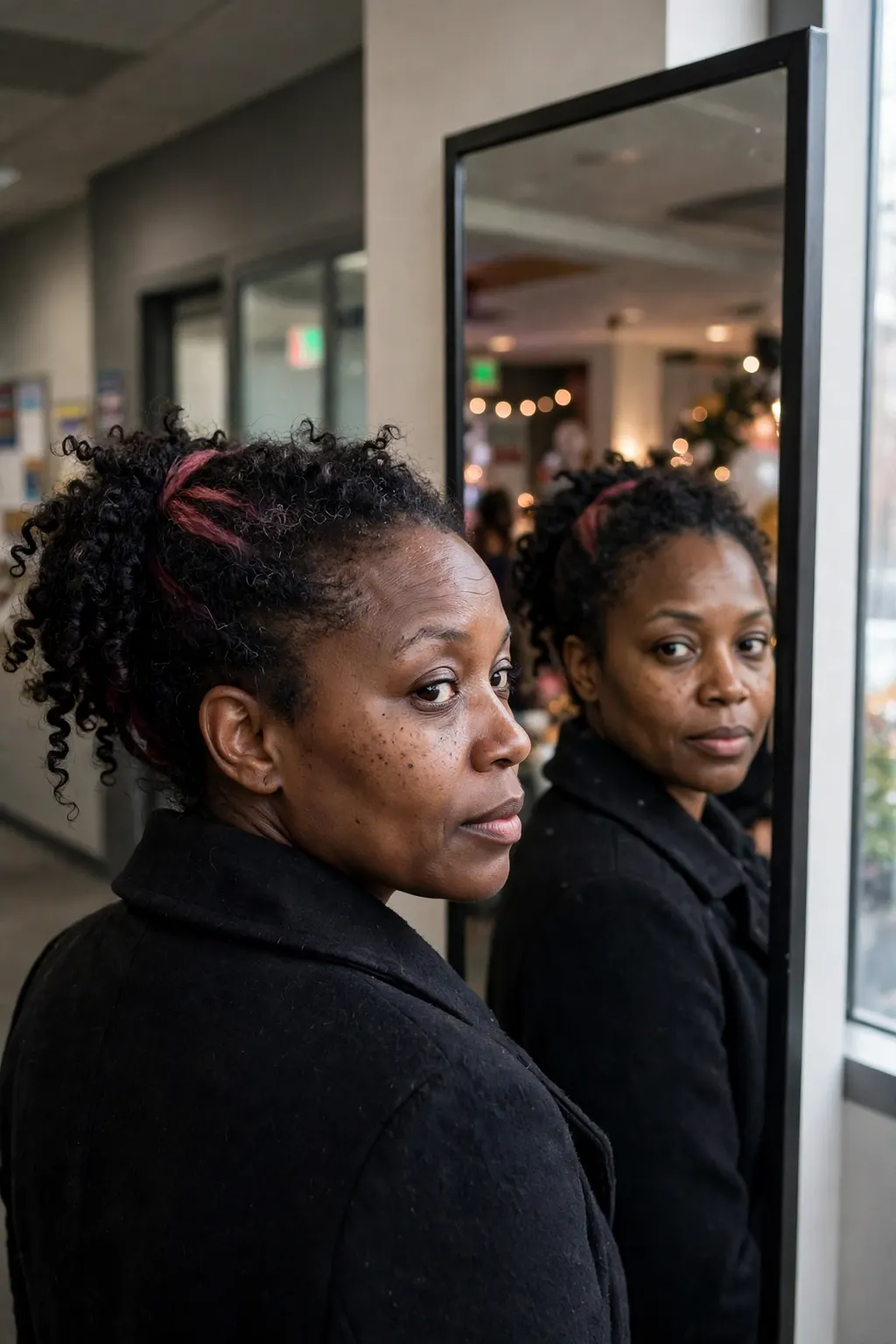
Hidden pink is a placement decision, and now you have ten of them. Start with the principle: the colour lives in the reveal zone and the dark top layer does the hiding, and the cover layer has to be long and full enough to do the job — test it with a low ponytail before you book. Then pick the placement for the life you actually live: the narrow nape panel if you want the most drama for the least maintenance, the behind-the-ear streaks if you want the reveal to be a gesture, the money piece if your work happens face-to-face and you want the pink where people look. Then the practical half: one gentle lift on the hidden section only, a fade into dusty rose that is a second act rather than a failure, a colour-depositing conditioner for the refresh, and an honest read of your dress code before the appointment rather than after it.
Start with the smallest step that tells you the most: the low-ponytail test, tonight, in front of the mirror. Gather the under-layer, let the top fall, and look from the front, the side and the back. If the gathered section vanishes, your hair is ready for a panel, and the next step is the salon script — read it out, show the photo, and ask the colourist to repeat the placement back to you before they mix any colour. If the section shows, give the top layer a few more weeks of length first, and start with the gloss-only route when you do book, because the subtlest pink is the one that teaches you whether you love the reveal before you commit to it. Either way, the pink is yours to show and yours to hide — and that is the whole point of peekaboo.
📌 Save this before your appointment — placement first, shade second. Narrow nape panel, deep dark pink, one gentle lift on the hidden section only, and the salon script read out loud before any colour is mixed.